 Save
Save There's something about the smell of sesame oil that immediately transports me to a bustling noodle shop in Singapore—even though I was just standing in my own kitchen with a pot of boiling water. The first time I made this salad, I was trying to recreate that bright, nutty flavor I'd chased for years, and somehow, whisking together tahini and soy sauce felt like I'd finally cracked a code I didn't know I'd been working on. Now it's become my go-to when the weather turns warm and I want something that tastes both satisfying and impossibly light.
I made this for a potluck on a sweltering July afternoon, and I watched people go back for seconds while standing in front of an open fridge—that's when I knew it was a keeper. Everyone assumed it was complicated, which felt like a small victory since I'd literally thrown it together that morning before heading out the door.
Ingredients
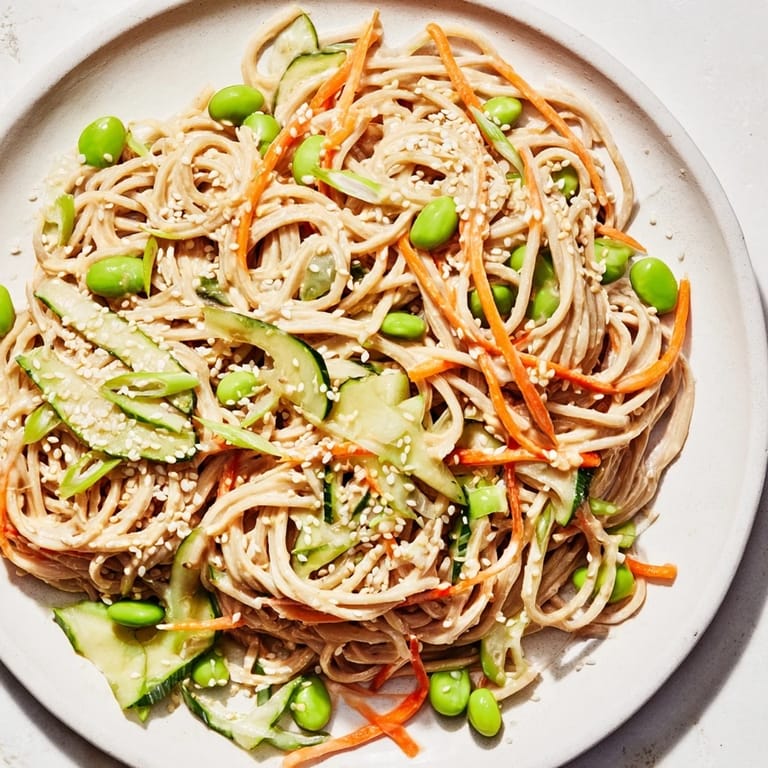
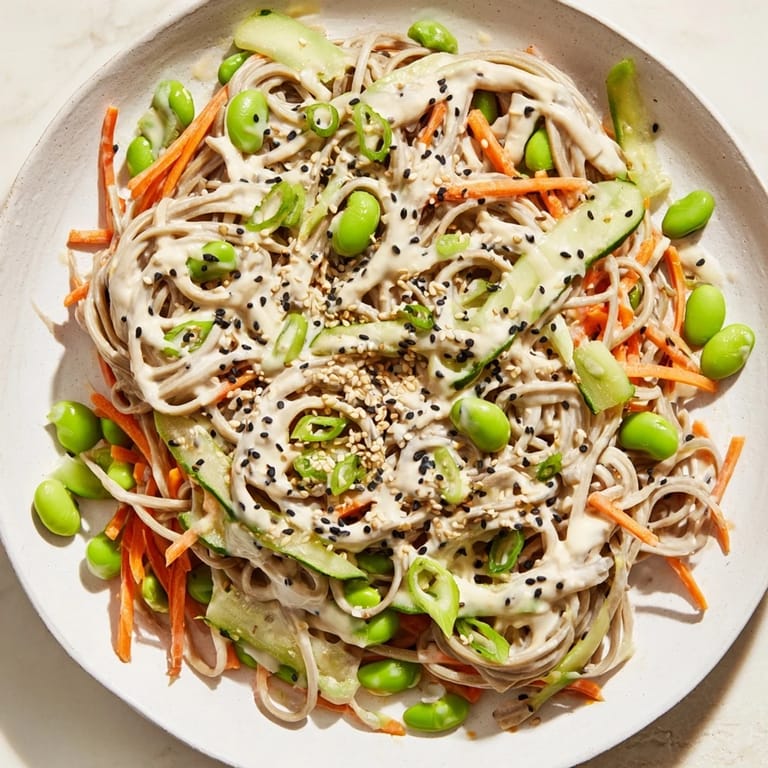
- Soba noodles or thin spaghetti (250 g / 9 oz): Soba has this earthy, slightly nutty quality that plays beautifully with sesame, but honestly, thin spaghetti works just as well and is usually easier to find—just make sure you rinse them thoroughly so they don't clump together.
- Cucumber, julienned (1 medium): This adds a cool, crisp contrast that keeps the whole dish feeling fresh; I always use English cucumbers because they have fewer seeds and a thinner skin.
- Carrots, julienned (2 medium): They bring a subtle sweetness and a satisfying crunch; julienning them takes maybe two minutes with a sharp knife and makes them feel intentional rather than just chopped.
- Edamame, shelled and cooked (1 cup / 150 g): These little green beans pack more protein than you'd expect and have this buttery quality when cooled; frozen ones are perfectly fine and honestly take the guesswork out of cooking time.
- Spring onions, thinly sliced (2): The sharp bite of raw onion cuts through the richness of the dressing and keeps your palate awake with every bite.
- Toasted sesame seeds (2 tbsp): Toast these yourself if you can—the difference between raw and toasted is like night and day, and your kitchen will smell incredible in the process.
- Tahini or toasted sesame paste (3 tbsp): This is the backbone of your dressing; toasted sesame paste is earthier and more forgiving than straight tahini, and it whisks together without getting grainy if you're patient.
- Soy sauce (2 tbsp): Use tamari if you need gluten-free, and don't skip this—it's what gives the dressing its savory depth and keeps it from tasting one-dimensional.
- Rice vinegar (1 tbsp): This adds brightness without the harshness of regular vinegar; it's gentle and floral compared to other options.
- Toasted sesame oil (1 tbsp): This is a flavor amplifier, not a cooking oil—a little goes a long way and it's what makes people ask what you did to make it taste so good.
- Honey or maple syrup (1 tbsp): A touch of sweetness balances the salty and tangy notes; maple syrup makes it slightly more complex if you're already at the grocery store.
- Fresh ginger, grated (1 tsp): Even a small amount brings warmth and a subtle spice that feels like it belongs there; grate it fresh rather than using ground.
- Garlic, finely minced (1 clove): One clove is all you need unless you're a garlic person like me, in which case, add another and don't tell anyone.
- Water (2-3 tbsp): Start with less and add more as you whisk the dressing together; the consistency should be pourable but not thin.
Tired of Takeout? 🥡
Get 10 meals you can make faster than delivery arrives. Seriously.
One email. No spam. Unsubscribe anytime.
Instructions
- Get your noodles ready:
- Bring a pot of water to a rolling boil and cook the noodles according to the package—usually around 8 to 10 minutes for soba. The moment they're tender, drain them and run cold water over them until they've cooled completely; this stops them from cooking further and keeps them from turning into mush.
- Build your dressing:
- In a large bowl, whisk together the tahini, soy sauce, rice vinegar, sesame oil, honey, ginger, and garlic until it's starting to come together. Add your first 2 tablespoons of water and keep whisking—it'll go from thick and clumpy to smooth and creamy, like magic, and then add more water a tablespoon at a time until it's the consistency of heavy cream.
- Bring everything together:
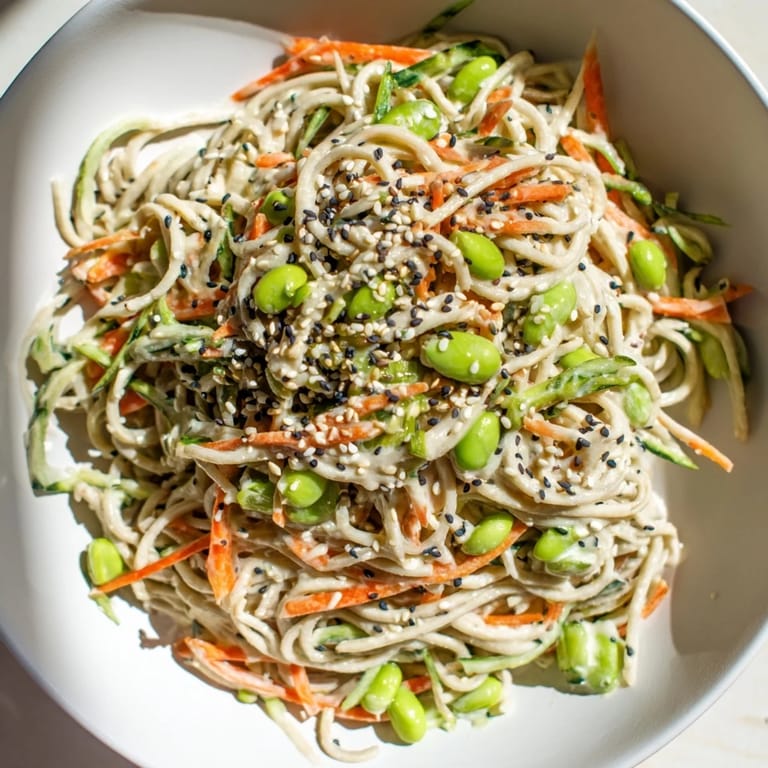
- Add your cooled noodles to the bowl along with the cucumber, carrots, and edamame, then toss everything gently with a pair of tongs or two spoons, making sure every strand of noodle gets coated in that silky dressing. If it looks dry, add another splash of water and toss again.
- Add the finishing touches:
- Sprinkle the spring onions and toasted sesame seeds over the top, then add any optional garnishes you're using—cilantro, crushed peanuts, lime wedges, whatever calls to you. Taste it and adjust the seasoning if needed; sometimes it wants a little more soy or a squeeze of lime.
- Chill before serving:
- Pop it in the fridge for at least 10 minutes and up to a few hours; the noodles will absorb more of the dressing flavors and the whole thing becomes more cohesive and delicious the longer it sits.
 Save
Save The thing that surprised me most about this salad was how it became a conversation piece at every single meal where I brought it—not because it's fancy, but because it tastes like someone understood exactly what you wanted to eat when you didn't want to be too full. There's freedom in a cold noodle salad, like you're eating something light but never feeling like you've compromised on flavor.
Variations and Swaps
This salad is endlessly flexible, which is one of the reasons I make it so often. You can swap the noodles for chilled ramen or even cooked rice noodles, and it tastes equally good—I've even made it with cooked quinoa when I was feeling adventurous and it was honestly delicious. The vegetables are just a starting point; add whatever is crisp and fresh in your fridge, whether that's bell peppers, snap peas, shredded radishes, or shredded cabbage.
Protein Options
While the edamame provides a solid plant-based protein, you can easily turn this into something heartier by adding shredded cooked chicken, crispy tofu, or even canned chickpeas if that's what you have on hand. A soft-boiled egg on top transforms this from a side dish into a full meal, and the runny yolk mixes right into the dressing and adds a silky richness. I've also tossed in shrimp during the warmer months, which pairs beautifully with the ginger and sesame.
Storage and Make-Ahead Tips
This is one of those salads that actually improves as it sits, so feel free to make it the night before and let it hang out in the fridge—the flavors deepen and the noodles absorb more of the dressing, which some people prefer. You can also prep all your vegetables ahead of time and store them separately, then toss everything together when you're ready to eat. Just keep any fresh herbs or crispy toppings separate and add them right before serving so they don't get soggy or bitter.
- Stored in an airtight container, this keeps for up to three days, though it tastes best within the first 24 hours.
- If it looks dry after sitting, just stir in a little water or sesame oil to refresh it.
- Lime wedges are your secret weapon for brightening up leftovers that have been sitting for a day.
 Save
Save Every time I make this, I'm reminded that the best meals are often the simplest ones—the ones that don't ask too much of you but somehow deliver everything you didn't know you wanted. This noodle salad has become my answer to so many moments: too hot to cook, need something quick, want to impress without effort, or just craving something that tastes bright and alive.
Recipe FAQs
- → What type of noodles work best?
Soba or thin spaghetti noodles work well, but rice noodles are a great gluten-free alternative.
- → Can the sesame dressing be adjusted?
Yes, you can tweak the sweetness, acidity, or thickness by adding more honey, vinegar, or water to suit your taste.
- → How can I add more protein to this dish?
Include shredded cooked chicken or tofu to boost the protein content without altering the fresh flavors.
- → Is this suitable for a vegan diet?
Use maple syrup instead of honey and ensure soy sauce is vegan-certified to keep it plant-based.
- → What garnishes enhance this dish?
Fresh cilantro or mint, crushed peanuts or cashews, and lime wedges add extra flavor and texture.