 Save
Save I discovered the magic of the cornucopia years ago when my grandmother brought one to our Thanksgiving table—not the traditional wicker basket, but an actual edible horn she'd baked from scratch. Watching my cousins' faces light up as they realized the centerpiece was meant to be eaten was unforgettable. That moment taught me that the best dishes aren't just about taste; they're about creating magic on the table and stories around it. Now, every autumn, I recreate that edible horn of plenty, and it's become the one thing everyone asks me to bring.
I'll never forget the year I made this for a potluck dinner party in October, and my friend Sarah arrived early to find me arranging dried figs and walnuts with the kind of focus usually reserved for painting. She laughed and grabbed a handful of pecans to help, and we ended up having a whole conversation about why autumn tastes different—warmer, richer, more intentional. That's when I realized this dish isn't just about feeding people; it's an invitation to slow down and savor the season together.
Ingredients
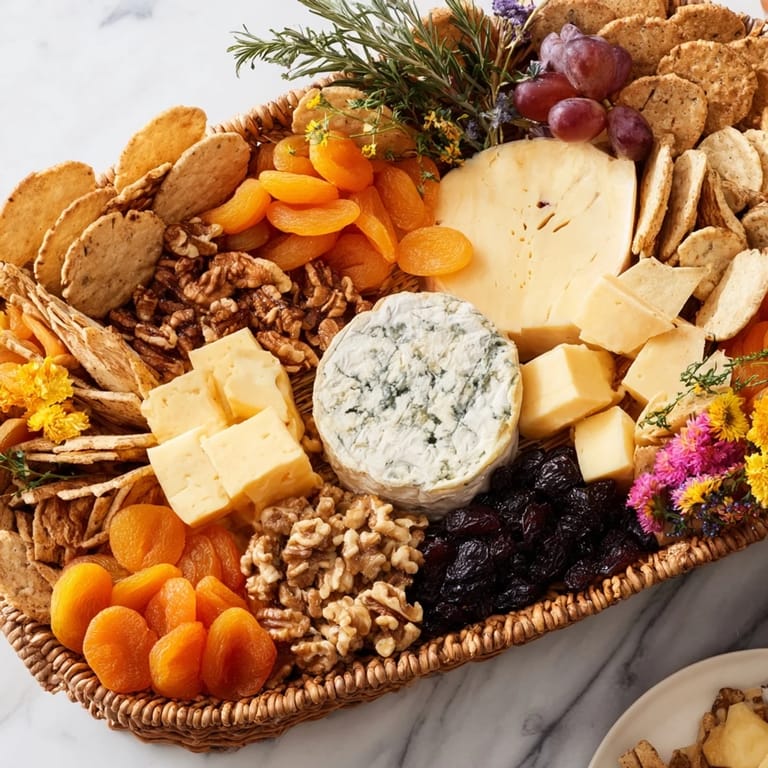
- Dried apricots, figs, cranberries, and apple rings (1 cup each): These are your color palette and flavor foundation. Apricots bring brightness, figs add richness, cranberries pop with tartness, and apple rings tie it all together with nostalgic sweetness. Buy from bulk bins if you can—they're fresher and you'll taste the difference immediately
- Seedless grapes (1 cup, optional): A handful of fresh grapes tucked among the dried fruits reminds everyone there's both abundance and freshness in the horn
- Walnuts, pecans, and almonds (1 cup each): Toast them lightly before assembling if you want them to taste nuttier and more alive. Raw works beautifully too, but that gentle warmth from the oven changes everything
- Aged cheddar, creamy goat cheese, rustic blue cheese, and aged gouda (6 oz each): This quartet of cheeses creates a conversation—sharp cheddar speaks, goat cheese whispers, blue cheese demands attention, and gouda bridges them all. Cut your cheddar and gouda into generous cubes so they feel abundant; let the goat cheese be soft and approachable
- Rustic crackers and baguette (2 cups and 1 small loaf): These are your edible vessels and flavor anchors. Choose crackers with character—the kind with seeds and texture that feel intentional, not generic
- Fresh rosemary and thyme sprigs, plus optional edible flowers or seasonal leaves: These aren't just garnish; they're the final brushstroke that says you care. Fresh herbs fill the air with the smell of the season
- Wicker cornucopia basket or homemade bread horn: This is your canvas. A wicker basket is traditional and forgiving; a bread horn is theatrical and memorable. Choose whichever speaks to your style and timeline
Tired of Takeout? 🥡
Get 10 meals you can make faster than delivery arrives. Seriously.
One email. No spam. Unsubscribe anytime.
Instructions
- Set your stage:
- Place your cornucopia basket or bread horn on a large serving platter or wooden board. This moment matters because you're establishing the focal point—make sure it's centered and stable, sitting confidently like it's been your table's anchor all along
- Build the cheese foundation:
- Arrange your cheeses inside the opening of the horn first, letting them cascade outward like they're tumbling from a place of plenty. Don't be shy—this is where abundance lives. Your blue cheese should crumble freely, your goat cheese should look creamy and inviting, your cheddar and gouda should catch the light
- Layer in the fruits and nuts with intention:
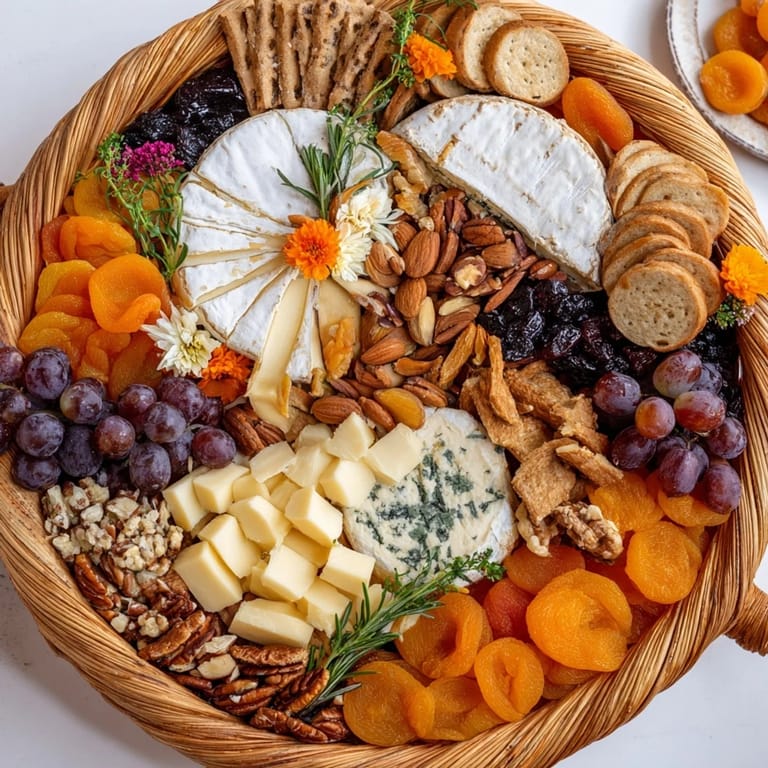
- Now comes the fun part. Imagine you're painting with color and texture. Dark dried figs next to golden apricots, deep cranberries contrasting with pale almonds. Mix warm and cool tones, crunchy and chewy. Let clusters spill out dramatically from the horn's opening like the abundance is too great to contain. This is where your eye matters more than any measurement
- Nestle in the crackers and bread:
- Tuck your rustic crackers and baguette slices along the sides and in small bunches among the fruits and nuts. Stand some upright so they create little walls and interest, lay others flat like they're resting. Leave gaps where you can see the other elements—negative space is your friend
- Crown it with herbs and flowers:
- This is your signature moment. Tuck sprigs of fresh rosemary and thyme throughout, letting their green needles peek through the golds and browns. If you have edible flowers or seasonal leaves, scatter them like you've just walked in from the garden and your hands are full of autumn. Step back and look. Does it feel alive? It should
- Present and invite:
- Bring it to the table at room temperature, letting everyone admire it before the feast for eating begins. Set out small plates and small tongs if you have them, but honestly, this is a dish best shared hand-to-mouth, like everyone's gathered around something precious and fleeting
 Save
Save Last year, I made this horn for a small gathering of friends I hadn't seen since spring, and as we stood around the table picking through dried figs and good cheese, someone said, 'This is what I missed—not just the food, but this.' That's when I understood that this dish isn't really about ingredients at all. It's about permission to gather, to celebrate the season changing, and to believe that abundance is worth arranging beautifully for the people you love.
Making the Edible Bread Horn
If you want to go theatrical—and I recommend it—crafting your own bread horn is easier than it sounds and infinitely more impressive than any basket. Start with your favorite bread dough (a simple rustic dough works best), wrap a cone-shaped form in foil, and gradually spiral the dough around it, sealing each layer as you go. Brush with egg wash for that golden glow, bake at 400°F until the outside is deep brown and sounds hollow when you tap it, then cool completely before carefully sliding off the foil form. The horn becomes your edible vessel, and filling it feels less like assembling appetizers and more like completing an edible sculpture. Your guests won't forget it.
Wine and Pairing Magic
The beauty of this cornucopia is that it plays well with almost any autumn drink you have on hand. A medium-bodied red wine—think a good Côtes du Rhône or Pinot Noir—echoes the earthiness of the cheeses and the warmth of the dried fruits. Sparkling cider feels more casual and celebratory, like you're toasting to the season itself. If you want something non-alcoholic, a good apple cider or spiced tea creates its own kind of magic alongside the horn. The combination of creamy, sharp, sweet, and nutty flavors means whatever you pour will find its match on the board.
Customizing Your Horn for Every Guest
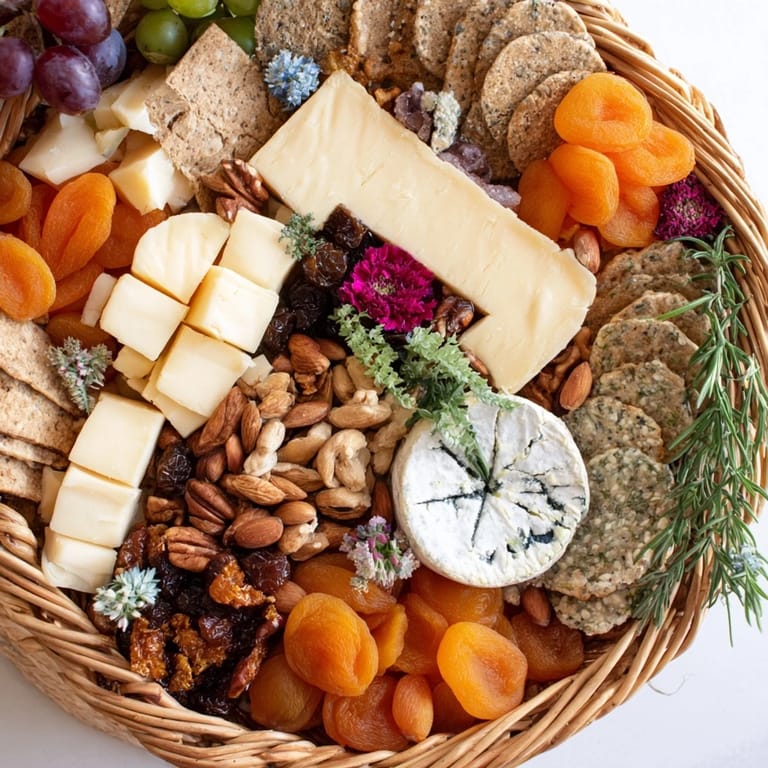
The genius of this recipe is that it's endlessly flexible and genuinely celebrates different tastes and needs. Swap your cheeses based on what's available or what your guests adore—aged gruyère for sophistication, creamy brie for approachability, sharp aged cheddar for boldness. Mix your nuts however feels right: add pistachios for color, cashews for creaminess, hazelnuts for new dimension. If gluten matters to your guests, your crackers solve that. If someone's vegan, the fruits and nuts are entirely theirs. This dish says to everyone at your table, 'I thought of you, and there's something here that's yours.' That's the real abundance.
- Swap in jam, honey, or apple butter on a small spoon as a flavor bridge between the cheeses and fruits
- A sprinkle of fleur de sel over the cheeses adds a whisper of sophistication and brightness
- If you're assembling far ahead, keep your crackers in a separate container and add them just before guests arrive so they stay crisp and welcoming
 Save
Save This cornucopia is proof that the most memorable food doesn't have to be complicated—it just has to be made with intention and served with joy. Every time you arrange it, you're creating a moment, and that's worth savoring.
Recipe FAQs
- → What nuts are best for the harvest horn?
Walnuts, pecans, and almonds provide a rich, crunchy texture and pair well with the dried fruits and cheeses.
- → Can I use fresh fruits instead of dried ones?
Dried fruits hold up better for display and last longer, but adding fresh grapes or apple slices can add freshness and color.
- → How do I make the bread horn base?
Shape bread dough around a foil-wrapped cone, bake until golden, then cool before filling to create an edible container.
- → What cheeses complement this autumn arrangement?
Aged cheddar, creamy goat cheese, rustic blue cheese, and aged gouda offer a balanced combination of flavors and textures.
- → Can this be prepared in advance?
Yes, prepare the components ahead and assemble the centerpiece shortly before serving to maintain freshness and presentation.
- → What beverages pair well with this spread?
Medium-bodied red wines or sparkling cider provide excellent pairings that enhance the flavors of the fruits and cheeses.