 Save
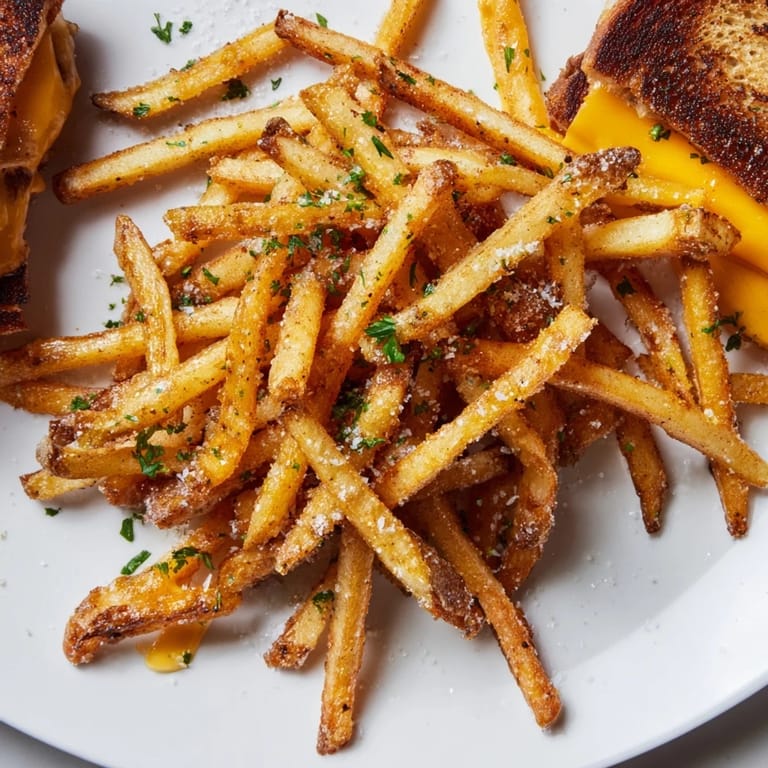
Save There's something about the smell of beef tallow hitting hot oil that stops you mid-thought—rich, almost meaty, nothing like the neutral vegetable oil smell you grew up with. I discovered this combination on a cold February afternoon when I had leftover tallow from making beef stock and a craving for grilled cheese that wouldn't quit. The fries came together almost by accident, and somehow that meal became the thing I make when I want to feel properly taken care of.
I made this for my sister on a lazy Sunday, and she actually put her phone down for the entire meal—that's when I knew it was something special. Watching someone's face light up when they bite into a grilled cheese that's both crispy and melty, followed by a fry that tastes like it came from a steakhouse, never gets old.
Ingredients
- 4 large russet potatoes, peeled and cut into ¼-inch sticks: Russets have the right starch-to-moisture ratio for maximum crispness; if they're too thick or thin, you'll either get soft centers or burnt edges.
- 1 quart beef tallow: This is the secret—it adds a savory depth that makes fries taste intentional and rich, not just fried.
- 2 tsp kosher salt and ½ tsp black pepper: Season generously after frying when the surface is still slightly moist and salt sticks.
- 1 tsp chopped fresh parsley: A small touch that makes them look cared for.
- 8 slices sourdough bread: Sourdough's slight tang and sturdy crumb hold up to the butter and heat without getting soggy.
- 8 slices sharp cheddar cheese: Sharp cheddar has enough flavor to shine through the butter and bread without melting into invisibility.
- 4 tbsp unsalted butter, softened: Soft butter spreads evenly and toasts more evenly than cold butter.
- 2 tbsp mayonnaise (optional): Mayo contains water that creates steam, giving you an extra-crispy crust if you're after maximum texture.
Tired of Takeout? 🥡
Get 10 meals you can make faster than delivery arrives. Seriously.
One email. No spam. Unsubscribe anytime.
Instructions
- Soak your potato sticks:
- Cut your potatoes and immediately plunge them into a bowl of cold water—you're washing away the excess starch that would otherwise make them stick together and brown unevenly. Let them sit for at least 30 minutes, then pat them completely dry with paper towels until they feel almost chalky to the touch.
- First fry (the gentle one):
- Heat your beef tallow to 325°F—you're looking for that gentle bubbling action, not an angry boil. Working in batches so you don't crowd the pot, fry the potatoes for 4 to 5 minutes until they're tender but still completely pale. They should bend slightly when you pull them out. Drain them on fresh paper towels and let them rest for a few minutes.
- Second fry (the crisper):
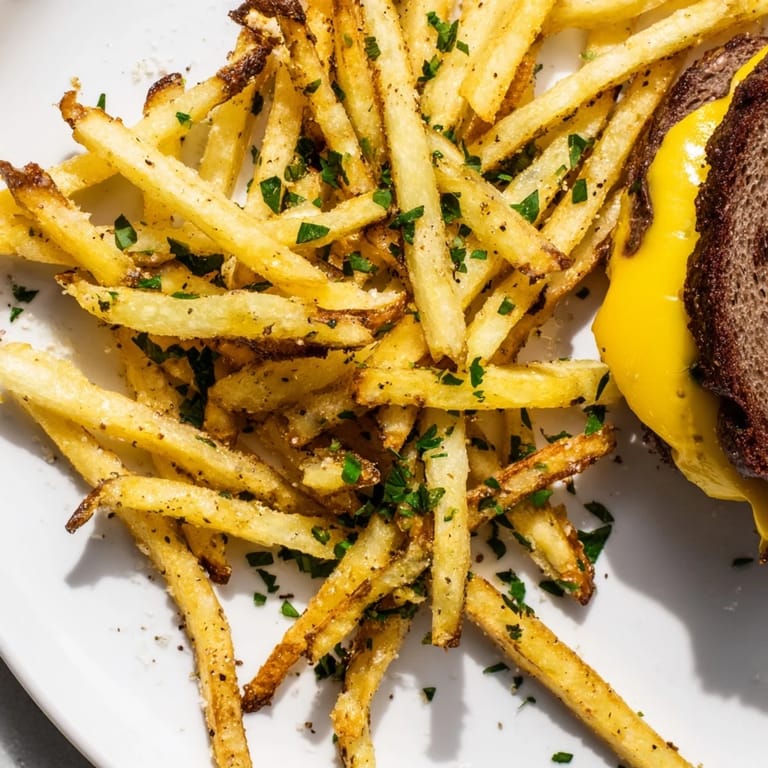
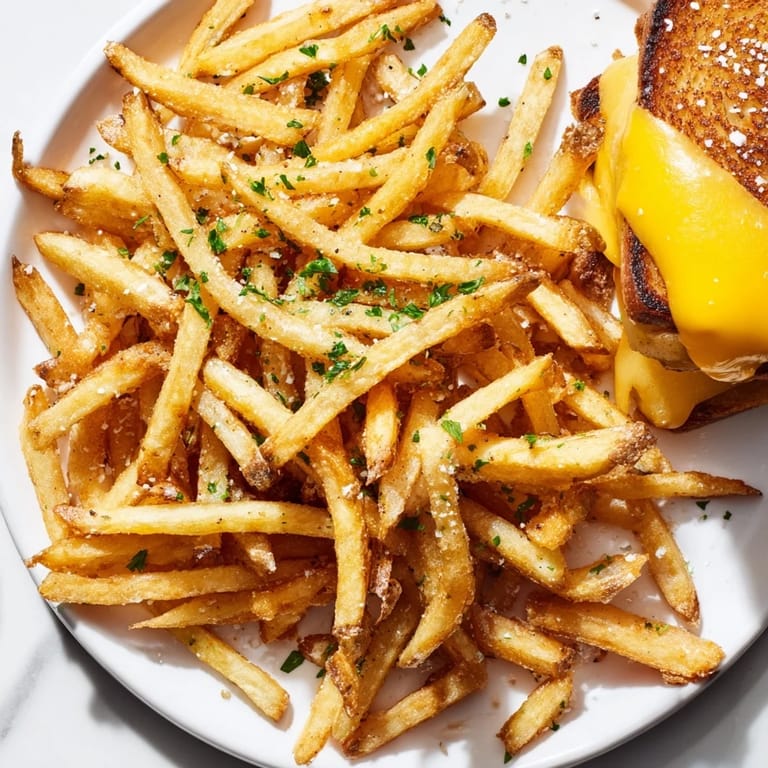
- Raise the temperature to 375°F and wait for it to come back to full heat. This is where the magic happens—fry each batch for just 2 to 3 minutes until they're golden, almost nutty-looking, and delightfully crispy. The outside should shatter slightly when you bite in. Drain, season immediately while they're still hot, and taste one to make sure they're perfect before moving on.
- Butter your bread:
- Spread your softened butter (and mayo if using it) on one side of each slice—go all the way to the edges so every bite gets that toasted crunch. Two slices of sharp cheddar go between the buttered sides, with the buttered sides facing outward like a protective blanket.
- Toast with intention:
- Heat your skillet or griddle over medium heat and let it warm for a minute. Place your sandwiches down and listen for that gentle sizzle, not a dramatic sear. Cook for about 3 to 4 minutes per side, pressing gently with a spatula every 30 seconds or so to keep the bread in contact with the heat. You're looking for a deep golden color, not brown.
- Serve immediately:
- Plate everything while the fries are still crispy and the cheese is still in that perfect melty state. Any waiting around and you lose the textural magic that makes this meal worth making.
 Save
Save There was a moment when my mom tried this and asked for the recipe, and I realized it was less about following instructions and more about understanding why each step matters. That's when food stops being just dinner and becomes something you want to share.
Why Beef Tallow Makes the Difference
Beef tallow sounds like something only a steakhouse would use, but it's actually one of those ingredient shifts that completely changes what's possible in your kitchen. The high smoke point means it gets crispy faster than other fats, and the flavor it brings is savory and complex without being overwhelming. Once you've had fries cooked in tallow, vegetable oil starts to taste like you're eating nothing at all.
The Two-Fry Method Explained
The reason restaurants make fries that shatter when you bite them is this two-temperature technique. The first fry at lower heat cooks the potato through without browning, and the second fry at higher heat creates the crispy exterior. Skipping either step and you end up with something that's either raw inside or tough throughout. It takes a little longer but tastes incomparably better, which is the whole point.
Making It Your Own
This is a foundation recipe, which means it's sturdy enough to build on. Some people prefer a mix of sharp cheddar and Gruyère for more complexity, or they'll add a thin slice of good ham inside the grilled cheese. I've seen people serve the fries with everything from fancy aioli to just ketchup and salt, which somehow misses the point a little because the tallow is already so flavorful. The beauty is that once you understand how the components work, you can adjust without breaking anything.
- A tiny sprinkle of fleur de sel on the fries after the second fry adds a sophisticated finishing touch.
- If you can't find beef tallow, duck fat works beautifully and is actually easier to find at most markets.
- Let your tallow cool and store it in the refrigerator between uses—it keeps for months and gets better at what it does the more you use it.
 Save
Save This meal is the kind of thing that reminds you why you bother learning to cook in the first place. Simple ingredients, technique that matters, and something genuinely delicious at the end—that's all it takes.
Recipe FAQs
- → Why soak potatoes before frying?
Soaking removes excess starch, which prevents fries from sticking together and helps achieve a crispier texture.
- → What is the benefit of frying fries twice?
Frying first at a lower temperature cooks the potatoes through, while the second hotter fry creates a golden, crispy exterior.
- → Can I substitute the beef tallow?
Yes, duck fat or vegetable oil can be used, though beef tallow provides a distinct rich flavor and crispness.
- → How do I get the grilled cheese perfectly melted?
Cooking over medium heat and pressing gently with a spatula helps melt the cheese evenly without burning the bread.
- → What cheeses work well for the sandwich?
Sharp cheddar is classic, but Gruyère and mozzarella blends add delicious complexity and meltability.