 Save
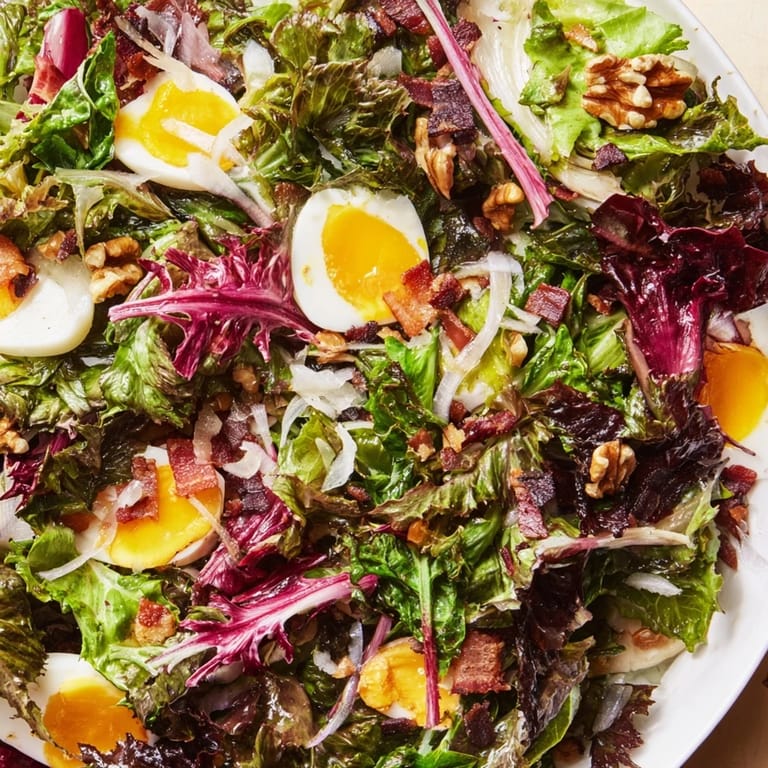
Save There's something about the smell of bacon hitting a cold pan that makes everything feel like a proper meal. I discovered this salad quite by accident on a Tuesday evening when I had a drawer full of assertive greens and nothing else seemed to matter. The warm dressing wilts the leaves just enough to soften their edge without turning them to mush, and somehow that hot-cold contrast became the thing I kept returning to. It's become my go-to when I want something that feels indulgent but keeps me feeling light.
My neighbor brought over an armful of dandelion greens from her garden one afternoon, and I wasn't sure what to do with something so aggressively bitter. I heated up some bacon I had frozen, threw together what I had in the cupboard, and poured the warm dressing over everything while she watched. She had thirds, and we ended up talking about how food you think won't work somehow becomes exactly what you needed.
Ingredients
- Mixed bitter greens (4 cups): Choose from escarole, frisée, dandelion, radicchio, or chicory, torn into bite-size pieces—the bitterness is the whole point, so don't shy away from the assertive ones.
- Red onion (1 small): Thinly sliced to catch the warm dressing and add a sharp note underneath.
- Thick-cut bacon (6 slices): The thicker the cut, the more substantial the pieces, and the rendered fat is where the magic happens.
- Red wine vinegar (2 tablespoons): Bright and classic; don't substitute with anything too mild.
- Dijon mustard (1 tablespoon): This emulsifies the dressing and adds a subtle sharpness that ties everything together.
- Honey (1 teaspoon): Just enough sweetness to balance the bitter greens and acidity.
- Black pepper (¼ teaspoon) and salt (⅛ teaspoon): Season to taste; the bacon will add saltiness too.
- Extra-virgin olive oil (2 tablespoons): Added last to emulsify and round out the flavors.
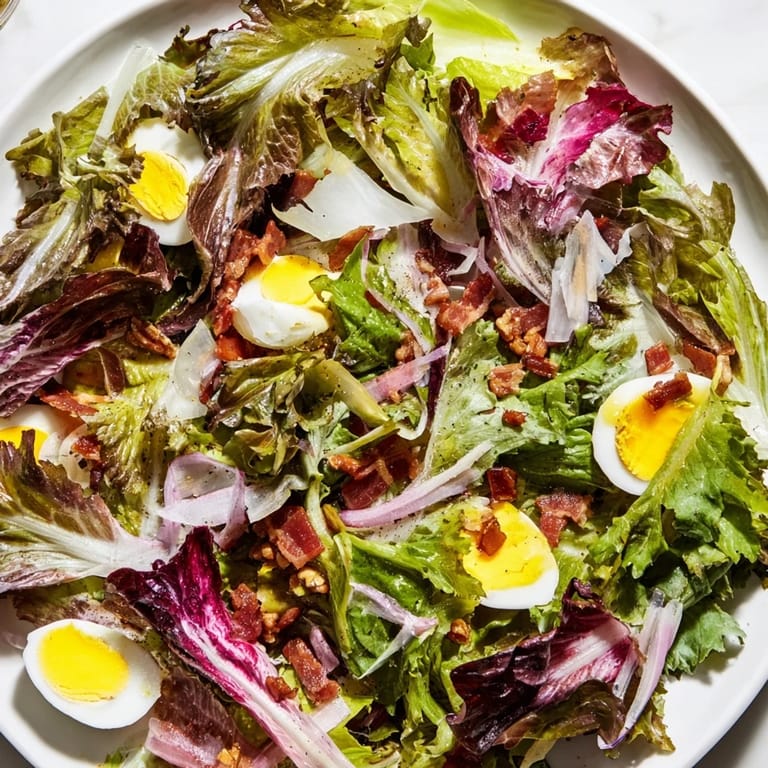
- Hard-boiled eggs and toasted nuts (optional): These add protein and texture if you want to make it heartier.
Tired of Takeout? 🥡
Get 10 meals you can make faster than delivery arrives. Seriously.
One email. No spam. Unsubscribe anytime.
Instructions
- Prepare your greens:
- Rinse and thoroughly dry the mixed bitter greens—any excess water dilutes the dressing. Tear them into bite-size pieces and place them in a large salad bowl along with the thinly sliced red onion.
- Render the bacon:
- In a large skillet over medium heat, cook the diced bacon until it's deeply crisp, about 7 to 9 minutes, stirring occasionally. Transfer the bacon to a paper towel-lined plate and keep that rendered fat in the skillet.
- Build the warm dressing:
- Reduce the heat to low and add the red wine vinegar, Dijon mustard, honey, black pepper, and salt directly to the bacon fat. Whisk everything together, scraping up any browned bits from the bottom of the skillet because those little bits taste incredible.
- Emulsify and warm:
- Slowly whisk in the extra-virgin olive oil until the dressing becomes silky and warm all the way through. This takes about a minute of patient whisking.
- Toss while hot:
- Immediately pour the hot dressing over the cold greens and red onion, then scatter the crisp bacon pieces over the top. Toss everything together so the heat gently wilts the leaves and coats them evenly with that rich dressing.
- Plate and serve:
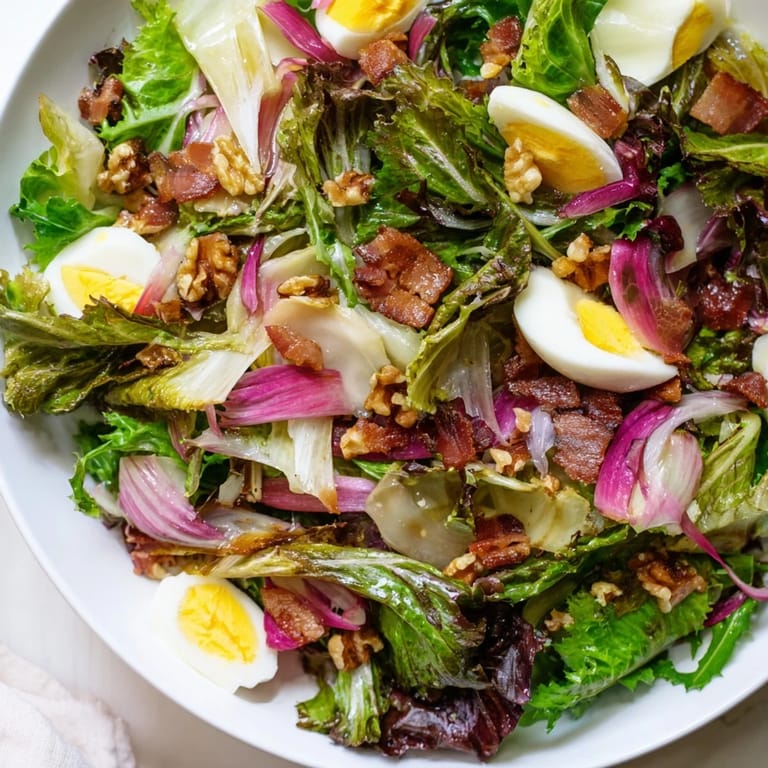
- Arrange the salad on plates while it's still warm, and garnish with quartered hard-boiled eggs and toasted walnuts or pecans if you're using them. Serve right away while the warmth still matters.
 Save
Save I made this for someone I was trying to impress who claimed to hate salad, and watching them ask for seconds while saying it didn't taste like salad at all felt like winning something. That moment taught me that context and temperature and the care you put into something changes how people actually taste it.
Why Bitter Greens Matter
There was a time when I thought greens like escarole and frisée were too intense, too much attitude on a plate. Then I realized that the bitterness isn't a flaw to mask—it's a feature that becomes elegant when you balance it with fat and acid and warmth. The slight wilt from the warm dressing softens them just enough so they're more approachable without losing what made them interesting in the first place. Every time I make this, I'm reminded that food doesn't have to be gentle to be good.
Making It Your Own
The beauty of this salad is how adaptable it is once you understand the principle. I've added thinly sliced apples for a fruity sweetness, experimented with maple syrup instead of honey for a deeper note, and even made a vegetarian version with sautéed mushrooms standing in for the bacon. The dressing formula stays the same—warm fat, acid, a touch of sweet, emulsified with oil—so you can play with the components and it will still work. The confidence to mess with a recipe comes from understanding why each part matters, and this one teaches you that quickly.
Timing and Storage
This salad is absolutely a right-now dish—it's best served the moment the dressing hits the greens while everything is still warm. If you have leftovers, they'll keep in the refrigerator for a day, but the greens will have wilted significantly and the dressing will have separated slightly. I've found it works best as an excuse to make exactly what you need, which means you're actually eating something fresh and intentional. For weeknight dinners, you can cook the bacon and prep the greens ahead of time, then finish the dressing and assemble everything in the last five minutes.
- Prep the greens and onions up to a few hours ahead if you keep them in a sealed container.
- Cook the bacon and store it at room temperature so you can reheat it gently if needed.
- Only make the dressing when you're ready to serve, and work quickly so the greens catch the heat.
 Save
Save This salad reminds me that sometimes the simplest combinations, treated with a little attention and warmth, become the meals you remember. It's proof that you don't need fancy or complicated to make something feel special.