 Save
Save I discovered the magic of a Celtic cross cheese platter at a dinner party where I showed up with store-bought wine and left thinking about geometry. My friend had arranged cheeses in quadrants around a central dip, and something about the intentional layout made people linger longer, talk more, and actually taste what they were eating instead of just grabbing and going. It wasn't fancy or fussy—just thoughtful—and I realized that day that how you arrange food matters almost as much as what's on the plate.
I made this platter for my sister's book club last spring, and what struck me was watching people who normally eat cheese straight from a package pause to actually appreciate the differences—the funk of the blue cheese, the buttery sweetness of the Brie, the firm bite of the Irish cheddar. Someone asked why I'd arranged it in a cross, and I found myself explaining Celtic history while they were all chewing, which felt like the best kind of distraction from the fact that I'd burned the bread I meant to toast.
Ingredients
- Irish cheddar, cubed: This is your bold anchor—firm, slightly sharp, and it doesn't soften or weep on the platter like softer cheeses do.
- Brie, sliced: Let this sit at room temperature for a few minutes before slicing so it yields to the knife instead of crumbling, and buy a wheel that's ripe but not collapsing.
- Blue cheese, crumbled: Buy a good one; the flavor will carry through all the other elements, and it's worth spending a little extra.
- Manchego, sliced: This Spanish sheep's milk cheese adds something unexpected without being weird, and its pale color creates visual balance against the darker blue.
- Sour cream or Greek yogurt: Greek yogurt makes a tangier, lighter dip and holds up better if guests are eating for hours; sour cream tastes richer.
- Fresh chives: Don't use dried; the fresh ones matter here because they're your only bright, oniony note.
- Lemon juice: A teaspoon sounds small, but it wakes up the dip and keeps it from tasting one-note creamy.
- Seedless red grapes: They're sweet, they roll around attractively, and their color is half the visual appeal of this board.
- Dried apricots: These bridge the gap between the savory cheeses and sweet elements, and they add chewiness.
- Walnuts: Toasted if you remember, raw if you don't—they ground the board with earthiness.
- Honey: Good honey tastes like something; cheap honey tastes like sugar water, so don't skip on this detail.
- Rustic crackers and baguette: Crusty bread and sturdy crackers let people actually pick up cheese without it falling apart on them.
Tired of Takeout? 🥡
Get 10 meals you can make faster than delivery arrives. Seriously.
One email. No spam. Unsubscribe anytime.
Instructions
- Mix the dip:
- Stir the sour cream with chives, lemon juice, salt, and pepper until it tastes bright and herbaceous—taste it as you go because salt levels vary wildly depending on your cream and how generous you're being with the chives. Spoon it into a small bowl that will sit in the center of your platter.
- Place the center:
- Set that bowl smack in the middle of your round platter and leave it there—it's your anchor and the visual heart of everything else.
- Arrange the four quadrants:
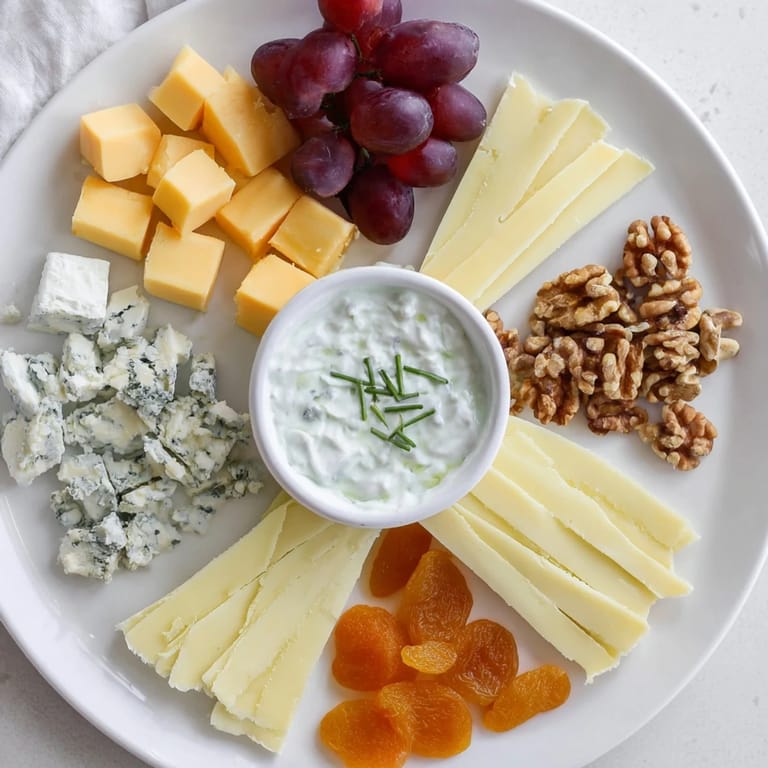
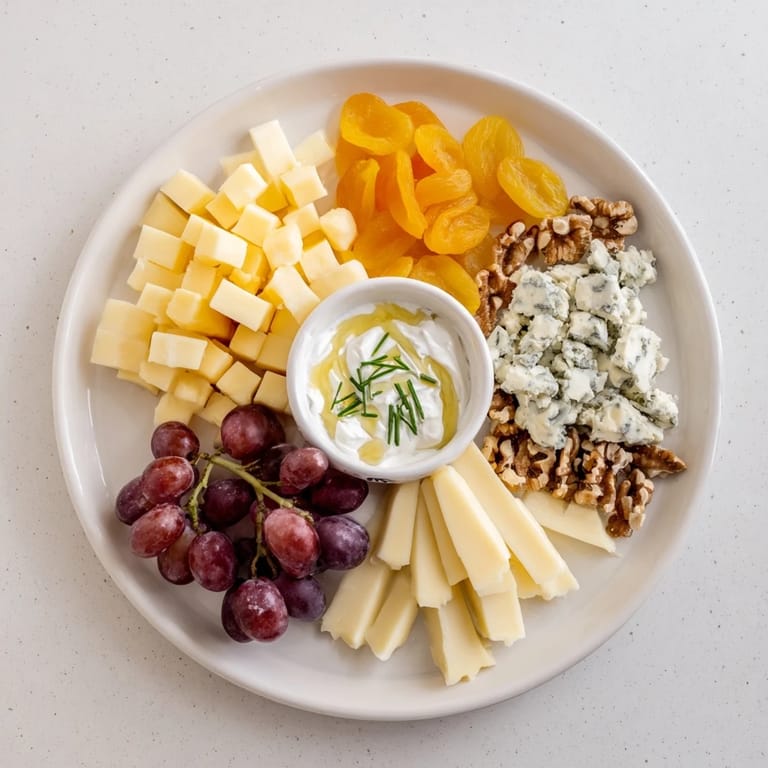
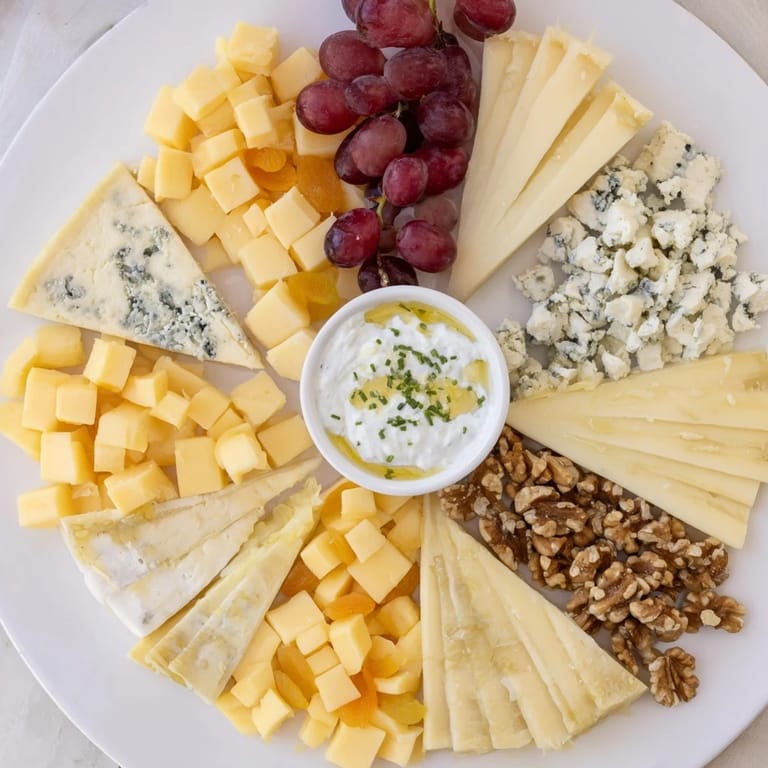
- Imagine a cross dividing your platter into four sections, and assign each cheese to one quadrant, spreading them out so each one gets breathing room and isn't fighting for space. Fan the sliced cheeses if you're feeling elegant, or pile the cubed and crumbled ones in little mounds if you're keeping it casual.
- Fill the gaps:
- Use the grapes, apricots, and walnuts to fill the white space between cheese quadrants, thinking about color balance as you go—scatter red grapes near the blue cheese, nuts in one corner, apricots somewhere they'll look like little jewels. The point is to make it look intentional, not accidental.
- Add honey:
- Drizzle a thin stream of honey over just the blue cheese section—it should look like you meant to do it, not like you spilled.
- Ring the platter:
- Arrange crackers and baguette slices around the outer edge, standing them up slightly so people can grab them without toppling the whole architecture. Leave a little space between pieces so it doesn't look cramped.
- Temperature check:
- Give everything 10 minutes at room temperature before serving so the cheese flavors aren't muffled by coldness—cold cheese tastes like nothing, and warm cheese tastes like itself.
 Save
Save What surprised me was that my 10-year-old, who claims to hate cheese, asked why this platter was "so fancy" and then ate three pieces of the Manchego when he thought I wasn't looking. Sometimes it's not the cheese; it's the story you're telling with how you present it.
Building Your Own Cross
You don't have to use the exact four cheeses I've listed here—the Celtic cross format works with any combination as long as you think about contrast. Pick one soft cheese, one firm cheese, one that's funky or blue-veined, and one that's mild or sweet-leaning so there's actual variation as people move around the platter. The cross shape isn't just decorative; it actually helps people navigate the board intuitively, and they'll eat more balanced bites instead of loading up on whatever's closest.
What Drinks Actually Work
Pairing drinks with a mixed cheese board is trickier than it sounds because you're not choosing wine for one cheese—you're choosing for all four at once. A crisp white wine like Sauvignon Blanc rides the line between cutting through the richness of the Brie and not overpowering the Manchego, and a light Pinot Noir works if your crowd leans red. The magic is picking something with enough acidity to cleanse your palate between cheeses, and honestly, sometimes sparkling water with lemon is the smartest choice because it lets the cheese be the star instead of fighting it for attention.
Making It Your Own
This board is a framework, not a formula, and the best version of it is the one that makes sense in your kitchen with what you actually like. Some people add fresh fruit like apple slices or pear (toss them in lemon juice so they don't brown), others swap cheeses entirely and build around a Welsh cheddar or a creamy goat cheese instead. The cross arrangement is flexible enough to hold whatever you want, and the real satisfaction comes from making something that looks intentional and tastes like you.
- If you're making this ahead, prepare the dip and assemble the platter up to two hours before serving, then cover it loosely with plastic wrap so it stays fresh but still breathes.
- Mark out where your cross will be with a toothpick before you start arranging so you don't second-guess yourself halfway through.
- Taste the dip on a cracker before serving because that's your safety check—if it needs more salt or lemon, now's the time to fix it.
 Save
Save The Celtic cross cheese platter taught me that simple food becomes memorable when you approach it with intention. It's one of those rare things you can make quickly that still feels like you tried.
Recipe FAQs
- → How should the cheeses be arranged for best presentation?
Divide the platter into four sections, placing each type of cheese in its own quadrant around the central dip for a balanced, visually appealing layout.
- → What ingredients enhance the flavor profile of this cheese selection?
Accompaniments like seedless red grapes, dried apricots, walnuts, and a drizzle of honey complement the cheeses with sweet and crunchy contrasts.
- → Can I substitute the central dip with alternatives?
Yes, sour cream or Greek yogurt mixed with fresh chives and lemon juice creates a fresh and tangy dip, but other creamy dips can work if preferred.
- → What is the ideal serving temperature for the cheeses?
Allow cheeses to reach room temperature before serving to enhance their natural flavors and textures.
- → Which beverages pair well with this platter?
Crisp white wines like Sauvignon Blanc or light reds such as Pinot Noir complement the cheese variety well without overpowering flavors.