 Save
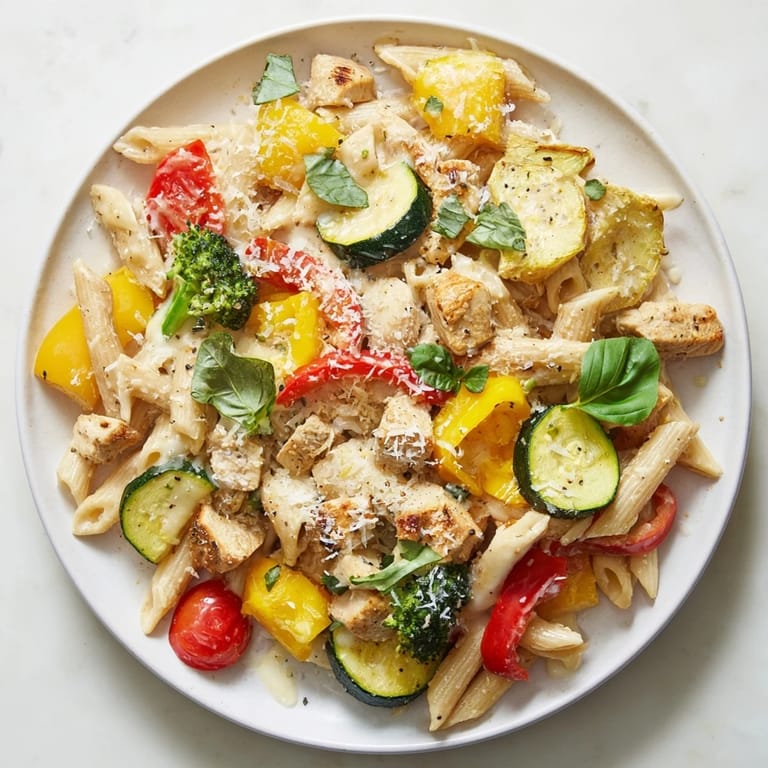
Save There's something almost meditative about a pasta night that actually works. I was standing in the produce section one Tuesday, basket already full, and I caught myself reaching for a sixth vegetable before stopping myself and thinking, what if I just grabbed five instead? That constraint became the whole point—five vegetables, four servings, three pantry staples pulling it all together, and suddenly a weeknight dinner felt less like a chore and more like a small act of intention. This pasta primavera grew from that moment, and it's become the dish I reach for when I want color, protein, and zero regrets.
I made this for my neighbor who'd just moved in, and she sat at my kitchen counter watching the skillet transform from empty to bursting with color. When I tossed everything together and the pasta waters mixed with cream into that silky sauce, she leaned forward and said it smelled like Sunday dinner, even though it was a Wednesday. That's when I knew this recipe had staying power—it makes ordinary nights feel a little bit special.
Ingredients
- Chicken breasts (2, cut into bite-sized pieces): Cut them roughly the same size so they cook evenly; uneven pieces leave you with raw centers or rubber edges.
- Red bell pepper (1, sliced): The sweetness balances everything, and the color is honestly half the appeal here.
- Zucchini (1, sliced into half-moons): It disappears slightly into the sauce, adding moisture and a subtle earthiness.
- Yellow squash (1, sliced into half-moons): Mild and buttery tasting, it softens faster than zucchini so watch it closely.
- Cherry tomatoes (1 cup, halved): Their juice becomes part of the sauce; use good ones or frozen in winter.
- Broccoli florets (1 cup): Keeps the dish from feeling too creamy and adds a slight bitter edge that works.
- Penne or farfalle pasta (300 g): The ridges or bowties catch the sauce; spaghetti works but feels less generous somehow.
- Heavy cream (60 ml): This is the magic ingredient that turns vegetables into a cohesive dish without weighing it down.
- Parmesan cheese (30 g, freshly grated): Pre-grated feels like a shortcut, but fresh-grated actually melts and incorporates instead of sitting in clumps.
- Garlic (3 cloves, minced): Bloom it in hot oil for thirty seconds so it tastes sweet instead of sharp.
- Olive oil (2 tablespoons, plus more as needed): Two separate moments of oil—one for chicken, one for vegetables—keeps flavors distinct.
- Dried Italian herbs (1 teaspoon): Fresh basil at the end is better, but dried herbs in the pan build background flavor.
- Salt and black pepper: Taste at the end; pasta water and cream change how much you need.
- Fresh basil (torn, optional but not really): This is the finish that makes people ask for the recipe.
Tired of Takeout? 🥡
Get 10 meals you can make faster than delivery arrives. Seriously.
One email. No spam. Unsubscribe anytime.
Instructions
- Get the water boiling and your mise en place ready:
- Salt your water generously—it should taste like the sea. While it heats, cut everything into roughly the same size so nothing races ahead of anything else. Mise en place sounds fancy but it's just not scrambling for the zucchini when the chicken's already cooking.
- Sear the chicken until it's golden and cooked through:
- Medium-high heat, don't move it around too much, and listen for the sizzle when it hits the pan. When the edges turn opaque and the underside releases easily, flip; you're looking for golden skin and a meat thermometer at 165°F, or just cut a piece to check.
- Build flavor in the pan with garlic and vegetables:
- Fresh pan, bit more oil, then garlic for just thirty seconds so it wakes up without browning. The vegetables go in all at once because different sizes cook at different rates—the denser broccoli needs the full four minutes while the squash softens faster.
- Bring everything together into one warm pan:
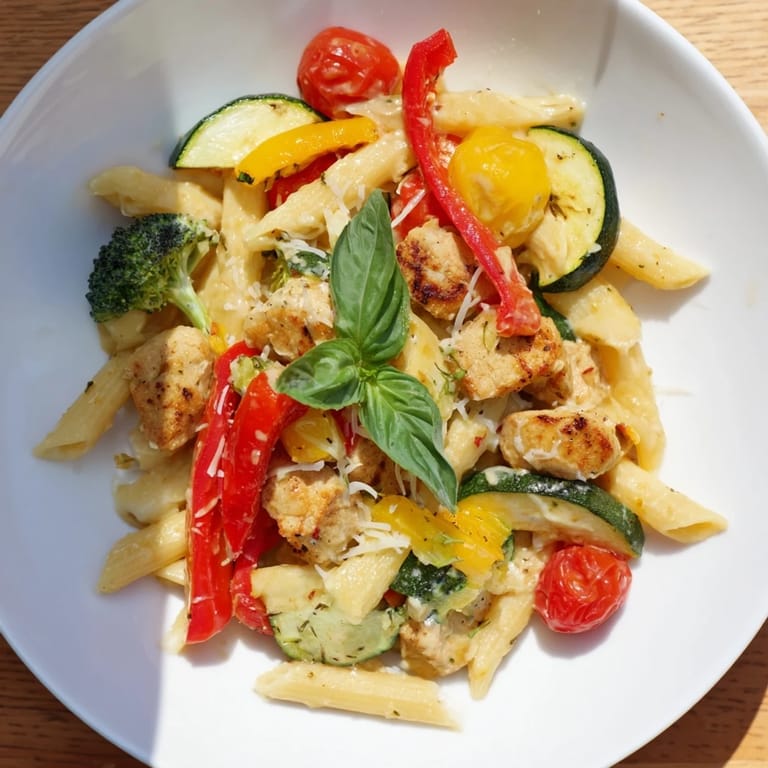
- Pasta, chicken, cream, cheese, and that reserved pasta water make a sauce that coats but doesn't drown. Start with a quarter cup of pasta water and add more if it feels thick; the sauce should move slowly across the bowl, not run.
- Taste and adjust before plating:
- This is the moment that separates good from actually delicious—a pinch of salt or pepper changes everything. Plate while it's hot and finish with basil and more cheese.
 Save
Save My son asked me once why this dish tasted like it took all day when I made it in thirty minutes. I think it's because vegetables at their peak taste like care, and cream makes everything feel intentional. That simple observation stuck with me—food doesn't have to be complicated to feel thoughtful.
Why This Works on a Weeknight
The clock is the real ingredient here. Everything happens on a timeline that actually fits into a real evening—pasta cooks while chicken sears while vegetables soften while cream warms. There's no waiting, no resting, no techniques that make you feel like you're failing. If you keep your knife sharp and your produce cut roughly the same size, you're already winning.
The Vegetable Swap Strategy
Five vegetables sounds rigid but it's actually freeing. The original combination works because you've got sweetness (red pepper, tomato, squash), umami (cherry tomatoes, broccoli), and texture (broccoli firm, squash soft). If you're not a zucchini person, use green beans. No red peppers? Use orange. The idea is that you're building a bowl where no single flavor takes over and colors matter as much as taste.
- Asparagus, snap peas, and mushrooms all fit this formula beautifully.
- Frozen broccoli and peas work fine if fresh feels like too much planning.
- The heavier the vegetable, the sooner it goes into the pan.
Making It Your Own
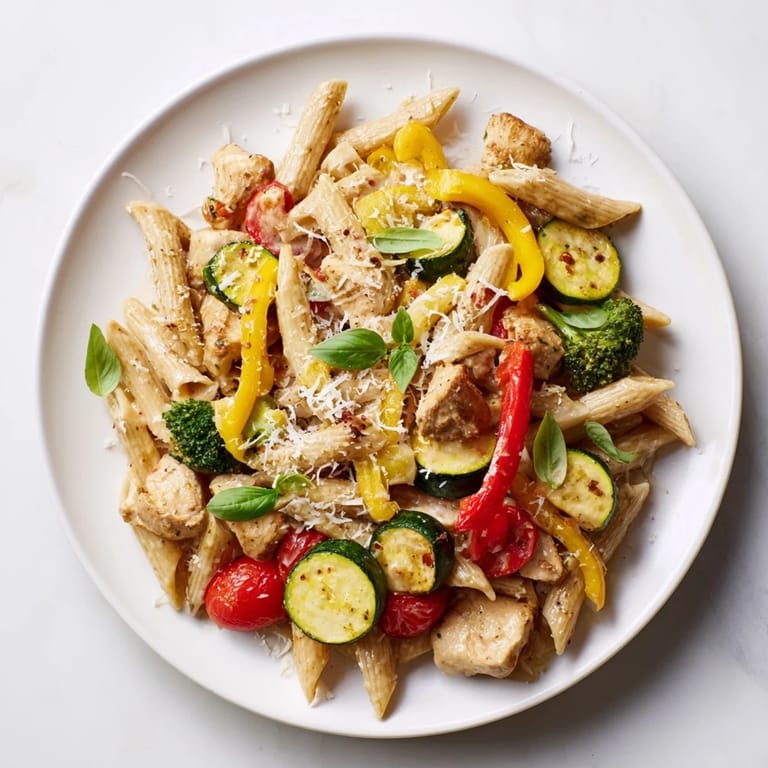
This recipe is a template pretending to be a rule. Tofu works if you want that richness without chicken; chickpeas make it vegetarian and honestly feel substantial in a different way. Whole wheat pasta adds a nuttiness that pairs surprisingly well with cream. The vegetable list is just five things from your market that day. The only non-negotiable is that you finish with basil and good Parmesan, because that's when it stops being dinner and becomes something worth remembering.
- Toast some pine nuts at the end if you want luxury without effort.
- A squeeze of fresh lemon juice right before serving brightens everything.
- If you have mascarpone instead of heavy cream, use it—the texture shifts but it's still beautiful.
 Save
Save This dish proved to me that simple doesn't mean boring, and weeknight doesn't mean settling. Make it exactly as written once, then trust yourself to change it the next time.
Recipe FAQs
- → How can I make this dish vegetarian?
Replace chicken with tofu or chickpeas, and ensure the cheese is vegetarian-friendly. This keeps the dish rich and protein-packed.
- → What pasta types work best in this dish?
Penne or farfalle pasta hold the creamy sauce well, but any short pasta like rigatoni or fusilli can be used.
- → Can I prepare this meal in advance?
You can cook the pasta and vegetables separately ahead of time, then combine and reheat gently to maintain texture and flavor.
- → How do I adjust seasoning for best flavor?
Season chicken with salt and pepper before cooking, then taste the combined dish and add more salt, pepper, or Italian herbs as needed.
- → What beverages pair well with this dish?
A crisp Sauvignon Blanc or sparkling water with lemon complements the bright vegetable flavors and creamy sauce nicely.