 Save
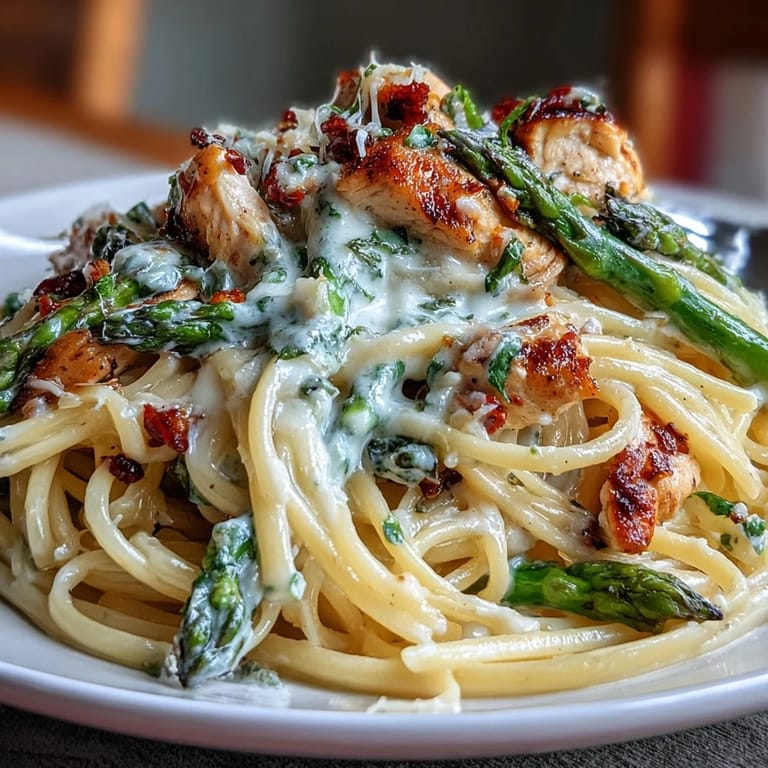
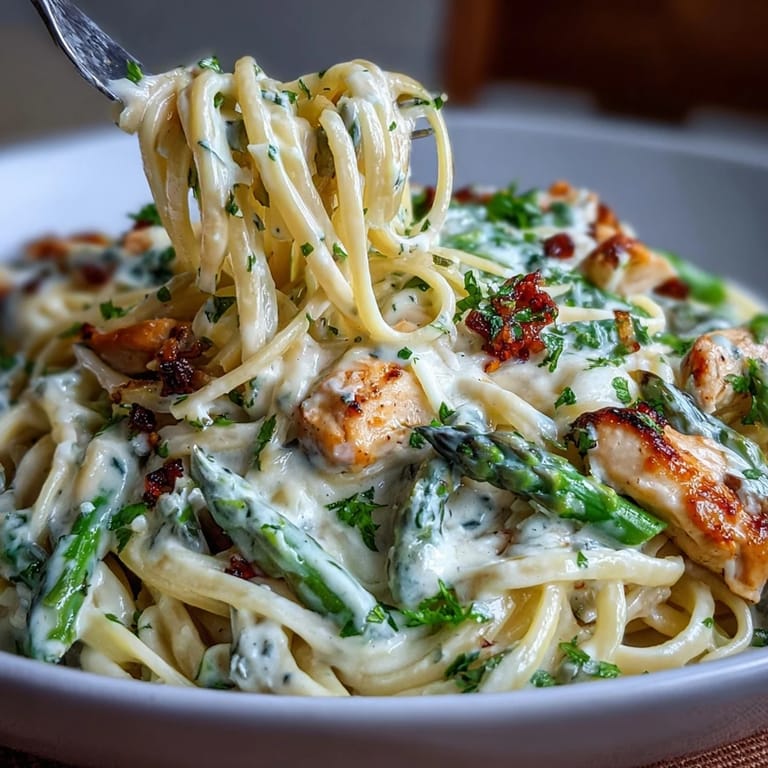
Save There's something about spring evenings that makes me crave pasta with a purpose, and this Creamy Asiago Chicken & Asparagus creation hit that mark perfectly one April when my neighbor dropped off a bundle of fresh asparagus from her garden. I'd been staring at my pantry—heavy cream, good cheese, chicken—and thought, why not roast the asparagus until it's practically golden and crispy, then fold it into something luxurious? That first bite, with the tender pasta catching all that creamy Asiago sauce and the asparagus adding this wonderful textural contrast, felt like I'd finally unlocked a dish that belonged on both weeknight tables and when people were coming over.
I made this for my parents last month, and my dad—who usually just eats what's put in front of him—actually paused mid-bite to ask what made the sauce taste so good. It was such a small moment, but it reminded me that cooking something with intention, with real ingredients treated right, does something to the people sitting at your table. They slow down and actually taste.
Ingredients
- Chicken breasts: Two large ones, cut into manageable bite-sized pieces, cook evenly and stay tender when you don't overcrowd the pan and let them get golden without fussing too much.
- Asparagus: Fresh, trimmed, and cut into 2-inch pieces so each one roasts into a little crispy-edged treasure; if your asparagus feels woody at the base, peel those ends rather than waste them.
- Linguine: 350 grams of it, cooked just to al dente because it finishes cooking slightly in the sauce, so don't let it go soft.
- Asiago cheese: Freshly grated (about 120 grams total), divided so half goes on the asparagus before roasting and half melts into the cream sauce; pre-grated cheese has anti-caking agents that can make your sauce grainy.
- Heavy cream: 180 milliliters, the soul of this sauce, creating that silky coating that makes people close their eyes a little when they eat.
- Butter: One tablespoon, unsalted so you control the salt level and it emulsifies the sauce without adding water.
- Garlic and onion: Two minced cloves and one finely chopped small onion build a flavor base that's gentle enough not to overpower the cheese.
- Olive oil: Two tablespoons total, for cooking the chicken and tossing with the asparagus before roasting.
- Salt, pepper, and optional garnishes: Black pepper freshly ground at the end, maybe lemon zest for brightness, red pepper flakes if you want a whisper of heat.
Tired of Takeout? 🥡
Get 10 meals you can make faster than delivery arrives. Seriously.
One email. No spam. Unsubscribe anytime.
Instructions
- Preheat and prep your asparagus:
- Get your oven to 220°C (425°F) and line a baking sheet with parchment paper so cleanup is easier later. Toss your asparagus pieces with a tablespoon of olive oil, salt, pepper, and half the grated Asiago, then spread them out in a single layer so they get that golden, crispy edges instead of steaming.
- Roast until golden:
- Pop them in the oven for 12 to 15 minutes—you're looking for tender asparagus with crispy, caramelized cheese clinging to the edges. Let them cool just enough to handle, then roughly chop them.
- Start your pasta water:
- While the asparagus roasts, get a large pot of salted water boiling; this is your only window to get the pasta cooking at the right time so everything finishes together.
- Cook the linguine:
- Add linguine once the water's rolling, and cook until al dente—this usually takes about 9 to 10 minutes, but read your package. Before draining, scoop out about 120 milliliters of that starchy pasta water and set it aside; this liquid is magic for loosening the sauce if it gets too thick.
- Sear the chicken:
- While pasta cooks, season your bite-sized chicken pieces with salt and pepper, then heat a tablespoon of olive oil in a large skillet over medium-high heat. Cook the chicken until the outside is golden and the inside is no longer pink, about 5 to 6 minutes—don't stir it constantly, let it develop some color.
- Build the sauce base:
- Once chicken is done, move it to a plate and melt butter in that same skillet over medium heat. Add the chopped onion and let it soften for 2 to 3 minutes until it's translucent, then add the minced garlic and cook just 30 seconds until fragrant but not browned.
- Create the cream sauce:
- Pour in the heavy cream and stir in the remaining grated Asiago, letting it simmer gently for 2 to 3 minutes until the cheese melts completely and the sauce thickens slightly. If it looks too thick, loosen it with a splash of that reserved pasta water.
- Bring it all together:
- Add the drained linguine back to the skillet, along with the cooked chicken and chopped roasted asparagus, and toss everything gently so the sauce coats every strand. Heat it all through for a minute or so, then taste and adjust the seasoning with salt, pepper, maybe a sprinkle of lemon zest or a pinch of red pepper flakes if you want brightness or heat.
- Serve while hot:
- Transfer to plates or a serving dish and garnish with extra grated Asiago or Parmesan if you like, then eat immediately while the pasta is still warm and the asparagus still has its crisp edge.
 Save
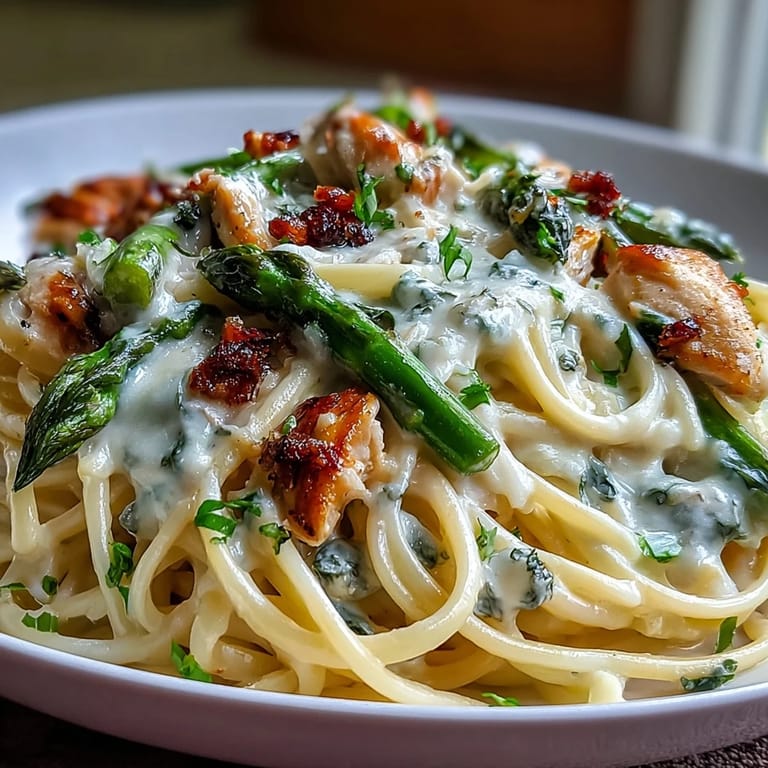
Save What I love most about this dish is how it proves that comfort food and spring freshness aren't opposites. That roasted asparagus with crispy cheese edges against creamy sauce and tender pasta—it made sense in a way I wasn't expecting, like the dish had been waiting all along for someone to try it.
Why Roasting the Asparagus Changes Everything
Roasting the asparagus before it hits the sauce is the move that separates this from just another creamy pasta dish. When you toss it with cheese and let it get golden in the oven, the cheese crisps up and the asparagus develops these caramelized edges that keep their structure even when they're mixed into something as silky as a cream sauce. I learned this the hard way the first time I tried to add raw asparagus to the pan and watched it disappear into softness within minutes—that's when I realized you need to cook some vegetables fully on their own to keep their identity in a dish like this.
Timing So Everything Finishes Together
The secret to this not feeling chaotic is understanding that your asparagus goes in first, then your pasta water starts, then chicken cooks while both are going. It sounds like juggling, but it's really just layering things that all take roughly 15 minutes. I used to try to do everything in sequence and end up with cold pasta waiting for warm sauce, so now I read through the whole recipe first, figure out which pans I need, and actually grab them before I start cooking. It takes two extra minutes but saves the entire meal from falling apart.
Making It Your Own
Once you've made this once, you'll see how flexible it really is. Some nights I add a handful of baby spinach at the very end so it wilts into the sauce, other times I'll throw in a few peas if that's what's in my freezer, and it still works because the Asiago cream is forgiving enough to support whatever vegetable you add. The sauce is also wonderful with a squeeze of fresh lemon zest at the end—it cuts through the richness without making anything taste sour, just brighter.
- If you prefer a lighter version, use half-and-half instead of heavy cream, though the sauce will be a bit thinner.
- Fresh lemon zest added at the very end lifts the whole dish without changing its character.
- Leftovers reheat gently in a low skillet with a splash of pasta water if they've thickened up in the fridge.
 Save
Save This dish is proof that the simplest ingredients, treated with a little care and timing, can taste like you spent hours on it. Make it once and I think it'll find its way back to your table.
Recipe FAQs
- → Can I use a different type of pasta?
Yes, fettuccine, penne, or rigatoni work well with this creamy sauce. Just adjust cooking time according to package directions.
- → What can I substitute for Asiago cheese?
Parmesan, Romano, or aged white cheddar make good alternatives. The flavor profile will shift slightly but still complement the chicken and asparagus.
- → How do I store leftovers?
Keep in an airtight container in the refrigerator for up to 3 days. Reheat gently with a splash of cream or pasta water to restore sauce consistency.
- → Can I make this dairy-free?
Use coconut cream or cashew cream instead of heavy cream, and opt for vegan cheese alternatives. The texture will be slightly different but still enjoyable.
- → Can I add other vegetables?
Peas, baby spinach, or sun-dried tomatoes make excellent additions. Add spinach at the very end to wilt, or peas during the last 2 minutes of cooking.
- → How do I know when the chicken is done?
The internal temperature should reach 165°F (74°C). Cut into a piece to verify it's opaque throughout and no longer pink in the center.