 Save
Save There's something about celery that catches people off guard in soup—most dismiss it as a supporting player, something that belongs in a stock pot and nowhere else. But one quiet Tuesday, I roasted the last bunch in my crisper drawer with butter and herbs, curious what would happen if I actually let it be the star. The kitchen filled with this green, almost perfumy warmth, and by the time I'd added cream and fresh dill, I understood why my grandmother kept a celery plant on her windowsill year-round. This soup tastes like that small moment of discovery.
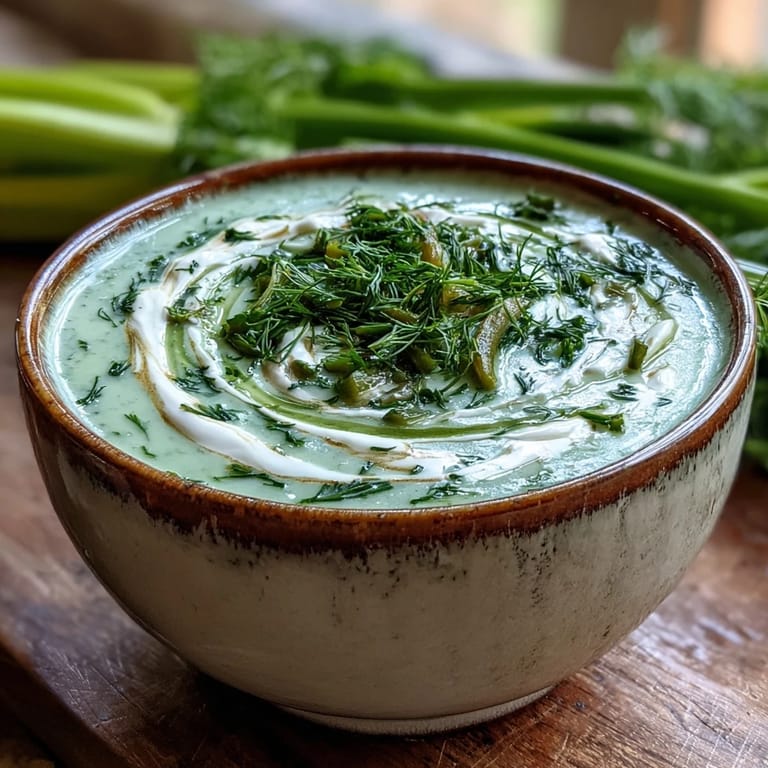
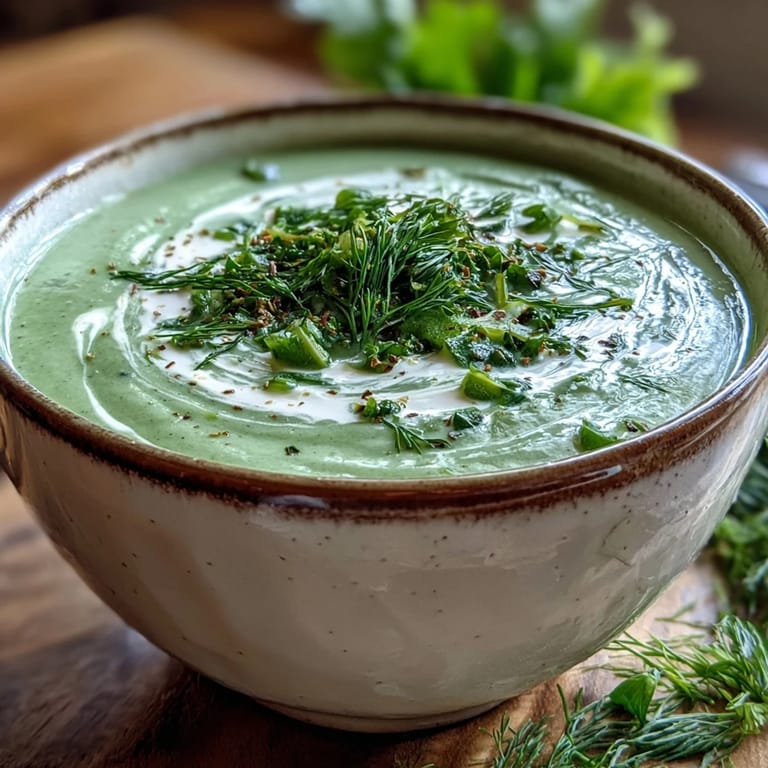
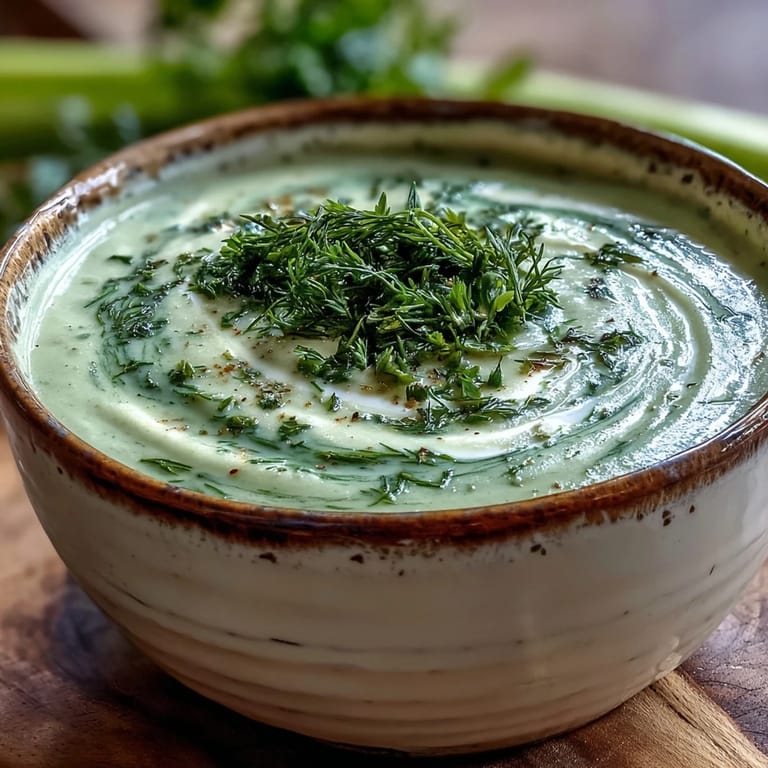
I made this for my sister one winter when she'd been dealing with a rough week and couldn't face heavy food, and she actually asked for seconds. The spoon just moved through it without resistance, and the color—pale green with those dark herb flecks—somehow felt nourishing just looking at it. That's when I knew this wasn't just a recipe, it was something to pull out when people need gentle restoration.
Ingredients
- Unsalted butter (2 tbsp): Unsalted lets the vegetables speak without competing salt, and it browns the onions into sweet submission without burning.
- Medium onion (1, chopped): The foundation of everything good—cook it low enough that it softens instead of coloring, which keeps the soup's delicate personality intact.
- Celery stalks (6, sliced, about 400 g): This is the whole point, so don't skimp or use the tough outer pieces; the tender inner stalks make all the difference in texture and that clean, green flavor.
- Medium potato (1, peeled and diced): The potato is what creates that silky mouthfeel when blended—it's not about potato flavor, it's the structure that makes this soup feel luxurious rather than watery.
- Garlic cloves (2, minced): One minute of cooking with the aromatics is enough; any longer and garlic turns bitter and bossy.
- Vegetable broth (4 cups): Use a broth you'd actually drink on its own—the cheaper stuff with too much salt will overpower the delicate herbs.
- Whole milk or plant-based milk (1 cup): Add this at the end to preserve its creamy texture; boiling it too long creates a slightly grainy finish.
- Bay leaf (1): Fishing this out after cooking prevents any woodsy overpowering, so don't forget this step.
- Fresh parsley (2 tbsp, plus extra for garnish): Use flat-leaf Italian parsley if you can find it—it has more personality than the curly stuff.
- Fresh dill (1 tbsp): This is the secret handshake that makes people ask what the green flavor is; it's cooling and bright, almost medicinal in the best way.
- Fresh chives (1 tbsp): They add a whisper of onion without the bite, so don't cook them—stir them in at the very end.
- Salt and freshly ground black pepper: Taste as you season; the broth already carries salt, so you're fine-tuning, not starting from scratch.
- Heavy cream or crème fraîche (2 tbsp, optional): A swirl transforms this from weeknight dinner to something that feels special, but it's not necessary.
- Crusty bread (for serving): The grease from the bread oil soaking through the crust pairs perfectly with the soup's simplicity.
Tired of Takeout? 🥡
Get 10 meals you can make faster than delivery arrives. Seriously.
One email. No spam. Unsubscribe anytime.
Instructions
- Start with the aromatics:
- Melt butter over medium heat and add your chopped onion, letting it soften for 3–4 minutes until it becomes translucent and sweet-smelling. You want it soft enough to fall apart in the spoon, but still pale—if it's turning golden, your heat is too high.
- Build the vegetable foundation:
- Add the sliced celery and diced potato, stirring occasionally for 5–7 minutes as they begin to relax and release their starches. This step matters; you're not trying to cook them through, just start the softening process so they're ready for the broth.
- Add the garlic moment:
- Stir in minced garlic and let it cook for exactly 1 minute, until the smell becomes almost intoxicating—that's your signal to move forward before it turns harsh.
- The gentle simmer:
- Pour in vegetable broth and tuck in a bay leaf, then bring everything to a simmer, cover, and let it bubble quietly for 15–18 minutes. The vegetables should be so tender they practically dissolve when you press them with a spoon.
- The herb moment:
- Fish out the bay leaf, then stir in the milk and all your fresh herbs—parsley, dill, chives—and let everything warm through for 2 minutes. Don't boil, just warm; milk is delicate and turns grainy if you're too aggressive.
- Blend into smoothness:
- Using an immersion blender directly in the pot, move it slowly through the soup until there are no visible vegetable pieces—it should look like pale green silk. If you're using a countertop blender, work in careful batches to avoid splash-back, and always leave the lid cracked open slightly so steam can escape.
- Final seasoning and heat:
- Return everything to the pot, taste carefully, and adjust salt and pepper until it feels balanced—remember that broth already carries sodium, so you're likely just adding black pepper for snap. Gentle heat brings it back to temperature if needed.
- The finishing flourish:
- Ladle into bowls, swirl in cream or crème fraîche if you've chosen that route, and scatter fresh herb garnish over the top. Serve immediately with crusty bread for dipping.
 Save
Save There was a Sunday afternoon when I served this to friends who weren't expecting much from 'celery soup,' and I watched their faces change with the first spoonful—that moment when something simple and honest wins people over is exactly why I keep making this. It's proof that the best recipes don't need to be complicated, just thoughtfully built.
Making It Your Own
This soup thrives on personalization because the herbs are flexible—if you don't have fresh dill, tarragon brings an almost anise-like warmth that's equally lovely. One night I added a splash of white wine after the vegetables had softened, and it introduced a subtle complexity that made everything taste more refined without calling attention to itself.
Storage and Make-Ahead Strategy
This soup actually improves by a day because the herbs have time to integrate more deeply, so make it ahead for a Wednesday dinner and thank yourself later. Freeze it in portions without the cream so you can pull out exactly what you need—it holds beautifully for up to three months, though I rarely keep it that long.
Variations Worth Trying
A pinch of nutmeg brings warmth and almost tastes like the soup is hugging you from the inside, especially on cold evenings. For a vegan version, swap the butter for plant-based and use coconut or oat milk instead of dairy, and honestly, the results are just as silky and satisfying.
- Try adding a swirl of walnut oil instead of cream for an earthy nuttiness that elevates everything.
- A squeeze of fresh lemon juice stirred in at the end brightens the whole thing if it ever feels too heavy.
- Crispy sage leaves scattered on top add crunch and an herbaceous depth that makes people linger over their bowls.
 Save
Save This soup is a reminder that the simplest ideas, executed with attention and fresh ingredients, can become something you find yourself craving months later. That's the whole philosophy right there—nothing fancy, just honest and generous.
Recipe FAQs
- → What makes this soup creamy without using heavy cream?
The diced potato naturally thickens the soup while creating a smooth, creamy texture when blended. The addition of milk adds richness without overwhelming the delicate celery flavor.
- → Can I make this soup ahead of time?
Absolutely. This soup actually develops deeper flavors when made a day ahead. Store it in the refrigerator for up to 3 days, but add the cream swirl and fresh herb garnish just before serving for the best presentation.
- → How do I prevent the soup from becoming too watery?
Potato is the key here—it provides natural thickening. Also, avoid covering the pot completely while simmering, which allows some liquid to evaporate and concentrate the flavors. If needed, simmer uncovered for an additional 5 minutes.
- → What herbs work best in this soup?
The classic trio of parsley, dill, and chives complements celery beautifully. Fresh herbs are essential here—dried herbs won't provide the same bright, fresh flavor. You can also add tarragon for a subtle anise note.
- → Is this soup suitable for freezing?
Yes, freeze without the cream swirl for up to 3 months. Thaw overnight in the refrigerator, then reheat gently. The texture may change slightly but will still be delicious. Add fresh herbs after reheating.
- → What can I serve alongside this soup?
Crusty bread is perfect for dipping. A simple green salad with vinaigrette balances the richness. For a more substantial meal, pair with a grilled cheese sandwich or a light quiche.