 Save
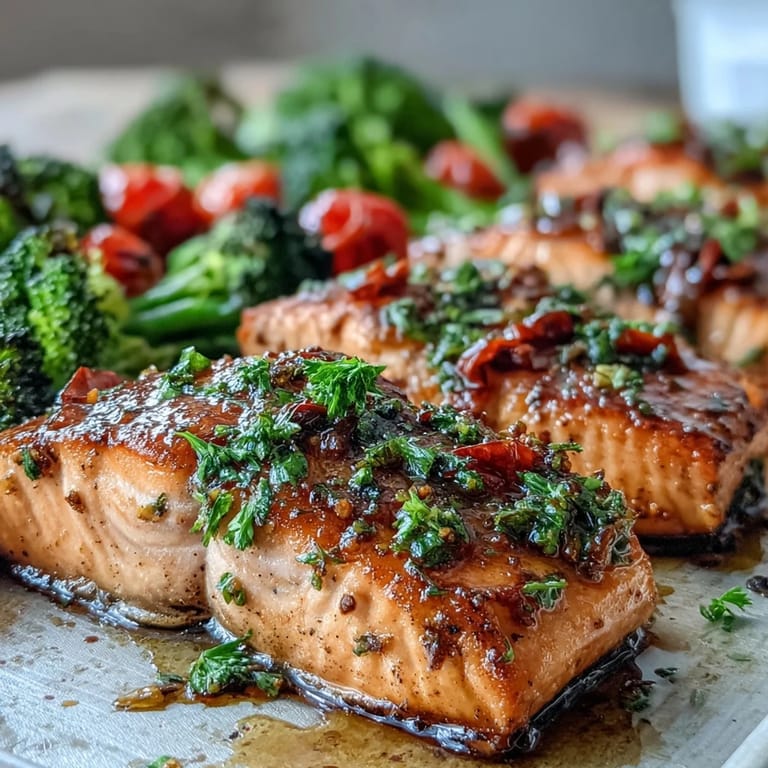
Save There's something magical about the sound of salmon hitting a hot sheet pan, that immediate sizzle that promises dinner will be ready before the evening news ends. I discovered this recipe on a Tuesday when I had exactly fifteen minutes to prep and nothing but what was in my crisper drawer, yet somehow it became the meal my family requests by name now. The Dijon glaze is deceptively simple, but it transforms ordinary salmon into something that tastes restaurant-quality without the pretense or the cleanup nightmare. Roasting everything together means the vegetables absorb all those golden, mustardy drippings while the salmon stays impossibly tender, and there's truly nothing to wash but one pan.
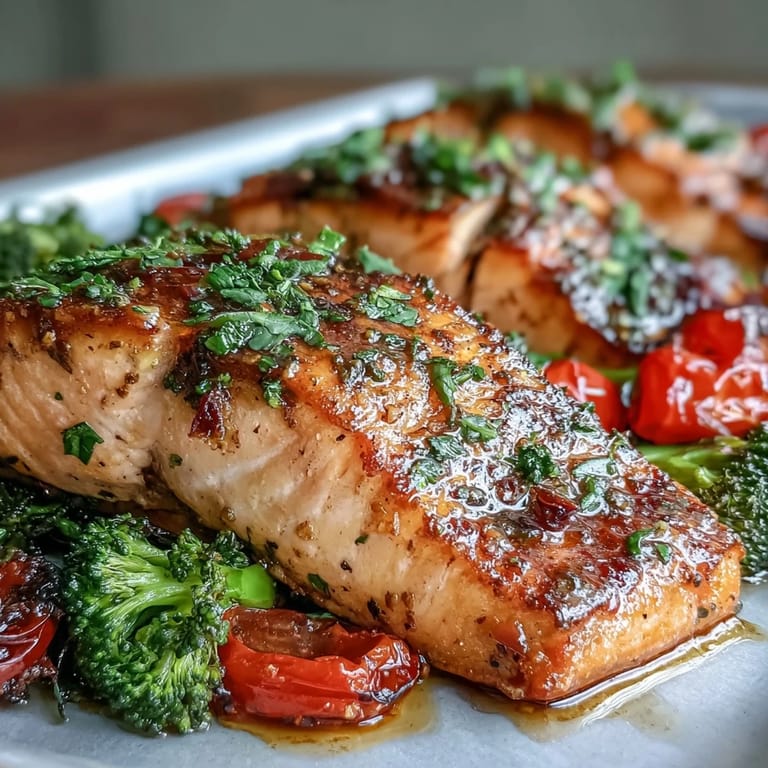
My daughter brought home a friend who claimed to hate vegetables, and I watched this skeptical twelve-year-old eat nearly her entire portion of roasted bell peppers and tomatoes without complaint. When they asked for seconds of the salmon, her mom joked that I'd somehow tricked them into healthy eating, but honestly, the caramelized edges on the broccoli and the way the honey in that glaze catches the light makes vegetables impossible to resist. That's when I realized this dish works magic because it doesn't feel like anyone's forcing wellness onto your plate.
Ingredients
- Salmon fillets: Choose pieces that are roughly the same thickness so they cook evenly, and don't stress about skin-on versus skinless, though skin-on gives you a beautiful crispy exterior if you're up for it.
- Dijon mustard: This is your secret weapon, adding sophistication and tang without any fussiness, and it creates an emulsion with the oil that clings beautifully to the fish.
- Honey: Just a teaspoon rounds out the mustard's sharpness and helps the glaze caramelize into something truly special.
- Lemon juice: Fresh is non-negotiable here because it brightens everything and keeps the dish feeling light.
- Olive oil: You're using it twice, once in the glaze and once for the vegetables, so don't skimp on quality.
- Broccoli florets: Cut them roughly the same size so they finish cooking at the same time as everything else.
- Cherry tomatoes: Halving them prevents them from rolling around and ensures they caramelize properly instead of just steaming.
- Bell pepper and red onion: The pepper adds sweetness and color while the onion mellows as it roasts, creating a subtle background harmony to the salmon's richness.
- Dried Italian herbs: Herbes de Provence works beautifully too if that's what you have, and it makes the whole pan smell like someone who knows what they're doing.
Tired of Takeout? 🥡
Get 10 meals you can make faster than delivery arrives. Seriously.
One email. No spam. Unsubscribe anytime.
Instructions
- Heat your oven and prepare the stage:
- Crank the oven to 220°C and line your sheet pan with parchment paper if you have it, though honestly a lightly oiled pan works just fine. This is your moment to clear a real estate on the pan where the salmon will sit.
- Mix the mustard magic:
- In a small bowl, whisk together the mustard, olive oil, lemon juice, honey, minced garlic, salt, and pepper until it looks emulsified and glossy. Taste it straight from the whisk if you're that person, and adjust the lemon or honey if it feels off to you.
- Arrange and season the vegetables:
- Scatter all your chopped vegetables across the sheet pan, drizzle generously with olive oil, then sprinkle with herbs, salt, and pepper. Toss everything with your hands until each piece glistens, then spread them out so they have space to actually roast instead of steam.
- Nestle in the salmon:
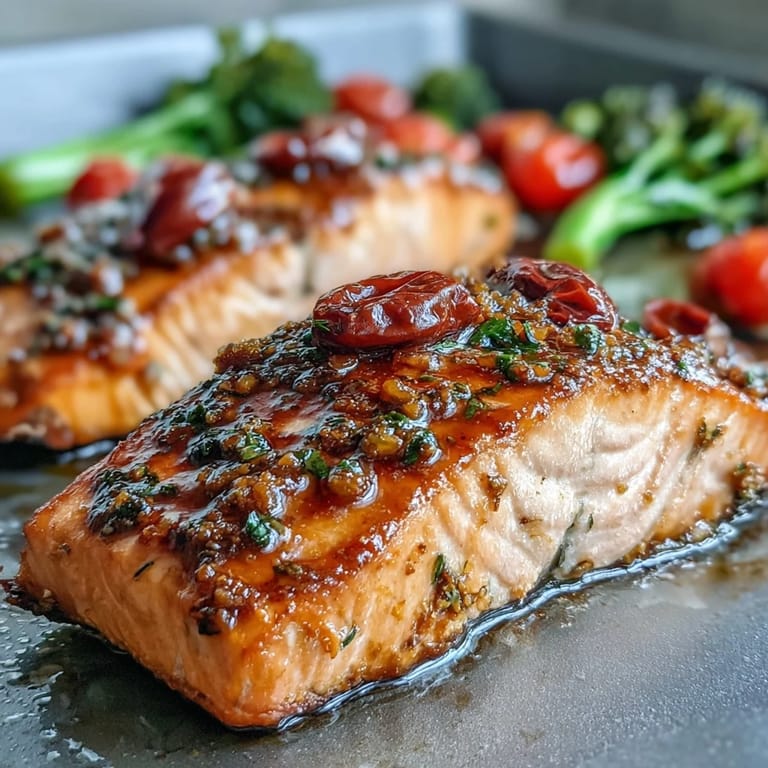
- Place salmon fillets skin-side down among the vegetables, then brush each one with that mustard glaze you made, using most of it. Don't be shy here because the glaze is doing all the heavy lifting flavor-wise.
- Roast until everything sings:
- Slide the pan into your hot oven and set a timer for 20 to 25 minutes, depending on how thick your salmon is. You'll know it's done when the salmon flakes easily and looks opaque, and the vegetables have dark, caramelized edges.
- Finish and serve:
- Pull it from the oven and let it rest for exactly one minute while you squeeze lemon wedges and maybe tear some fresh parsley if you have it. Serve immediately while the salmon is still warm and the vegetables are at their peak.
 Save
Save Last spring, I made this for my neighbor who'd just come home from the hospital, and she cried because it tasted like someone was taking care of her. That's when I understood that feeding people well is its own kind of language, one that says I see you and you matter enough for me to spend forty minutes making something real.
The Science of the Glaze
That mustard glaze works because the emulsion created when you whisk the oil into the mustard helps it stay on the salmon instead of sliding off into the pan. The honey adds subtle sweetness that balances the mustard's sharpness, while the acid from the lemon juice keeps everything bright and prevents the flavors from feeling heavy. Combined with heat, this creates a thin coating that caramelizes and turns golden brown, which honestly is where most of the flavor magic happens.
Timing and Temperature Matter
I learned the hard way that a crowded sheet pan is a steamed vegetable pan, so spacing things out means you get actual caramelization instead of just soft, sad vegetables. The high oven temperature is intentional because it creates those beautiful browned edges that taste infinitely better than pale roasted vegetables. Start checking for doneness around the twenty-minute mark because salmon continues cooking slightly after it comes out of the oven, and you want it tender, not dry.
Why This Becomes Your Go-To Meal
Once you make this twice, you'll realize you can swap vegetables based on what you have or what's in season, which means it never feels repetitive even though you're making it constantly. The glaze works on any firm white fish too, so you can stretch your seafood budget by using cod or halibut when salmon's out of reach. Best of all, it's the kind of meal that makes you feel accomplished without requiring any actual fancy cooking skills, just good timing and honest ingredients.
- Leftover salmon flakes beautifully into grain bowls the next day for lunch.
- Make the glaze up to four hours ahead and keep it in the fridge so weeknight dinner prep is truly just chopping and roasting.
- This meal pairs perfectly with a simple salad or crusty bread if you want something more substantial on the plate.
 Save
Save This recipe became my answer to the question nobody asks but everyone needs answered, which is how to make dinner that's both impressive and easy. Once you taste it, you'll understand why.
Recipe FAQs
- → Can I use skinless salmon fillets for this dish?
Yes, skinless salmon works well. Skin-on helps keep fillets moist, but either option suits the roasting method.
- → What vegetables can I substitute for broccoli?
Asparagus or green beans are excellent alternatives that roast well alongside the salmon and other vegetables.
- → How do I know when the salmon is cooked properly?
The salmon is done when it flakes easily with a fork and turns opaque throughout, usually after 20–25 minutes at 220°C (425°F).
- → Can I prepare the Dijon glaze ahead of time?
Absolutely. The glaze can be mixed in advance and stored in the fridge for up to a day to enhance flavors.
- → What wine pairs best with this roasted salmon and vegetables?
A crisp Sauvignon Blanc or unoaked Chardonnay complements the tangy glaze and roasted flavors nicely.