 Save
Save I remember the first time I assembled a proper cheese and chocolate board, I was nervous that pairing them together seemed too bold. But then I tasted it by the fire one winter evening, and something clicked. The dark chocolate's bitterness against the sharp edge of aged cheddar, the way the creamy blue cheese softened the cocoa's intensity—it felt like discovering a secret language the cheeses and chocolate had been speaking all along. Now whenever the weather turns cold and the fireplace calls, this platter is what I reach for.
I'll never forget my friend Sarah's face when she realized the chocolate-dipped figs and aged gouda were meant to go together. She'd been eating them separately, and then tried them as a pair, and just closed her eyes. That's when I knew this platter had become something special in our kitchen traditions.
Ingredients
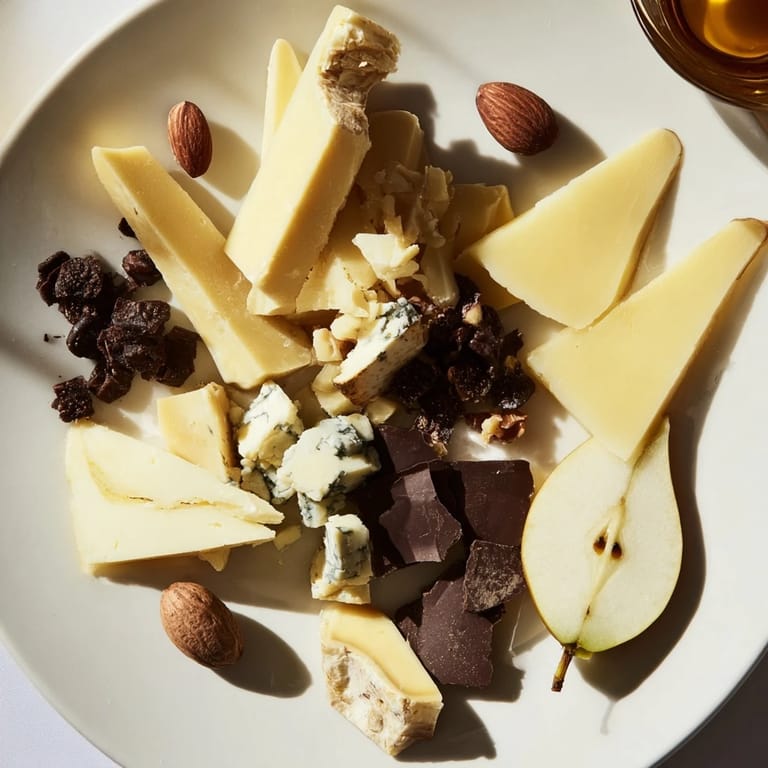
- Aged cheddar, 200 g, cut into large irregular chunks: Look for a cheddar that's been aged at least 18 months—the crystals that crunch between your teeth are flavor that time has built. Cut it rough and generous; those irregular edges catch the light and feel substantial on the board
- Aged gouda, 150 g, broken into wedges: Gouda has this creamy sweetness that becomes almost caramel-like when aged. Break it by hand rather than slicing it; the jagged surfaces hold honey better
- Blue cheese, 150 g, crumbled or chunked: The sharp, almost peppery notes of blue cheese are what make the dark chocolate shine. Don't be shy with it
- Dark chocolate, 70% cocoa or higher, 120 g, broken into pieces: Higher cocoa percentage means less sugar, which lets you taste the chocolate's actual complexity. Break it into varied sizes—some small pieces for nibbling, some larger chunks to really let melt on your tongue
- Chocolate-covered almonds, 100 g: The nuttiness underneath the chocolate coating creates texture and prevents the platter from feeling one-note
- Chocolate-dipped dried figs, 80 g: These are your secret weapon. The figs' natural sweetness wrapped in chocolate becomes almost luxurious against the sharp cheeses
- Chocolate truffles, 60 g: Use ones you actually love; this is where quality matters most since people will eat them plain
- Baguette, 1 small, sliced: Slice it the day of, or at least the morning of. Stale bread can't carry the weight of good cheese
- Roasted walnuts or pecans, 80 g: The oils in roasted nuts carry their own subtle sweetness that bridges cheese and chocolate beautifully
- Pear, 1, sliced: Slice just before serving so it doesn't brown. Pears have this subtle floral quality that chocolate respects
- Apple, 1, sliced: Choose a crisp variety. The tartness cuts through the richness and keeps your palate awake
- Honey, 2 tbsp: Serve it in a small bowl for dipping. Warm it gently if you're serving by the fire; cold honey feels stingy somehow
- Whole milk, 500 ml for cocoa: Full-fat milk makes the difference. Skim milk can't carry the chocolate's flavor the way whole milk can
- Dark chocolate, 100 g, chopped for cocoa: Use the same quality chocolate as your board if possible. Consistency matters when you're drinking something
- Unsweetened cocoa powder, 1 tbsp: This deepens the chocolate flavor without adding sugar. Don't skip it
- Sugar, 1 tbsp: Start here and taste as you go. The chocolate contributes sweetness, so you might not need more
- Salt, pinch: A tiny amount makes chocolate taste more like itself, more intense
- Vanilla extract, 1/2 tsp: Added at the end, off heat, so it doesn't cook away. Vanilla is chocolate's quiet partner
- Whipped cream and shaved chocolate, optional but I always use them: The cream cools the cocoa just enough to make it last longer, and shaved chocolate gives you something beautiful to look at while you drink
Tired of Takeout? 🥡
Get 10 meals you can make faster than delivery arrives. Seriously.
One email. No spam. Unsubscribe anytime.
Instructions
- Start with your canvas:
- Lay out your large wooden board or platter in front of you. Wood is important—it's warm and it's what people expect for this kind of gathering. If you don't have wood, ceramic works, but avoid glass if you can; this meal is about warmth
- Build the cheese foundation:
- Arrange your three cheeses on the board with generosity and a little chaos. Put the cheddar in one area, the gouda in another, the blue cheese somewhere that feels balanced. Don't arrange them in lines or patterns—let them fall where they look good. The irregularity is part of the charm. These chunks should feel substantial enough that people can build themselves proper bites
- Add the chocolate elements:
- Scatter your dark chocolate pieces among the cheeses, then add the chocolate-covered almonds, dipped figs, and truffles. Think about colors and textures as you place them. You want someone's eye to travel around the board and find surprises. The chocolate pieces should look like they belong there, not like an afterthought
- Fill the spaces with life:
- Arrange your baguette slices so they're leaning slightly, not lying flat. They're more inviting that way. Add your nuts in a small pile—they feel generous in clusters. Scatter the apple and pear slices right before serving so they stay fresh and bright. Pour honey into a small bowl and set it where people can reach it easily
- Heat the milk gently:
- Pour your whole milk into a saucepan and set it over medium heat. You want to see small wisps of steam rising, hear tiny bubbles at the edge—it should feel hot in your hand if you carefully touch the outside of the pan, but not aggressively boiling. This is the temperature where chocolate melts silkily instead of seizing up
- Create the cocoa magic:
- Add your chopped dark chocolate, unsweetened cocoa powder, sugar, and a tiny pinch of salt to the hot milk. Pick up your whisk and start moving it through the mixture with intention. Watch the chocolate pieces soften and disappear into the milk. Keep whisking until you don't see any cocoa powder lumps—they have a way of hiding in corners. The mixture should smell intense and look like liquid velvet
- Finish with grace:
- Remove the saucepan from heat and let it cool for maybe 10 seconds. Then stir in your vanilla extract. This timing matters because vanilla is delicate and heat steals its perfume. If you're using whipped cream and shaved chocolate for topping, have them ready in small bowls nearby
- Pour and present:
- Pour your hot cocoa into mugs—ceramic ones if you have them, so people can warm their hands around them. If you're adding whipped cream, add just a small dollop so people can see the cocoa underneath. Shave chocolate over the top with a microplane or vegetable peeler, creating those thin curls that look more intentional than a sprinkle
- Bring it all together:
- Set the board and the mugs on a table where people can reach both comfortably. The board is for lingering and exploring, the cocoa is for wrapping your hands around between bites. Light the fire if you can. If not, candlelight works beautifully too
 Save
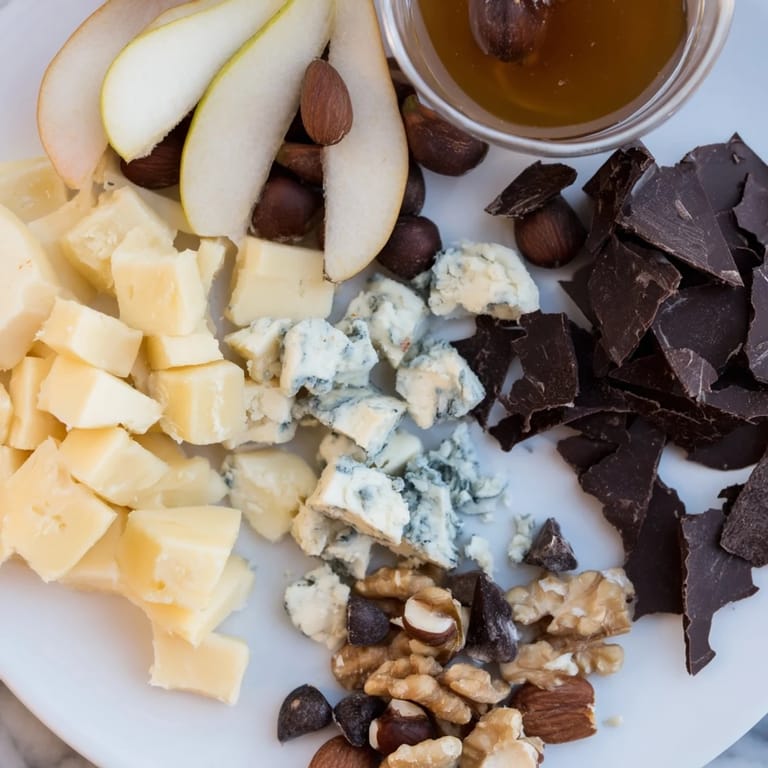
Save There's a particular magic that happens when people slow down around a board like this. Someone will pick up the pear and blue cheese together, taste it, then call someone else over to try it. The board becomes a conversation, and the cocoa keeps everyone's hands warm while the fire does the rest.
The Art of Pairing Chocolate and Cheese
The reason this platter works is because chocolate and cheese speak the same language—they're both fermented, complex, full of subtle notes that wake up your palate in different ways. The trick is understanding what each cheese wants from chocolate. Your sharp cheddar almost demands the intensity of 70% cocoa; they're both bold and they respect each other. The creamy gouda wants something that complements its natural sweetness, which is why the dark chocolate works instead of milk chocolate. And the blue cheese? It wants chocolate to gentle it, to round off its edges a bit. When you taste them together, you understand why they were meant to meet on the same board.
Why This Became Our Winter Ritual
This platter became something we reach for every winter because it gives you permission to slow down. You're not making a meal, you're not baking something that requires precision. You're just arranging beautiful things and making hot chocolate. Everyone comes together naturally, and the board becomes an excuse to sit longer, talk more, taste more carefully. It's one of those recipes that's less about following steps and more about creating a moment.
Making This Your Own
The beauty of a platter like this is that it's a template, not a rulebook. If you have a favorite aged cheese that isn't on this list, use it—just make sure it's something you'd eat happily on its own, because that's the foundation everything else builds on. Same with the chocolate; if you prefer 85% cocoa or you have truffles from somewhere special, honor that preference. The additions are where your kitchen personality shows through. I've added dried apricots instead of figs, toasted hazelnuts instead of walnuts, even a wedge of smoked cheddar when I wanted something different. The only things that stay constant in my version are the aged gouda, the dark chocolate above 70%, and the hot cocoa. Those three elements are what make it feel like itself.
- If you want to make this more substantial, add cured meats—prosciutto or salami draped casually around the board creates pockets of salty richness
- Dried cherries or apricots work beautifully alongside the chocolate if figs aren't your thing, and they'll catch light the same way
- A small jar of whole grain mustard or fig jam changes everything if someone wants something tart or structured to build bites with
 Save
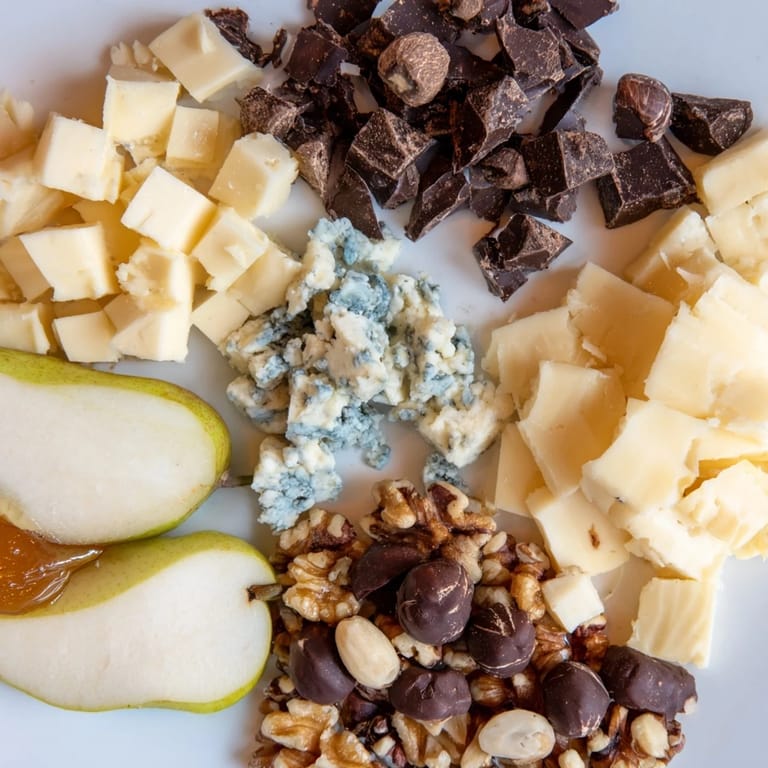
Save This platter is an invitation to taste deliberately and sit longer. Every bite is a small discovery, and the cocoa warming your hands between bites is part of the whole beautiful thing.
Recipe FAQs
- → What cheeses work best for this platter?
Aged cheddar, gouda, and blue cheese provide a variety of intense, robust flavors and textures that complement the chocolate and other accompaniments well.
- → Can I customize the chocolate selection?
Absolutely. Feel free to substitute with your preferred dark chocolate varieties or add dried fruits covered in chocolate for added sweetness and texture.
- → Is there a gluten-free option?
Yes, replace the sliced baguette with gluten-free bread or crackers to accommodate gluten-free diets while maintaining the platter’s rustic feel.
- → How is the hot cocoa made smooth and rich?
Heating whole milk gently and whisking in chopped dark chocolate along with cocoa powder and sugar creates a creamy base. A touch of vanilla enhances the flavor without overpowering.
- → What nuts pair well with this platter?
Roasted walnuts or pecans add a crunchy, earthy element that balances the richness of cheeses and chocolate on the board.