 Save
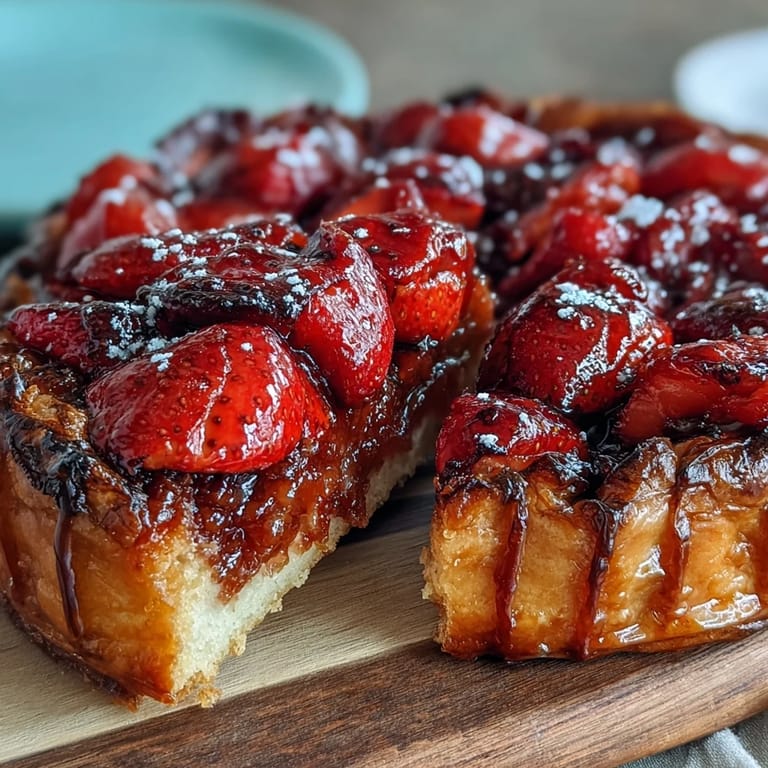
Save My neighbor brought over a strawberry galette one June afternoon, and I watched her unfold it like she was revealing a secret. The pastry crackled, steam rose from the filling, and suddenly I understood why the French had perfected the art of looking effortless while doing something rather brilliant. That rustic edge, those golden pleats catching the light—it felt achievable in a way that fussy desserts never do. I made my own that weekend and haven't stopped since.
I brought one to a potluck during a heatwave, worried the filling would be too soft and the pastry would wilt in the car. Instead, it held its dignity beautifully, and three people asked for the recipe before dessert was even finished. That's when I realized this galette isn't just a recipe—it's a confidence builder disguised as fruit and butter.
Ingredients
- All-purpose flour: The foundation of your pastry, and keeping it cold is the secret to those delicate, flaky layers.
- Cold unsalted butter: Don't skip the cold part—it's what creates those tiny pockets of steam that make the crust shatter when you bite into it.
- Ice water: Add it gradually and you'll feel the exact moment the dough decides to cooperate, usually around 3 tablespoons.
- Almond flour: This is what elevates the galette from simple to sophisticated, providing a subtle nuttiness that plays beautifully with fresh strawberries.
- Fresh strawberries: Choose ones that smell sweet—if they don't smell like much, they won't taste like much either.
- Cornstarch: A small amount thickens the filling just enough so it doesn't leak all over your oven, but not so much that it becomes gluey.
- Lemon juice: Brings brightness to the strawberries and keeps them from tasting one-dimensional.
- Coarse sugar: For sprinkling on top, it gives you those satisfying crunchy bits in every bite.
Tired of Takeout? 🥡
Get 10 meals you can make faster than delivery arrives. Seriously.
One email. No spam. Unsubscribe anytime.
Instructions
- Make the pastry dough:
- Combine your flour, sugar, and salt in a bowl, then cut in the cold butter until it looks like coarse breadcrumbs—some people say sand, but I think it's more like the texture of wet gravel. Add ice water one tablespoon at a time, stirring gently until the dough just barely holds together, then shape it into a disk, wrap it, and let it chill for at least thirty minutes.
- Blend the almond filling:
- Cream together the almond flour, sugar, and softened butter until it's pale and fluffy, then mix in the egg, vanilla, and almond extract until you have a smooth, spreadable paste. This is your secret weapon—it adds richness and prevents the filling from being watery.
- Prepare the strawberry mixture:
- Toss your sliced strawberries with sugar, cornstarch, and lemon juice, then let them sit for a few minutes so they release just a little juice without becoming soggy.
- Preheat and prepare:
- Heat your oven to 400°F and line a baking sheet with parchment paper so cleanup becomes a joy instead of a chore.
- Roll out the pastry:
- On a lightly floured surface, roll your chilled dough into a twelve-inch circle—it doesn't need to be perfect, in fact, the imperfections are half the charm. Transfer it carefully to your prepared baking sheet.
- Spread the frangipane:
- Spoon the almond mixture evenly over the center of the dough, leaving about two inches of bare pastry around the edges so you have something to fold up.
- Arrange the strawberries:
- Layer your strawberries over the almond filling in whatever pattern feels right—concentric circles look pretty, but honestly, casual piling works just fine too.
- Create the rustic edge:
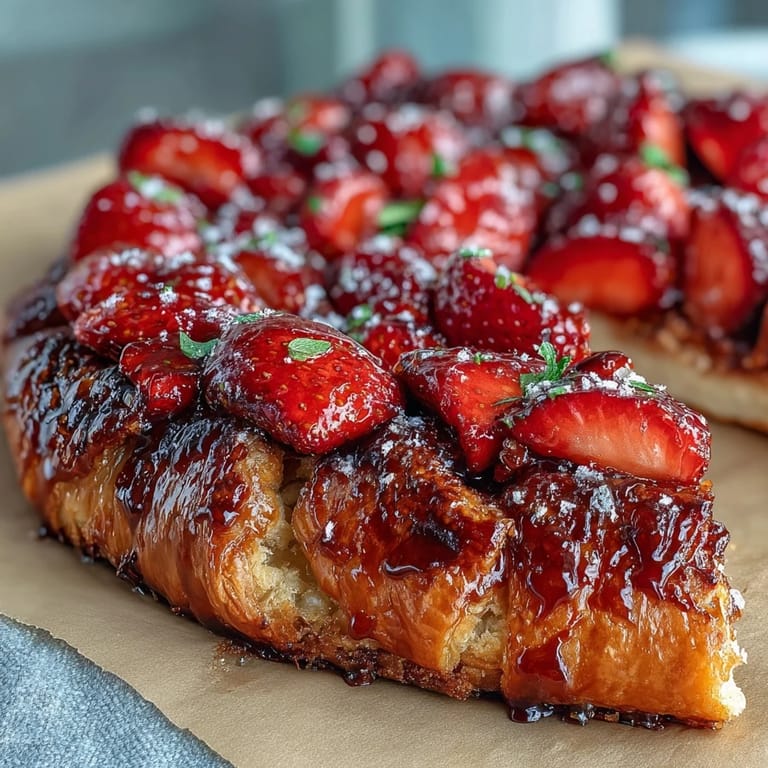
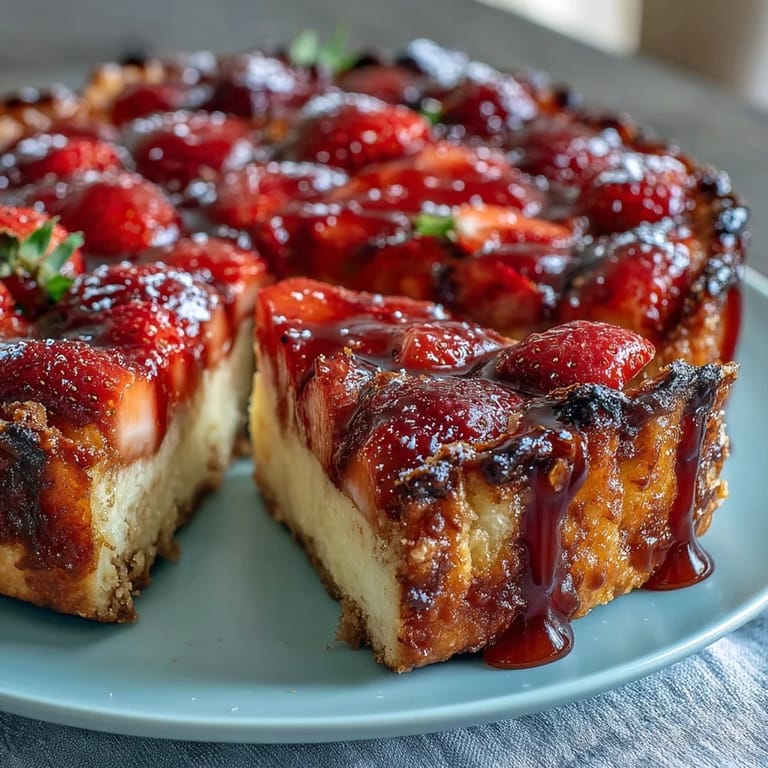
- Fold the pastry edges up and over the filling, pleating as you go and leaving the center exposed so you can see those beautiful strawberries. Brush the exposed pastry with milk or cream and sprinkle it generously with coarse sugar for that golden, crunchy exterior.
- Bake to golden perfection:
- Bake for thirty-five to forty minutes until the crust is deep golden brown and you can see the filling bubbling slightly at the edges. Your kitchen will smell absolutely incredible—that's how you know you're doing it right.
- Cool and serve:
- Let it cool for just a few minutes before slicing so it holds together, but serve it still warm if you can because the contrast between the flaky pastry and soft, jammy strawberries is absolutely magical.
 Save
Save One evening, my daughter declared it was "fancy enough for fancy people but easy enough for regular people," which I think might be the highest compliment this recipe will ever receive. That's the moment I knew it had become more than just a dessert—it was proof that beautiful things don't require perfection, just intention and decent ingredients.
Why This French Classic Works in Any Kitchen
Galettes are forgiving by design—the rustic aesthetic celebrates imperfection rather than punishing it. A crooked pastry edge becomes charming, not a failure, and any unevenness in filling distribution just means some bites are extra fruity and others are extra nutty. This is genuinely a recipe where your mistakes become features.
Timing and Temperature Matter More Than You Think
The temperature of your ingredients directly affects how the pastry behaves, and I learned this the hard way on a summer day when my butter softened before I could even mix it in. Cold butter creates steam pockets, warm butter creates hockey pucks. The oven temperature is equally important—too low and you get a soggy crust, too high and the edges burn before the center cooks. Four hundred degrees is the sweet spot where pastry and filling finish together, golden and perfect.
Variations and Next Steps
Once you've made this with strawberries, you'll realize it's a template for any season—raspberries and blackberries in late summer, peaches in August, even pears in autumn with a drizzle of honey instead of lemon juice. The frangipane stays the same, which is comforting, and only the fruit changes. You could also skip the almond filling entirely and spread a thin layer of jam for a quicker version that's just as lovely.
- Try brushing the pastry with an egg wash instead of milk for an even shinier, more dramatic golden finish.
- A tiny pinch of cardamom in the frangipane adds an unexpected warmth that makes people ask what they're tasting.
- Serve warm with a dollop of whipped cream or vanilla ice cream to turn it into an occasion.
 Save
Save This galette proves that home cooking doesn't require precision or complicated techniques—just good ingredients, a little time, and the confidence to let something beautiful be imperfectly yours. Once you make one, you'll find yourself making them again and again, each time remembering why simple desserts are sometimes the most memorable.
Recipe FAQs
- → What type of flour is used for the pastry?
All-purpose flour is used to create a tender yet sturdy pastry base.
- → Can I substitute the almond frangipane for a nut-free option?
Yes, omitting frangipane and spreading a thin layer of jam works well for a nut-free alternative.
- → How do I keep the pastry crisp after baking?
Ensuring the pastry is chilled before baking and baking until golden helps maintain a crisp texture.
- → What is the purpose of cornstarch in the strawberry filling?
Cornstarch thickens the strawberry juices during baking, preventing a soggy crust.
- → Can other fruits be used instead of strawberries?
Yes, berries or stone fruits work well as alternatives for varied flavors.