 Save
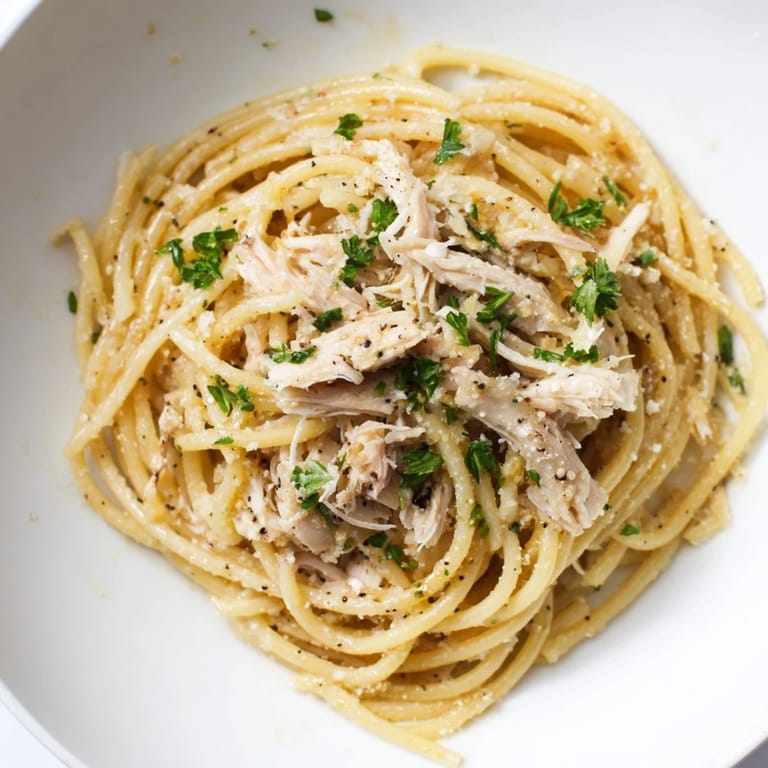
Save There's something about the smell of butter hitting a hot pan that stops me mid-thought every time. I discovered this dish on a Tuesday night when I had nothing but pasta, garlic, and leftover rotisserie chicken staring back at me from the fridge. No fancy tricks, no long ingredient list—just the kind of meal that reminds you why simple cooking often tastes the best. The bucatini catches every bit of that golden garlic butter, and somehow it feels both casual and special at once.
I made this for a friend who showed up hungry and skeptical about how pasta, butter, and garlic could possibly be enough. Watching her twirl that first forkful and then go quiet—that quiet where you know someone's tasting something honest—made the whole thing worth it. She asked for the recipe before she'd even finished her plate, which told me everything.
Ingredients
- Bucatini pasta (200 g): The hollow center means sauce coats both inside and out—it's why this pasta shape matters here more than you'd think.
- Unsalted butter (3 tbsp): Use real butter, not the margarine cousin; it's the whole point and where you can taste the difference.
- Garlic cloves (3 large, minced): The finer you mince, the more evenly it distributes and the less likely you'll hit a sharp chunk.
- Cooked shredded chicken (200 g): Rotisserie chicken saves time, but poached works beautifully if you want to control the seasoning yourself.
- Salt and black pepper: Taste as you go; this dish is naked enough that oversalting shows immediately.
- Fresh parsley (1 tbsp, optional): A small handful of green cuts through the richness and makes it feel finished.
Tired of Takeout? 🥡
Get 10 meals you can make faster than delivery arrives. Seriously.
One email. No spam. Unsubscribe anytime.
Instructions
- Set the water going:
- Fill a large pot with salted water—it should taste like the sea—and bring it to a rolling boil. This is the only seasoning the pasta itself gets, so don't skip this step.
- Cook the bucatini:
- Add pasta and stir it once or twice in the first minute so strands don't stick. Check the package time but start testing a minute before; you want it to have a slight bite when you pull it from the water. Reserve a quarter-cup of pasta water before draining—that starchy liquid is your secret insurance.
- Build the garlic butter:
- Melt butter in a large skillet over medium heat and watch it carefully. Add your minced garlic and let it sizzle for about a minute until it becomes fragrant and golden; this is where the magic lives, but one extra minute and it turns bitter, so stay close.
- Bring it together:
- Add the drained bucatini directly to the skillet and toss with tongs so every strand gets coated in that golden butter. If it looks too dry, splash in a bit of that reserved pasta water and keep tossing until it looks glossy and loose.
- Season and plate:
- Taste first, then add salt and pepper knowing you're seasoning something delicate. Divide between plates, top with chicken, scatter parsley across if you have it, and serve while it's still warm.
 Save
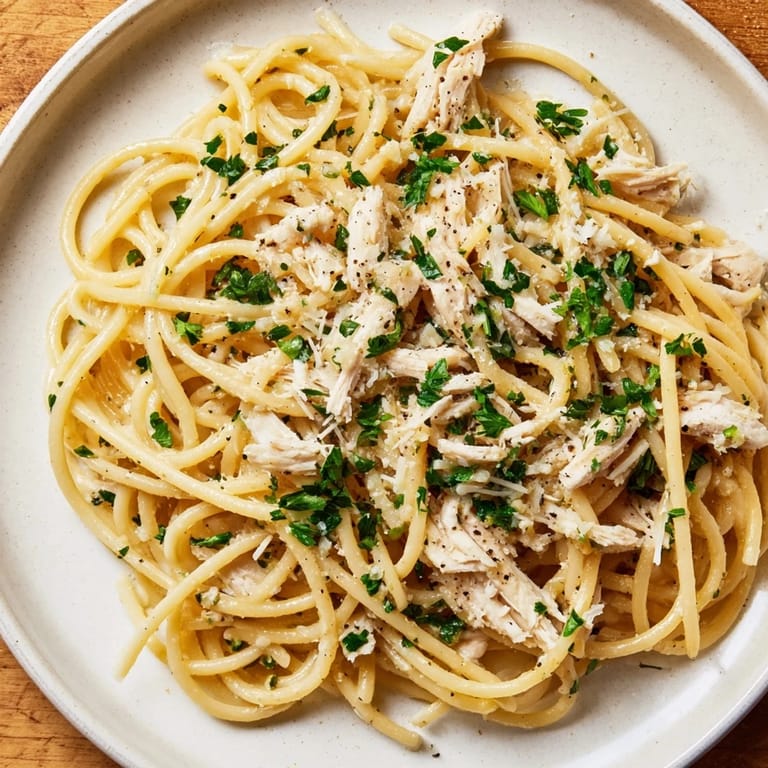
Save The first time someone told me this was their favorite pasta, I was honestly surprised. Then they explained it was because it never felt like a compromise—it was exactly what they wanted, nothing fussy, nothing pretending to be more than it was. That's when I realized the real skill in cooking isn't complexity; it's knowing when to stop.
Why Simplicity Works
When you strip away everything except butter, garlic, and pasta, you notice things you'd normally gloss over. The way fresh butter smells different from the kind that's been sitting open. How each type of pasta absorbs sauce at its own rhythm. You start understanding your ingredients instead of just following steps. This dish teaches you to listen to what's happening in the pan rather than watching the clock.
Timing and Temperature Matter
The biggest mistake I made early on was trying to do everything at once. Now I melt the butter and start the garlic about the time the pasta water reaches a boil; by then the garlic is ready when the pasta is drained. Temperature-wise, medium heat keeps things steady and forgiving. Too high and garlic scorches; too low and butter just sits there. Finding that middle ground makes the difference between a dish that tastes effortless and one that tastes rushed.
Making It Your Own
This recipe is a canvas more than a rulebook. I've made it on nights when I crumble chili flakes over the top for heat, or squeeze lemon juice in at the end for brightness. Sometimes I stir in roasted mushrooms instead of chicken, and it becomes something entirely different but equally true. The point is that once you understand how these basic elements work together, you can play with them.
- A whisper of red pepper flakes added to the butter takes it in a spicier direction without overwhelming the garlic.
- Fresh lemon juice added just before serving brightens everything and cuts through the richness perfectly.
- Torn fresh basil instead of parsley gives it an almost summery feel if you're in the mood for that.
 Save
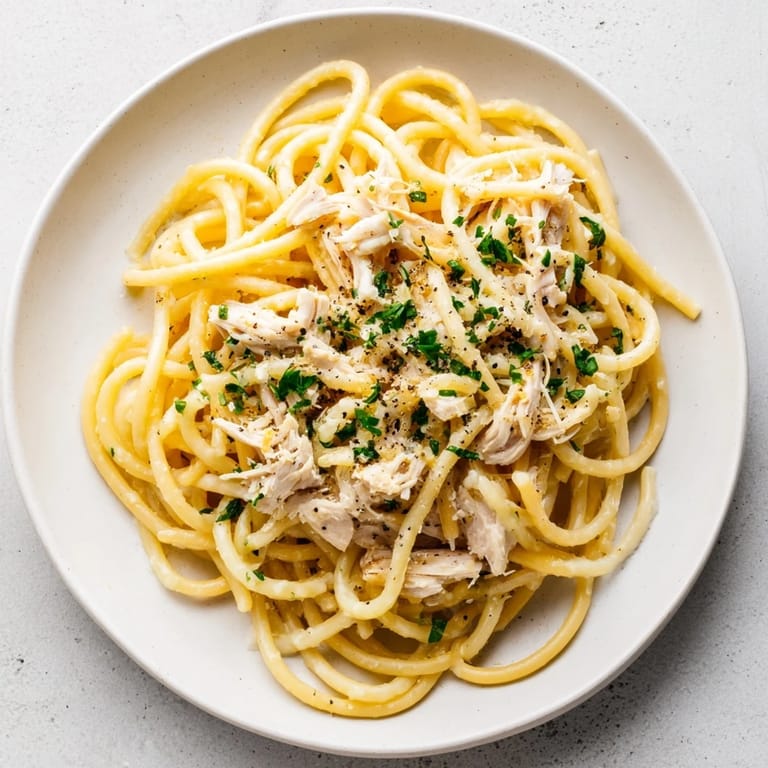
Save This is the kind of dish that reminds you why you cook in the first place. Simple, honest, and ready whenever you need it.
Recipe FAQs
- → How can I prevent the garlic from burning?
Sauté garlic over medium heat for 1–2 minutes until fragrant, stirring continuously to avoid browning which causes bitterness.
- → What pasta water ratio works best to loosen the sauce?
Reserve about ¼ cup of pasta water; add gradually to the skillet to reach a silky consistency without making the sauce watery.
- → Can I substitute the shredded chicken with something else?
For a vegetarian option, roasted mushrooms or sautéed vegetables provide a delicious alternative to shredded chicken.
- → What is the ideal pasta cooking time?
Cook bucatini until al dente, generally about 9-11 minutes, depending on package instructions, ensuring a firm yet tender bite.
- → How can I enhance the flavor of this dish?
Add a pinch of chili flakes or a squeeze of fresh lemon juice right before serving for added depth and brightness.