 Save
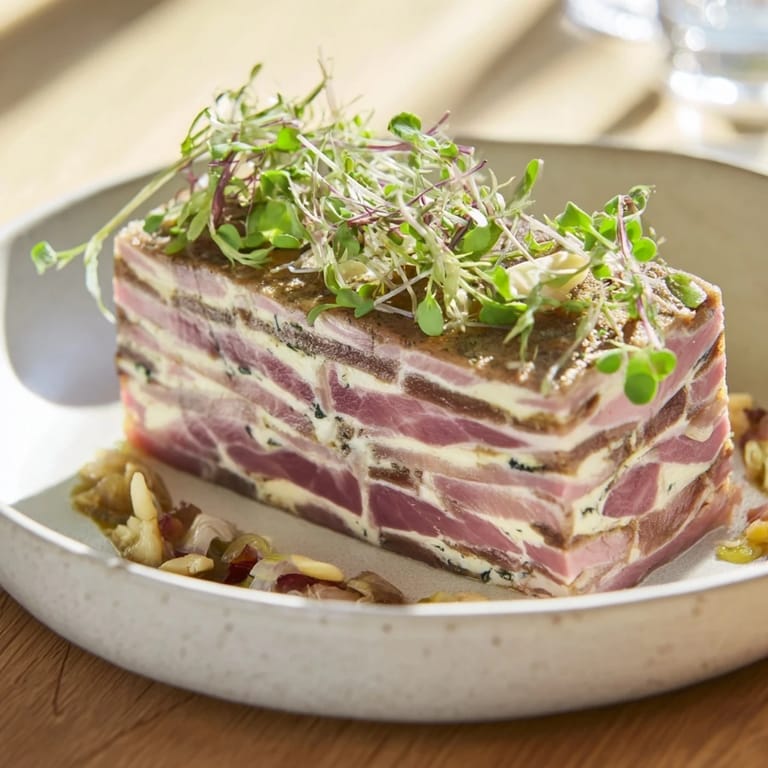
Save I discovered this dish while staring at photographs from a road trip out West, mesmerized by how the canyon walls seemed to layer different shades of rust and gold. That evening, I was inspired to create something equally striking on a plate—a savory terrine that captured those same dramatic geological strata, but with meat instead of stone and a river of blue cheese threading through like water carved through time. The moment I sliced into it the first time and saw all those bands of color with that vivid blue vein running through, I knew I'd captured something special.
I made this for a dinner party on a cold November evening when friends from college were visiting. Someone turned off the overhead lights and lit candles just as I unmolded the terrine, and the way the light caught those layers and that glowing blue center—I watched everyone lean forward at once. That's when I realized food isn't just about taste; it's about the moment you create when it finally arrives.
Ingredients
- Beef sirloin, thinly sliced: The hearty base that anchors the color palette; slice it yourself or ask your butcher to do it on the meat slicer for uniform, delicate layers.
- Turkey breast, thinly sliced: Adds a lighter tone and prevents the terrine from feeling too rich; the subtle flavor lets other elements shine.
- Smoked ham, thinly sliced: Brings a whisper of saltiness and smokiness that grounds the composition.
- Pork loin, thinly sliced: The pale complement that breaks up the darker meats and keeps the striping visually interesting.
- Blue cheese, crumbled: This is your river—use a quality cheese with good tang and creaminess that can blend smooth without becoming bitter.
- Cream cheese, softened: The secret to making the blue cheese mousse silky and spoonable rather than grainy.
- Heavy cream: In both the river and binding layer; whip it gently into the cheese to lighten the texture.
- Fresh chives and parsley: These herbs keep the mousse from tasting one-dimensional; don't skip them or the flavor flattens.
- Eggs and milk: The binding layer that holds everything together without adding much flavor, just gentle structure.
Tired of Takeout? 🥡
Get 10 meals you can make faster than delivery arrives. Seriously.
One email. No spam. Unsubscribe anytime.
Instructions
- Set your stage:
- Preheat the oven to 160°C and line a loaf pan with plastic wrap, leaving generous overhang on all sides so you can fold it over the top like a present. This prevents the edges from drying and makes unmolding effortless later.
- Make your binder:
- Whisk together the eggs, milk, heavy cream, salt, and pepper in a bowl until completely combined; this is what holds the layers together without turning tough. Set it aside and don't skip this—it's the backbone of the whole structure.
- Craft your river:
- Blend the blue cheese, softened cream cheese, heavy cream, chives, parsley, and black pepper until completely smooth and spreadable. Taste it and adjust the seasoning; you want it tangy and herbaceous.
- Begin the canyon walls:
- Start arranging beef slices along one side of the pan, overlapping them slightly like shingles on a roof, then add layers of turkey, ham, and pork in a staggered pattern so they visually slope downward. The overlapping matters—it creates that cliff-face effect when you slice.
- Bind as you go:
- After every 2 or 3 meat layers, use a pastry brush to lightly coat the surface with the egg mixture. You're not drowning it, just sealing the layers together.
- Carve your river:
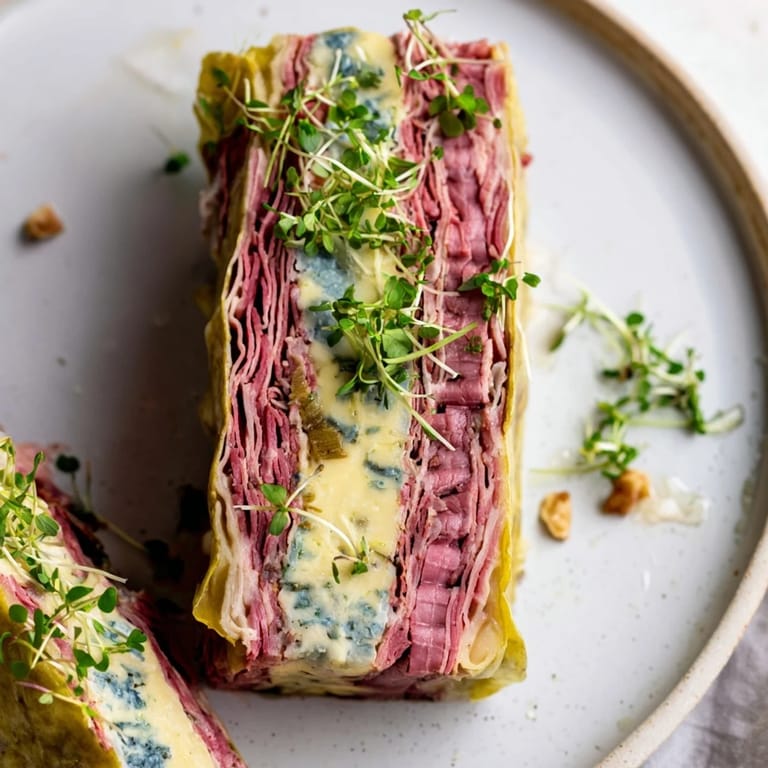
- When you're roughly halfway up the pan, spoon the blue cheese mousse in a thick line down the center, then continue layering meats around and over it, maintaining that sloped pattern. This is where the magic happens—the river becomes visible when you slice.
- Seal and steam:
- Fold the overhanging plastic wrap over the top to seal, then cover everything with foil. Place the loaf pan inside a larger roasting dish and pour hot water into the roasting dish until it reaches halfway up the sides—this gentle bain-marie keeps the terrine from cooking too aggressively.
- Bake and cool:
- Bake for 1 hour 15 minutes until the terrine is set but still tender; it should jiggle just slightly when you shake the pan. Let it cool to room temperature, then refrigerate for at least 4 hours, preferably overnight—the cold is essential for clean slicing.
- Reveal the masterpiece:
- Unmold onto a serving platter by unfolding the plastic wrap and gently turning it out. Slice with a sharp, warm knife using long smooth strokes, wiping the blade between cuts for pristine layers.
 Save
Save There's something profound about a dish that looks like geology, like you've somehow captured thousands of years in a loaf pan. The first time someone asked for seconds and then asked if they could photograph their slice before eating it, I understood that this terrine had become more than a recipe—it became a memory-maker.
Why Layering Matters
The beauty of this dish isn't accident—it's intention translated through your hands. Each layer you arrange, each slight overlap, each decision about where the blue cheese river flows determines what someone will see when they cut into it. I learned early on that rushing the layering meant a muddled appearance; taking ten extra minutes to arrange each tier thoughtfully made all the difference between good and stunning.
The Blue Cheese River
If the meat layers are the canyon walls, the blue cheese mousse is the Colorado River—the dramatic focal point that justifies the entire composition. The first time I positioned it perfectly down the center and then realized I'd gone a bit too thick, I thought I'd ruined everything, but when sliced, that bold blue vein turned out to be exactly right, drawing the eye and settling on the tongue with a pleasant tang that balanced all the savory meat.
Serving and Pairing
Present this terrine with fresh toasted brioche or a sturdy crusty bread to echo the layers and give guests something to accompany each slice. A light red wine like a Pinot Noir or a crisp white like Sauvignon Blanc cuts through the richness without overpowering the delicate meat flavors. Follow it with a sharp salad and good conversation—this dish demands an audience.
- Warm your knife blade under hot water and wipe it dry between each slice for clean, impressive cuts.
- Bring the terrine to cool room temperature for 10 minutes before serving so the flavors open up.
- This keeps refrigerated for up to 4 days, though it's best eaten fresh within 2 days.
 Save
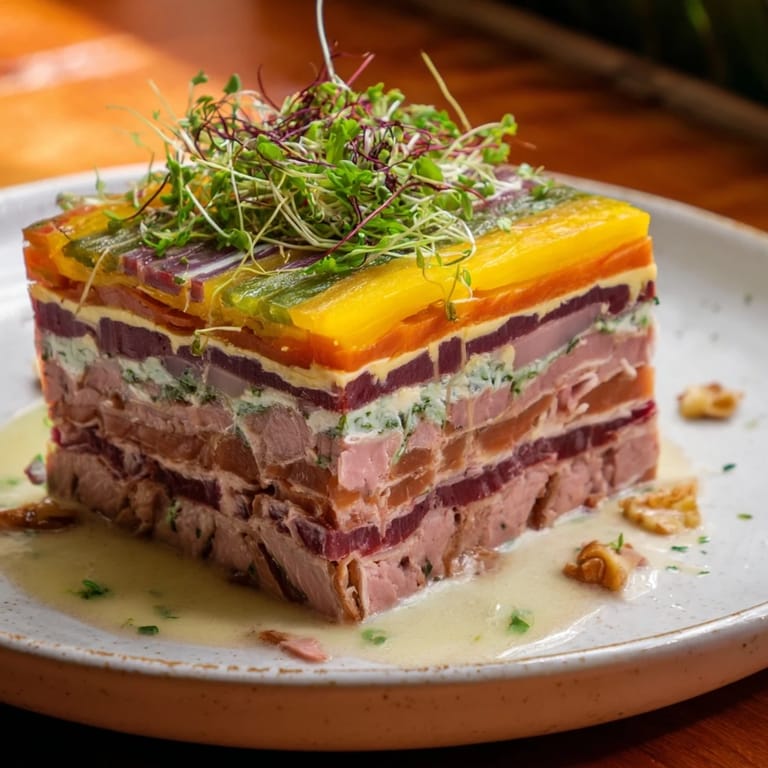
Save Making this Grand Canyon Rim terrine taught me that cooking doesn't always have to be complicated to be memorable—it just has to be intentional and beautiful. Every time you bring this to a table, you're serving not just food, but a small edible landscape that makes people pause and notice.
Recipe FAQs
- → How do I create the layered cliff effect?
Arrange the thin slices of beef, turkey, smoked ham, and pork in overlapping layers that slope downward, mimicking canyon walls.
- → What is the purpose of the blue cheese mixture?
The blue cheese and herb mousse forms a vibrant 'river' running through the terrine, adding rich creaminess and tangy flavor that contrasts with the meats.
- → Can I substitute the meats for other options?
Yes, smoked duck or prosciutto can replace some meats for a smokier profile without losing the layered texture.
- → Why is a bain-marie used during baking?
The bain-marie ensures gentle, even cooking and prevents the terrine from drying out or cracking, preserving smooth texture.
- → How should the terrine be served?
Slice the chilled terrine thickly to reveal the layered effect and serve garnished with microgreens, edible flowers, and toasted walnuts for added texture.
- → What pairings complement the layered meat terrine?
This dish pairs beautifully with crusty bread or toasted brioche and a light red wine or crisp white to enhance flavors.