 Save
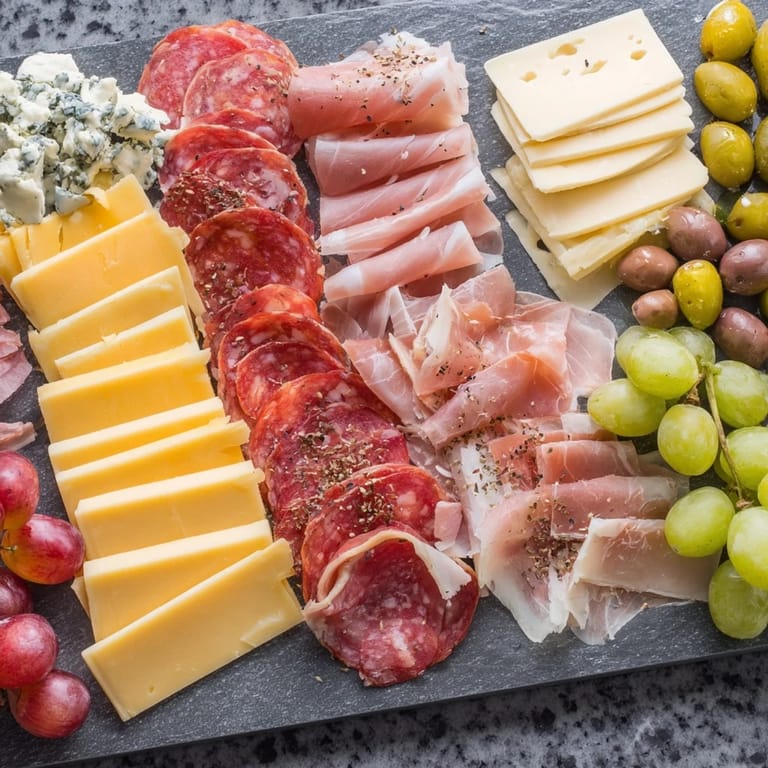
Save There's something about pushing back from a minimalist table that makes you feel like you've stepped into a gallery opening. I discovered the power of arranging charcuterie in strict lines when I was setting up for a dinner party and ran out of traditional platters, so I grabbed a slate tile from my kitchen renovation pile. What started as a practical accident became the moment I learned that constraint breeds elegance—the straight lines forced me to think about each ingredient as its own small statement rather than a jumbled heap.
My friend Marcus showed up early to help set up, and when he saw the slate board covered in these geometric lines of meat and cheese, he just laughed and said it looked like a modernist painting someone had decided to eat. That's when I realized this isn't just appetizers—it's about disrupting the expected mess of charcuterie boards and replacing it with something that feels intentional and a little bit daring.
Ingredients
- Smoked prosciutto: 100 g of the delicate stuff, thin enough to see light through, bringing salt and smoke that anchors the whole board.
- Soppressata: 100 g of this peppery Italian classic, sliced about a quarter-inch thick so it holds its shape in a line.
- Coppa: 100 g with its beautiful marbling and subtle heat, the bridge between prosciutto's delicacy and soppressata's boldness.
- Mortadella: 100 g of this porky, spiced wonder that people often overlook but that brings unexpected richness to the arrangement.
- Aged cheddar: 100 g sliced into neat rectangles, sharp enough to cut through the richness of the meats.
- Manchego: 100 g with its subtle nutty undertone, the cheese that keeps everything balanced and civilized.
- Gruyère: 100 g of creamy complexity that somehow makes every other ingredient taste better beside it.
- Blue cheese: 100 g crumbled into uneven pieces, the secret weapon that makes people go quiet for a moment.
- Seedless red grapes: One small bunch as palate cleansers and pops of color that break up the neutral tones.
- Cornichons: 50 g of tiny pickled cucumbers that cut through richness like small, briny punctuation marks.
- Whole grain mustard: 50 g for dipping and dolloping, the textured kind with visible seeds.
- Mixed olives: 50 g of green and black, pitted if you're thinking about your guests' teeth.
- Freshly cracked black pepper: To taste, because the aroma of fresh pepper over cured meat is half the appeal.
Tired of Takeout? 🥡
Get 10 meals you can make faster than delivery arrives. Seriously.
One email. No spam. Unsubscribe anytime.
Instructions
- Start with your canvas:
- Find a large, heavy slate or stone board—the weight matters because it feels intentional and anchors everything on the table. If possible, chill it in the refrigerator for a few minutes so your ingredients stay cool longer and that sleek aesthetic doesn't wilt.
- Map out your meats:
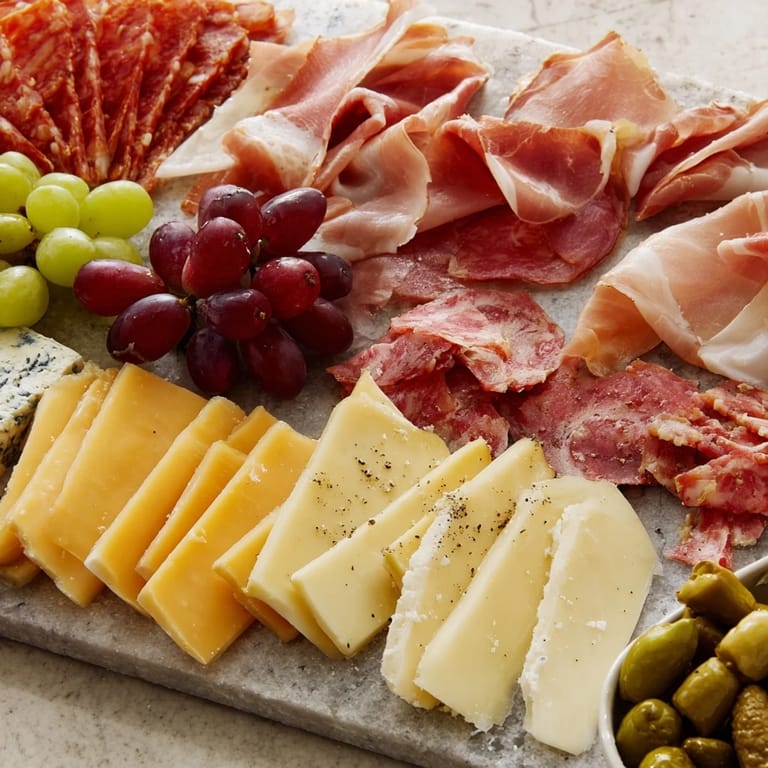
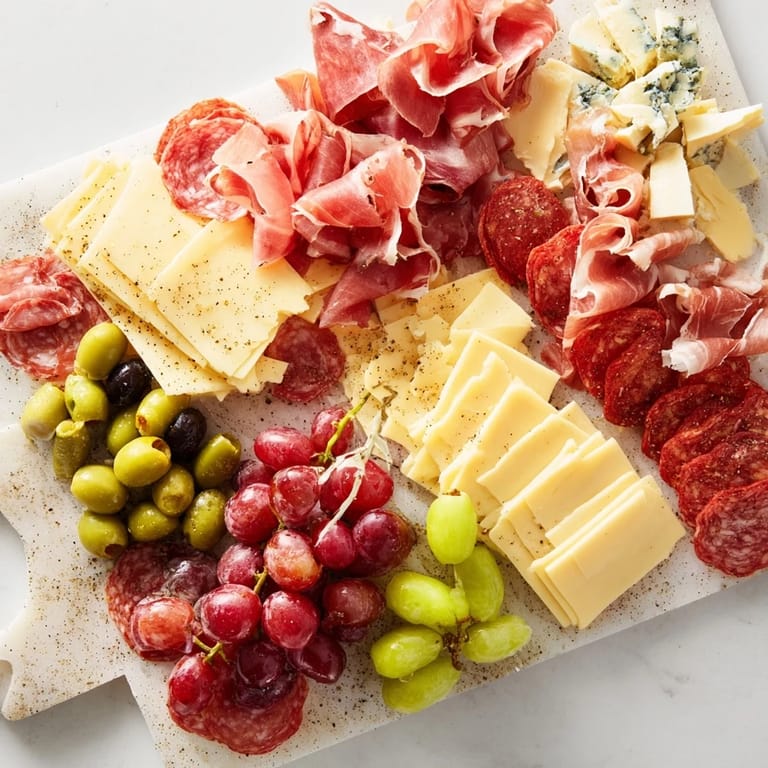
- On one half or third of the board, lay down your four cured meats in parallel lines, making sure each type gets its own dedicated stripe. Think of it like you're drawing with salumi, each line a different flavor story.
- Give the cheeses their moment:
- On the opposite side or in the remaining space, arrange your four cheeses in similarly straight lines, sliced consistently so they feel like they belong to a set. The geometry is the whole point here.
- Fill the gaps with intention:
- Tuck your grapes into small clusters, arrange cornichons in their own neat pile, and scatter olives where they'll break up the meat and cheese lines without creating chaos. This is where your hand-eye coordination gets a little workout.
- Add your condiments:
- Place small dollops or streaks of mustard along one edge or in a tiny bowl nestled into a corner. Don't drown anything; restraint is the whole aesthetic here.
- The finishing touch:
- Give the meats and cheeses a light shower of freshly cracked black pepper, enough that people notice the aroma before they taste anything. This is where you step back and appreciate what you've made without touching it again.
 Save
Save I realized something watching people approach this board for the first time: they hesitate. There's something about the stark arrangement that makes them pause and actually look before they reach. That moment of appreciation before the eating begins—that's the whole reason to do this instead of throwing everything in a bowl.
The Weight of Presentation
When you serve food on something heavy and deliberately plain, you're asking people to notice the ingredients themselves rather than hiding behind color and clutter. I learned this when I realized my grandmother's charcuterie board, piled high and chaotic, disappeared faster but was barely remembered, while this minimal version had people talking about it for weeks. The stone carries part of the story—it says you thought about this, that it matters.
Timing and Temperature
The mathematics of this board is simple: everything must stay cold, which means you assemble it no more than twenty minutes before serving. The meats warm up quickly and lose their snap, the cheeses begin to soften, and suddenly your gallery installation becomes sloppy. Work quickly, chill your board if you can, and don't get flustered if a line isn't perfectly straight—the slight imperfections are what make it feel handmade rather than factory-produced.
Pairing and Serving Philosophy
This board breathes when paired with wine that's equally uncompromising: a crisp Sauvignon Blanc that cuts through the fat, or a bold Cabernet Sauvignon that matches the assertive flavors. For non-wine drinkers, a sparkling water with lemon feels right because it stays true to the minimalist spirit. Serve it on its own as an appetizer or alongside other dishes, but resist the urge to turn it into a full charcuterie extravaganza—let the restraint be the point.
- Assemble no more than twenty minutes before guests arrive to maintain the crisp, cold perfection.
- If blue cheese crumbles seem too chaotic, form tiny balls and nestle them into small lines of their own.
- For vegetarians, swap the meats for roasted nuts, marinated artichoke hearts, and sun-dried tomatoes arranged with the same disciplined geometry.
 Save
Save At its heart, this is about permission to make something feel special without spending hours in the kitchen. The Industrial Slate proved to me that elegance sometimes just means knowing when to stop adding and start paying attention to what's already there.
Recipe FAQs
- → What types of meats are included in this platter?
The platter features smoked prosciutto, soppressata, coppa, and mortadella, offering a variety of savory flavors.
- → Which cheeses complement the meats on this slate?
Aged cheddar, Manchego, Gruyère, and blue cheese are carefully sliced and arranged to balance the meat selection.
- → How are the ingredients arranged for presentation?
Cold meats and cheeses are placed in straight parallel lines on opposite sides of the slate, with grapes, cornichons, and olives filling the spaces in between.
- → Can this platter accommodate dietary preferences?
Yes, a vegetarian version can be created by omitting meats and adding marinated artichoke hearts and roasted nuts.
- → What accompaniments enhance the flavor of this dish?
Whole grain mustard adds spice and zest, while freshly cracked black pepper enhances aroma and taste.
- → How should the slate be prepared before assembly?
Chilling the unpolished stone slate before arranging ingredients helps keep everything cold and fresh longer.