 Save
Save The first time I truly understood what made a biryani sing was watching my neighbor's hands move through the rice with such calm certainty, each grain getting its moment in the oven's warmth. She taught me that biryani isn't just about throwing ingredients together—it's about patience, the smell of ghee meeting caramelized onions, and trusting the steam to do its quiet magic inside a covered pot. That afternoon, as golden-brown rice came spilling out, studded with nuts and herbs, I realized why this dish had traveled across continents and still felt like coming home.
I made this for my sister's birthday dinner once, and the whole house smelled so incredible that her friends asked what restaurant we were using before they even sat down. Watching faces light up when they tasted that first spoonful—the way the saffron subtly sweetened everything, how the cardamom whispered in the background—that's when I knew this recipe deserved a permanent spot in my rotation.
Ingredients
- Bone-in chicken or lamb (900 g): The bone adds a richness you can't replicate with boneless meat, and the marbling keeps everything tender through the long oven time.
- Plain yogurt (1 cup): This is your tenderizer and flavor base—it's what makes the meat stay juicy instead of drying out.
- Ginger-garlic paste (1 tbsp): Fresh is always better than jarred if you have time; the flavor stays bright and doesn't turn bitter.
- Spice blend (cumin, coriander, turmeric, garam masala, chili powder): Toast these separately in a dry pan before adding to the yogurt if you want even deeper flavor, though mixing them raw works fine.
- Basmati rice (3 cups): Don't skip the rinsing step—cloudy water means starch that makes rice gluey, and you want each grain distinct.
- Ghee (3-4 tbsp total): If you don't have ghee, clarified butter works, but regular butter will brown slightly differently and that's okay too.
- Whole spices for rice (cloves, cardamom, cinnamon, bay leaf): These float on top and get stuck in people's teeth sometimes, so warn your guests or fish them out before serving.
- Caramelized onions (2 large): This is where patience pays off—slow, steady heat turns them golden and sweet, not crispy and brown.
- Fresh herbs (coriander, mint): Cut them just before using; they lose their brightness if left too long.
- Saffron threads in warm milk (pinch soaked in 3 tbsp): Saffron is expensive but a little goes far, and this step unlocks its color and subtle earthiness.
- Nuts and raisins: Toast the nuts yourself for better texture, and soak raisins in warm water for five minutes to plump them up.
Tired of Takeout? 🥡
Get 10 meals you can make faster than delivery arrives. Seriously.
One email. No spam. Unsubscribe anytime.
Instructions
- Marinate the meat:
- Combine the yogurt, lemon juice, ginger-garlic paste, and all the ground spices in a large bowl, then add your meat and coat everything well. Let it sit in the refrigerator for at least an hour—overnight is even better because the flavors have time to really settle in.
- Prepare the rice:
- Rinse your basmati rice under cold running water until the water coming out is clear, not milky. Soak it for 30 minutes so it cooks evenly and stays separate instead of clumping.
- Par-cook the rice:
- Bring salted water to a boil with the cloves, cardamom, cinnamon, and bay leaf, then add your drained rice. You're aiming for 70% cooked—test a grain with your teeth and it should still have a tiny bit of firmness in the center, like a gentle bite. This takes about 6 to 7 minutes, then drain it all in a fine mesh sieve.
- Heat your oven:
- Set it to 180°C (350°F) so it's ready when you need it.
- Caramelize the onions:
- Heat ghee in your ovenproof pot over medium heat, add the sliced onions, and let them cook slowly for about 12 to 15 minutes, stirring occasionally. They should turn a deep golden color with crispy edges—this takes patience but it's worth every minute because the sweetness builds. Scoop out about half for garnish and set aside.
- Cook the meat:
- Add the marinated meat to the pot with the remaining onions and sear it for 5 to 7 minutes until it gets some color on the outside. Cover and lower the heat, cooking for 20 to 25 minutes if you're using chicken or 35 to 40 minutes for lamb, until the meat is tender enough to pull apart with a fork. Add a splash of water if it looks too dry.
- Layer it up:
- Sprinkle half of your chopped herbs, raisins, and toasted nuts over the meat. Then add half of your par-cooked rice in an even layer, then the remaining herbs and nuts, then the rest of the rice on top.
- Add the saffron:
- Drizzle that saffron milk across the top layer of rice, letting it seep down. Dot the surface with small pieces of ghee or butter so it cooks evenly.
- Seal and bake:
- Cover the pot tightly first with foil, then place the lid on top to trap all the steam. Bake for 30 to 35 minutes until you hear a faint sizzle at the edges and smell that unmistakable nutty aroma.
- Rest and serve:
- Let it sit undisturbed for 10 minutes—this settles everything and makes fluffing easier. Then gently run a wooden spoon through to separate the rice, being careful not to mash it.
 Save
Save There's a moment right after you lift that foil lid when the steam rolls out and fills your whole kitchen with this incredible fragrance—cardamom, saffron, ghee, all mingling together. That's when you know it worked, that this really is something special.
Why This Dish Travels Well
Kuwaiti biryani has this quiet confidence about it—it doesn't need anything fancy or fussy to shine. I've brought it to potlucks, family dinners, even packed it cold for a picnic once, and it holds up beautifully every time. The flavors actually deepen as it sits, so making it a day ahead is not a shortcut, it's a smart move.
Making It Your Own
The base recipe is solid, but biryani is forgiving in small ways. Some people add a drop of rose water with the saffron milk, which gives it a floral whisper. Others swear by adding a tablespoon of ghee mixed with mint leaves between the layers. I once threw in pomegranate seeds instead of raisins and it was lovely—different but lovely.
Serving Suggestions and Pairings
Biryani is rich and complex enough to stand completely on its own, but a cool raita or simple cucumber-yogurt salad alongside it really brings out the best in everything. I like to serve it with some sliced tomatoes and a squeeze of lemon on the side, so people can adjust the brightness to their taste.
- Make a quick raita by stirring chopped cucumber, mint, and a pinch of cumin into plain yogurt.
- If any of your guests are vegetarian, you can swap the meat for paneer marinated the same way, or layer in marinated cauliflower and root vegetables.
- Leftover biryani keeps in the refrigerator for three days and actually tastes even better when you reheat it gently with a splash of water.
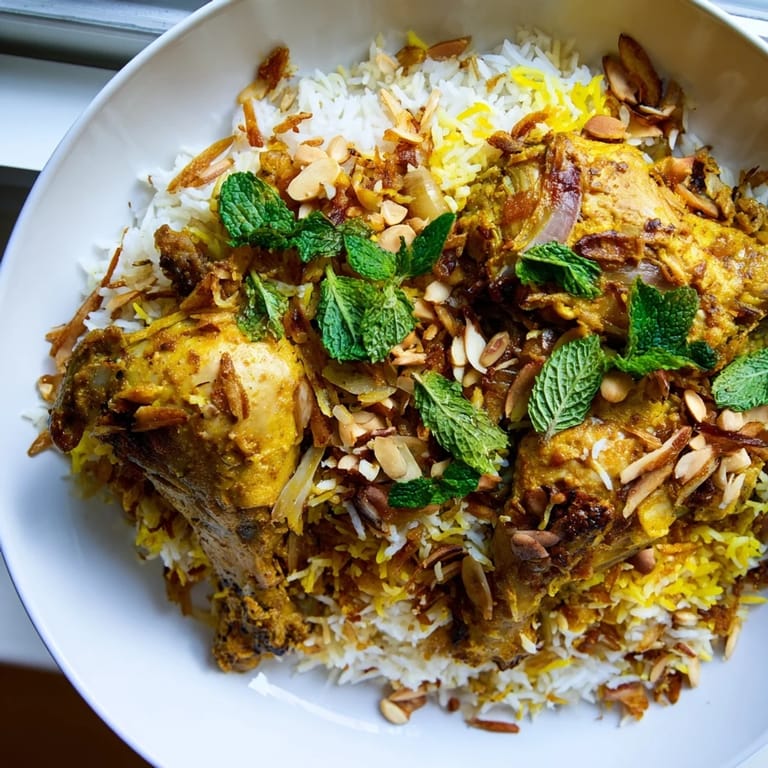 Save
Save This biryani is the kind of dish that reminds you why people gather around food—because it tastes like care, like someone took their time. Make it whenever you want to feel that magic in your kitchen.
Recipe FAQs
- → What type of meat works best for this dish?
Bone-in chicken pieces or lamb cut into serving sizes provide ideal texture and flavor when marinated and cooked slowly.
- → How do I achieve the perfect texture for the rice?
Partially cook basmati rice by boiling with whole spices until about 70% done, then drain before layering and baking.
- → What role does saffron play in this dish?
Saffron soaked in warm milk infuses the rice with a distinctive aroma and a subtle golden hue, enhancing overall flavor.
- → Can I prepare this dish ahead of time?
Yes, marinating the meat overnight deepens flavors, and the dish can be assembled in advance before baking.
- → Are there vegetarian alternatives available?
Substitute marinated paneer or mixed vegetables for the meat to create a satisfying vegetarian version.