 Save
Save The first time I tasted mango sticky rice, I was sitting on a plastic stool at a night market in Bangkok, the heat still radiating off the pavement even as the sun dipped below the rooflines. An elderly vendor handed me a paper plate with a mound of pearlescent rice and three perfect mango slices fanned beside it, drizzled with coconut cream that looked almost too luxurious to eat. That single bite—the creamy sweetness of the rice meeting the bright tartness of the fruit—stayed with me for years until I finally attempted it in my own kitchen. What surprised me most was how simple the ingredient list actually was, and how the magic came from patience and the right rice, not complexity.
I made this for my sister's birthday dinner last summer, and I'll never forget how she closed her eyes after that first spoonful and just sat there smiling like she'd transported somewhere else. Her kids wanted seconds before anyone else even finished, which never happens with dessert in that house. That's when I realized this dish has this quiet power to make people slow down and actually taste what's in front of them.
Ingredients
- Glutinous (sticky) rice: This is non-negotiable—regular jasmine or long-grain rice won't give you that creamy, clingy texture that makes this dessert special, so don't try to improvise here.
- Coconut milk (full-fat): The richness comes straight from this, so grab the canned stuff from the Asian aisle, shake it well, and never use lite versions.
- Granulated sugar: White sugar dissolves cleanly into the coconut milk and lets the natural mango flavor shine without competing.
- Salt: Just a whisper of it, but it wakes up all the other flavors and keeps the dessert from tasting one-note sweet.
- Ripe mangoes: This is where your final dish lives or dies—pick ones that yield slightly to pressure, smell floral and sweet, and have that golden-orange blush on the skin.
- Cornstarch slurry (optional): I use this when I want the coconut topping to cling to the rice rather than pool around it, but some people skip it entirely and that's fine.
- Toasted sesame seeds or mung beans: The garnish adds a tiny textural surprise and looks intentional, though honestly the dish shines without it too.
Tired of Takeout? 🥡
Get 10 meals you can make faster than delivery arrives. Seriously.
One email. No spam. Unsubscribe anytime.
Instructions
- Rinse and soak your rice:
- Grab a fine-mesh strainer and run cold water over the rice until the water that drains looks clear instead of milky—this removes excess starch and helps the grains stay separate during steaming. If you have time, let it soak overnight or at least four hours; this softens the grains so they cook evenly and absorb the coconut mixture more readily.
- Steam the rice until translucent:
- Line your steamer basket with cheesecloth to prevent grains from falling through, spread the drained rice in a thin layer, and steam it for 25 to 30 minutes until the grains turn glossy and translucent. You'll know it's ready when you bite one and there's zero crunch left in the center.
- Warm the coconut sauce gently:
- While the rice steams, pour a cup of coconut milk into a saucepan with the sugar and salt, then warm it over medium heat, stirring occasionally until the sugar dissolves completely. Keep the heat low—you want to warm it through, not boil it, which can break the coconut milk and separate the fat.
- Pour the sauce over hot rice:
- Transfer your steamed rice to a bowl while it's still hot, pour the warm coconut mixture right over it, and stir everything gently to combine. Cover the bowl and let it sit for about 15 minutes so the rice absorbs the coconut liquid and becomes even creamier and more fragrant.
- Make the topping:
- In a separate small saucepan, combine the remaining 1/3 cup coconut milk, sugar, and salt, then heat gently stirring constantly. If you want it thicker, stir your cornstarch slurry right in and let it bubble briefly until it coats the back of a spoon.
- Plate and drizzle:
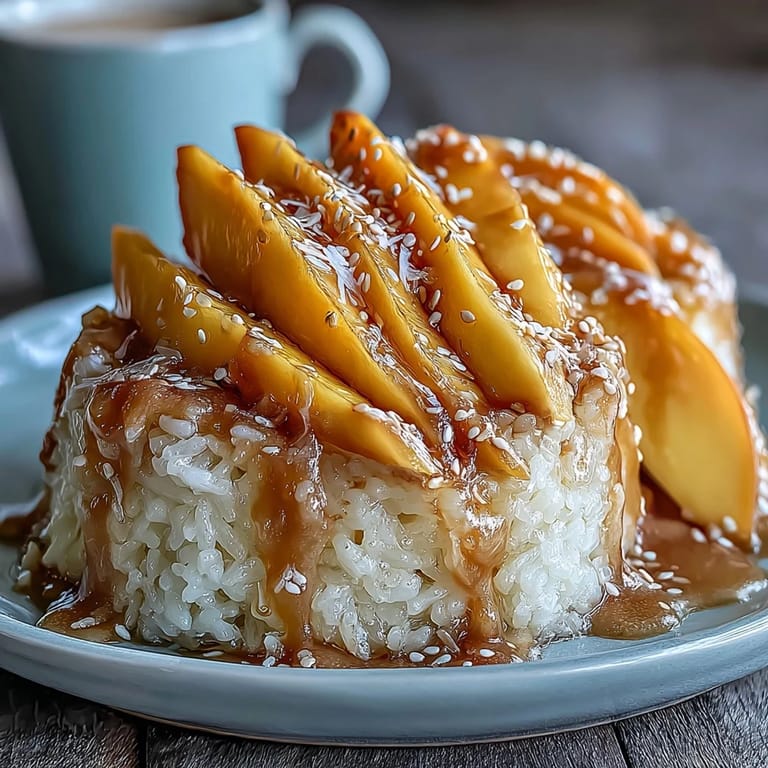
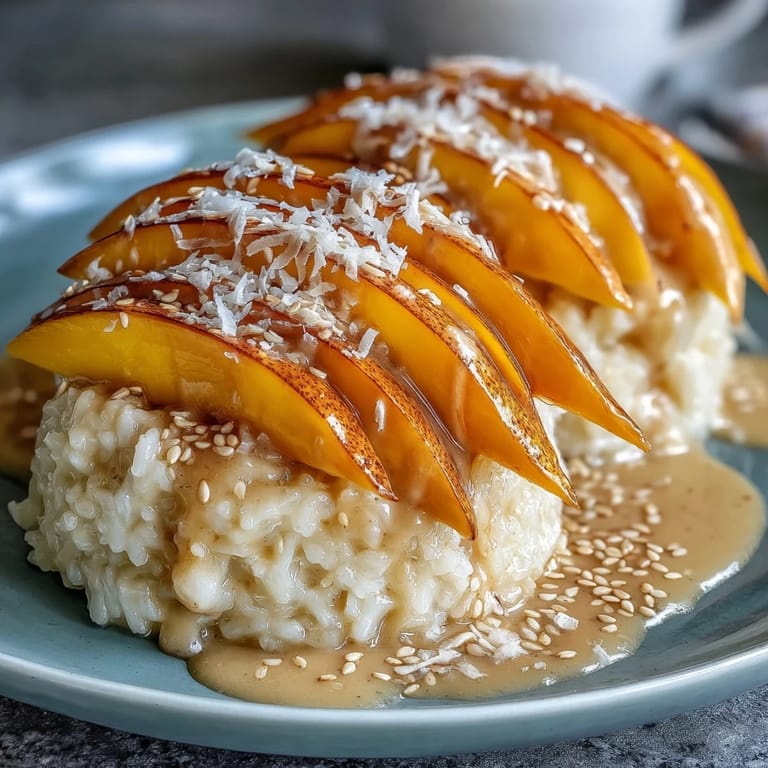
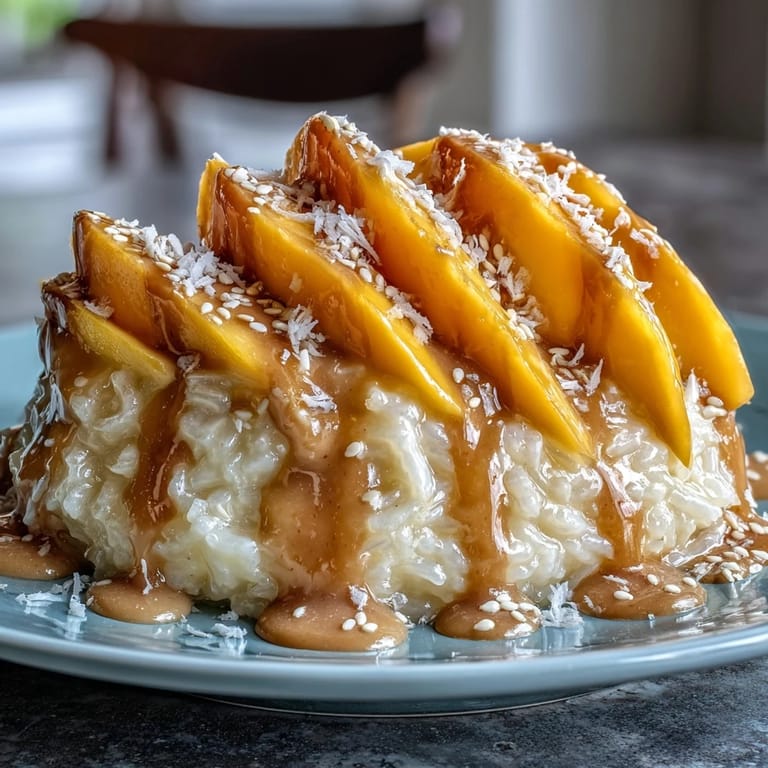
- Mound a portion of the sticky rice onto a plate, fan your mango slices alongside it, and pour a generous drizzle of the coconut topping over everything. Scatter sesame seeds or mung beans on top if you're using them, then step back and admire what you've made.
 Save
Save There's a moment when you set a plate down in front of someone and they go quiet, and you know the flavors just transported them somewhere warm and good. That's what this dish does, and it never gets old to witness.
Choosing Your Mangoes
The success of this entire dessert hinges on mango quality in a way that's almost unfair, so let's talk about picking them properly. Look for ones with a yellow or golden-orange skin (avoid ones that are still green, as they won't have developed their sweetness), that smell fragrant and slightly floral at the stem end, and that yield just slightly to gentle pressure without being mushy. Asian markets often have better varieties than supermarkets, and asking the vendor which ones came in today gets you fresher fruit that's already at peak ripeness.
Timing and Temperature
This dessert is best served at room temperature, which means the sticky rice should cool to warm or room temperature before plating, and the mango should be fresh from the counter rather than cold from the fridge. I learned this by serving it too cold once, and the rice became slightly rubbery while the mango flavor flattened out, so now I let everything sit on the counter for a few minutes after cooking. The coconut topping can be warm or room temperature—both work beautifully, though the warm version feels more luxurious and restaurant-like.
Storage and Variations
This dish is a fresh-eat-today kind of dessert, as the rice gradually loses its silky texture if stored overnight in the refrigerator, though it'll still taste decent for a day. If you're feeling adventurous, you can add a single pandan leaf to your coconut sauce while warming it, which will give the rice a pale green color and a subtle nutty fragrance that's traditionally Thai. For a vegan version, this recipe is already there—just make sure your coconut milk and sugar are free of animal products.
- Prep your ingredients the morning of serving so you only have to steam rice and make sauce when guests arrive.
- Fresh mango slices oxidize quickly, so slice them just before plating to keep them bright and beautiful.
- If someone in your group is allergic to tree nuts, be extra careful reading coconut milk labels, as cross-contamination can happen in manufacturing.
 Save
Save This dish reminds me why I love cooking in the first place—how something this elegant and delicious can come from such simple ingredients and a little patience. Serve it with jasmine tea or cold coconut water alongside, and watch how people's faces change when they take that first bite.