 Save
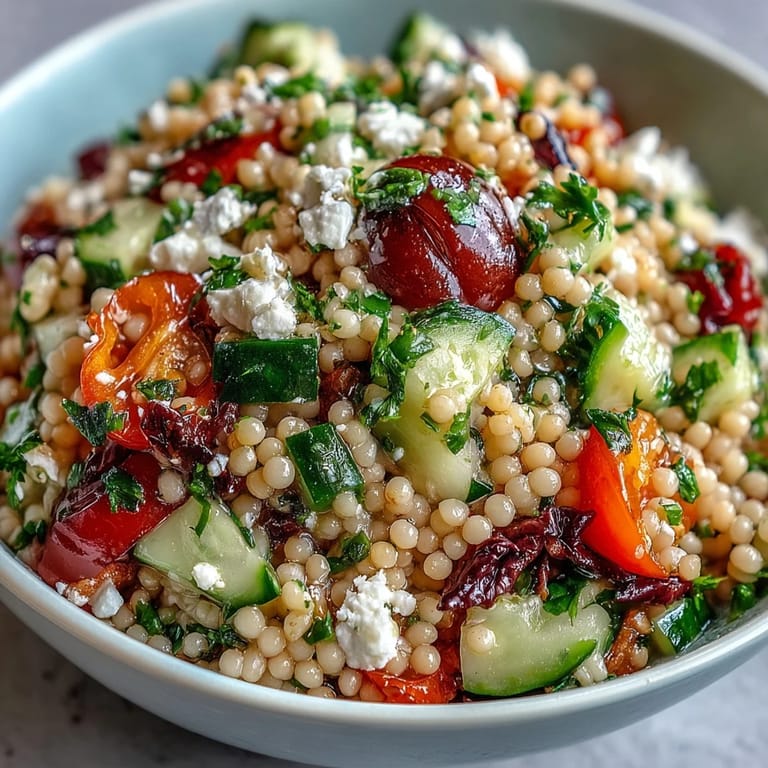
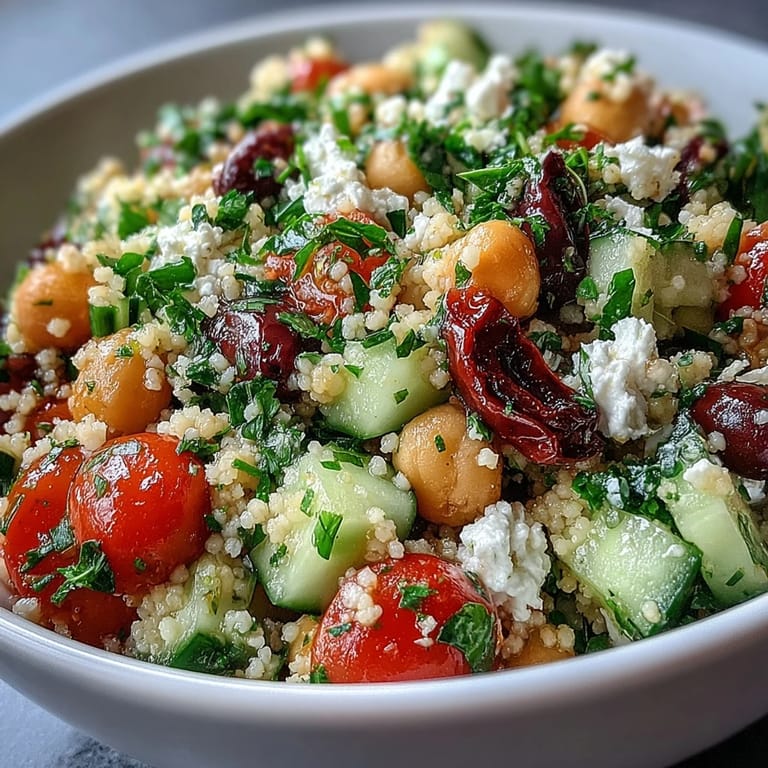
Save The smell of toasted pearl couscous always brings me straight back to a humid Saturday afternoon when I accidentally let the grains sit a little too long in the dry pan. That nutty, almost popcorn-like aroma filled the kitchen, and instead of panicking, I leaned into it. What started as a near-mistake turned into one of my favorite salad bases, the kind that holds up in the fridge and tastes even better the next day. Now I toast it on purpose every single time.
I made this for a friend who swore she hated couscous, mostly because she'd only had the mushy kind from a box. When she took her first bite, she paused mid-chew, looked at me, and asked what grain I used. That moment of surprise, watching her go back for a second serving without saying a word, told me everything. Sometimes all it takes is a little texture and a good vinaigrette to change someone's mind.
Ingredients
- Pearl couscous: Look for the large, round grains sometimes labeled Israeli couscous, they absorb flavor beautifully and keep a pleasant chew even when cold.
- Vegetable broth: This is where the couscous picks up its baseline flavor, so use a good quality broth or add a pinch of garlic powder to store-bought if it tastes flat.
- Red bell pepper: Dice it small enough to get a little sweetness in every forkful, but not so small that it disappears into the mix.
- Cucumber: I prefer English cucumber because the seeds are smaller and it holds its crunch longer, but any variety works if you scoop out the watery center.
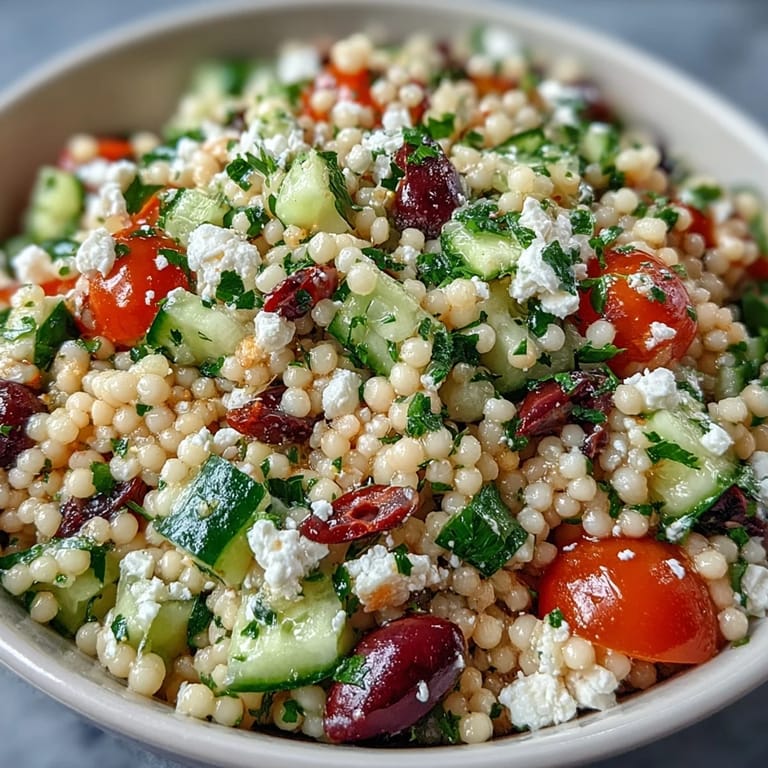
- Cherry tomatoes: Halve them so their juice mingles with the dressing, adding a hint of acidity that brightens the whole bowl.
- Red onion: Chop it fine and rinse it under cold water for ten seconds if the bite feels too sharp, it mellows beautifully without losing character.
- Kalamata olives: Their briny punch is essential, but if you only have green olives or even canned black ones, go ahead and use what you have.
- Feta cheese: Crumble it yourself from a block rather than buying pre-crumbled, the texture is creamier and it doesn't have that odd dusty coating.
- Fresh parsley: Flat-leaf Italian parsley has more flavor than curly, and it should go in at the very end so it stays vibrant and green.
- Olive oil: A fruity extra virgin olive oil makes a difference here since the dressing is so simple, it's one of the few places the oil really shines through.
- Red wine vinegar: This gives the dressing its tangy backbone, but white wine vinegar or even a squeeze of lemon juice works in a pinch.
- Dried oregano: A little goes a long way, and if you rub it between your palms before adding it, the oils release and the flavor deepens.
Tired of Takeout? 🥡
Get 10 meals you can make faster than delivery arrives. Seriously.
One email. No spam. Unsubscribe anytime.
Instructions
- Boil the broth:
- Bring the vegetable broth to a rolling boil in a medium saucepan over medium-high heat. The bubbles should be vigorous and steady before you add the couscous.
- Simmer the couscous:
- Stir in the pearl couscous, reduce the heat to low, cover, and let it simmer for about 10 minutes, stirring occasionally to prevent sticking. The grains should be tender and the liquid fully absorbed.
- Cool the couscous:
- Spread the cooked couscous onto a baking sheet in an even layer and let it cool for 10 minutes. This stops the cooking and prevents clumping.
- Prep the vegetables:
- While the couscous cools, combine the diced red bell pepper, cucumber, cherry tomatoes, red onion, olives, and feta in a large mixing bowl. Toss gently just to distribute everything evenly.
- Whisk the dressing:
- In a small bowl, whisk together the olive oil, red wine vinegar, dried oregano, salt, and pepper until it emulsifies slightly and looks cohesive.
- Combine and toss:
- Add the cooled couscous to the bowl with the vegetables, pour the dressing over the top, and toss gently with a spoon or your hands. Make sure every grain gets a little coating.
- Finish and serve:
- Fold in the chopped parsley, taste, and adjust the seasoning with more salt, pepper, or a splash of vinegar if needed. Serve immediately or chill for 30 minutes to let the flavors marry.
 Save
Save One evening I brought this to a backyard dinner where everyone else showed up with chips and store-bought dip. By the end of the night, my bowl was scraped clean and three people had texted me asking for the recipe. It wasn't fancy, just good ingredients treated simply, but that's the kind of dish that makes you feel quietly proud without having to say a word.
Serving Suggestions
This salad shines as a make-ahead lunch, packed into glass containers and pulled straight from the fridge when hunger hits. It also works beautifully as a side dish next to grilled chicken, lamb skewers, or even a simple piece of seared fish. I've served it at room temperature on a platter for picnics, and it holds up under the sun better than most leafy salads ever could.
Customizing the Recipe
If you want to bulk it up, toss in a can of drained chickpeas or some chopped artichoke hearts for extra substance. Roasted red peppers add a smoky sweetness that plays well with the oregano, and a handful of toasted pine nuts or slivered almonds introduces a welcome crunch. For a vegan version, skip the feta entirely or swap it for a cashew-based cheese, the salad doesn't lose much without it.
Storage and Make-Ahead Tips
This keeps in an airtight container in the fridge for up to three days, and honestly, day two is when it tastes best. The couscous continues to absorb the dressing, the flavors deepen, and everything melds into something more cohesive. If you're making it ahead, hold off on adding the parsley until just before serving so it stays bright and fresh.
- Store the dressing separately if you're meal prepping for more than two days to keep the vegetables from getting soggy.
- Let the salad sit at room temperature for about 15 minutes before serving if it's been chilled, the flavors open up and the olive oil loosens.
- Refresh leftovers with a small squeeze of lemon juice or a drizzle of olive oil to bring back that just-made brightness.
 Save
Save There's something quietly satisfying about a salad that doesn't wilt, that tastes better with time, and that makes people ask for seconds without you having to convince them. This one does all of that.
Recipe FAQs
- → Can I make this dish ahead of time?
Yes, you can prepare this dish up to 3 days in advance. Store it in an airtight container in the refrigerator. The flavors actually improve as they meld together. Just give it a quick toss before serving.
- → What can I substitute for pearl couscous?
You can substitute pearl couscous with quinoa for a gluten-free option, regular couscous for a finer texture, or orzo pasta for a similar shape and consistency. Adjust cooking times accordingly based on your grain choice.
- → How do I make this vegan?
Simply omit the feta cheese or replace it with your favorite plant-based cheese alternative. Use vegetable broth instead of chicken broth, and you'll have a delicious vegan Mediterranean dish.
- → Can I serve this warm or does it need to be chilled?
This dish is versatile and delicious both ways. Serve it warm immediately after preparation for a comforting meal, or refrigerate for 30 minutes to chill for a refreshing cold salad. Both options are equally tasty.
- → What other vegetables can I add?
Feel free to customize with artichoke hearts, roasted red peppers, chickpeas, sun-dried tomatoes, or zucchini. These additions enhance texture and flavor while keeping the Mediterranean character of the dish intact.
- → How do I prevent the couscous from clumping?
After cooking, spread the couscous on a baking sheet to cool for 10 minutes. This allows excess moisture to evaporate and prevents clumping. Fluff with a fork before adding to the vegetable mixture for best results.