 Save
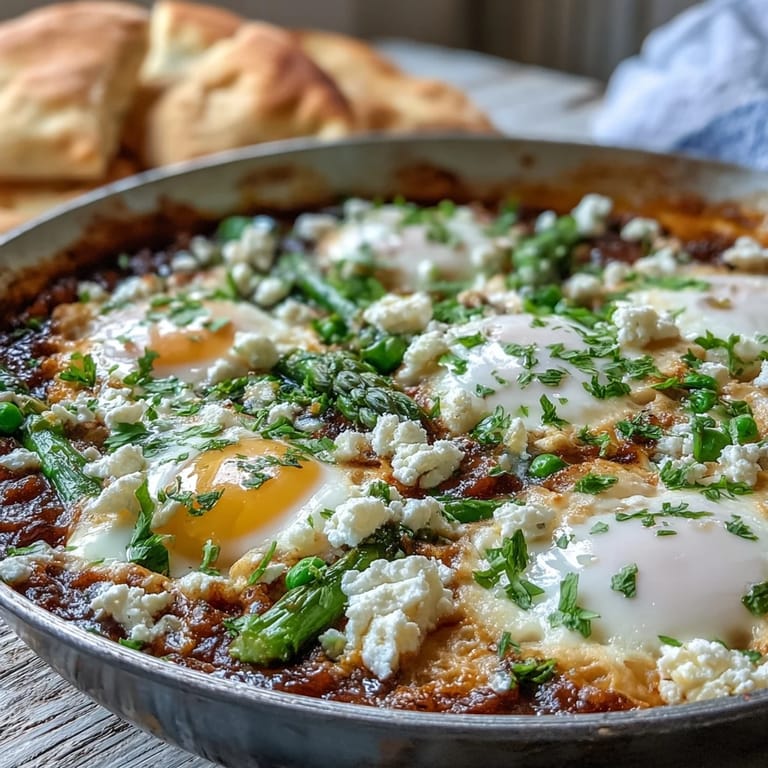
Save Spring arrived late one year, and I found myself staring at farmers market bags stuffed with peas, broad beans, and asparagus before I'd even planned dinner. There's something about those first tender vegetables that demands to be celebrated, not buried under heavy sauces. I'd made shakshuka countless times, but always with the same autumn tomato base, so I thought: why not let spring have its moment? The result was brighter, fresher, and somehow felt like cooking with sunlight.
I made this for my partner on a Wednesday evening when we both needed something that tasted like celebration but didn't require ordering takeout. The kitchen filled with the smell of cumin and paprika hitting hot oil, and by the time we sat down, we'd somehow gone from "what's for dinner?" to clinking glasses like it was a special occasion. That's when I knew this recipe was worth keeping.
Ingredients
- Fresh or frozen peas (1 cup): Use frozen if you can't find good fresh ones, they're picked at peak ripeness and honestly taste better in winter months.
- Fresh or frozen broad beans (1 cup): If you're using fresh, the double-podding step (removing them from their outer pod and then the bitter skin) takes time but makes them silky.
- Asparagus (1 bunch, about 200g): Cut into 2-inch pieces so they cook evenly and stay tender without falling apart in the sauce.
- Medium onion, finely chopped: This builds your flavor foundation, so don't rush the chopping.
- Red bell pepper, diced: The sweetness balances the spices and adds color that makes the dish look alive.
- Garlic cloves, minced (2): Fresh garlic matters here because it'll bloom in the hot oil and fill your kitchen with that unmistakable aroma.
- Canned chopped tomatoes (400g): Good quality matters because this is your sauce base, so choose a brand you'd actually eat straight from the can.
- Tomato paste (2 tablespoons): This concentrates the tomato flavor and adds depth without being heavy.
- Ground cumin (1 teaspoon): Warm and slightly earthy, it's the backbone of the spice profile.
- Smoked paprika (1 teaspoon): Adds a subtle smokiness that makes people ask what your secret ingredient is.
- Ground coriander (½ teaspoon): Just enough to lift the spices without overpowering anything.
- Chili flakes, optional (¼ teaspoon): Add these if you like heat, skip them if you're cooking for people who don't.
- Salt and black pepper: Taste as you go because you'll add these at different stages.
- Large eggs (4): Room temperature eggs cook more gently and set more evenly in the hot sauce.
- Crumbled feta cheese (3 tablespoons): The tangy saltiness is essential, it's not just a garnish.
- Fresh parsley or mint (2 tablespoons, chopped): Mint feels more spring-like here, but parsley works if that's what you have.
- Extra virgin olive oil: Use good oil for the final drizzle, it makes a noticeable difference.
Tired of Takeout? 🥡
Get 10 meals you can make faster than delivery arrives. Seriously.
One email. No spam. Unsubscribe anytime.
Instructions
- Blanch your spring vegetables:
- Bring a pot of salted water to a boil and drop in the peas and broad beans for just 2 minutes, then shock them in ice water to stop the cooking and set their bright color. This step ensures they stay tender and don't turn mushy when they hit the sauce later.
- Build your flavor base:
- Heat olive oil in a large deep skillet over medium heat, then add the chopped onion and red bell pepper, letting them soften for about 5 minutes while you listen to them sizzle. You want them just tender, still with a little resistance when you stir them.
- Toast the spices:
- Add the minced garlic along with cumin, smoked paprika, coriander, and chili flakes if using, cooking for just 1 minute until the kitchen smells incredible. Don't let them burn or they'll turn bitter, so keep the heat at medium and stir constantly.
- Create your tomato sauce:
- Stir in the tomato paste first, letting it caramelize slightly for about a minute, then add your canned tomatoes and let everything simmer for 10 minutes, stirring occasionally, until it thickens and deepens in color. The sauce should be cohesive but still have some movement when you stir it.
- Add the vegetables and season:
- Fold in the blanched peas, broad beans, and asparagus pieces, then taste and season with salt and pepper as needed. Let this simmer for 5 to 7 minutes until the asparagus is just tender with a slight bite.
- Create wells and crack your eggs:
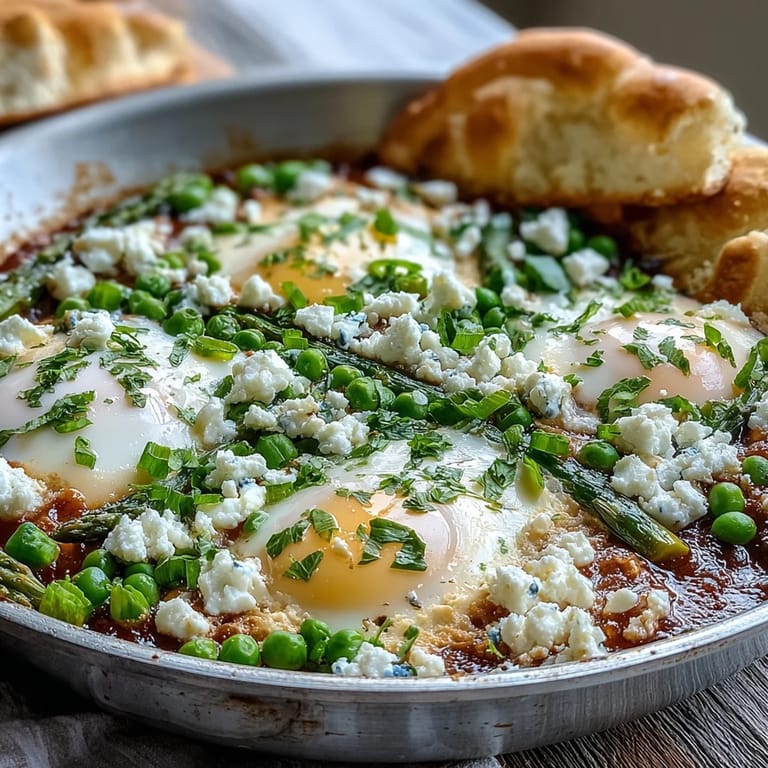
- Use the back of a spoon to make four small indentations in the vegetable mixture, spacing them evenly around the pan. Crack an egg into each well, cover the pan, and reduce the heat to low.
- Cook until just set:
- Cook covered for 7 to 10 minutes, watching carefully, until the egg whites are opaque and set but the yolks still jiggle slightly when you gently shake the pan. This is the sweet spot where the eggs become part of the sauce without being rubbery.
- Finish and serve:
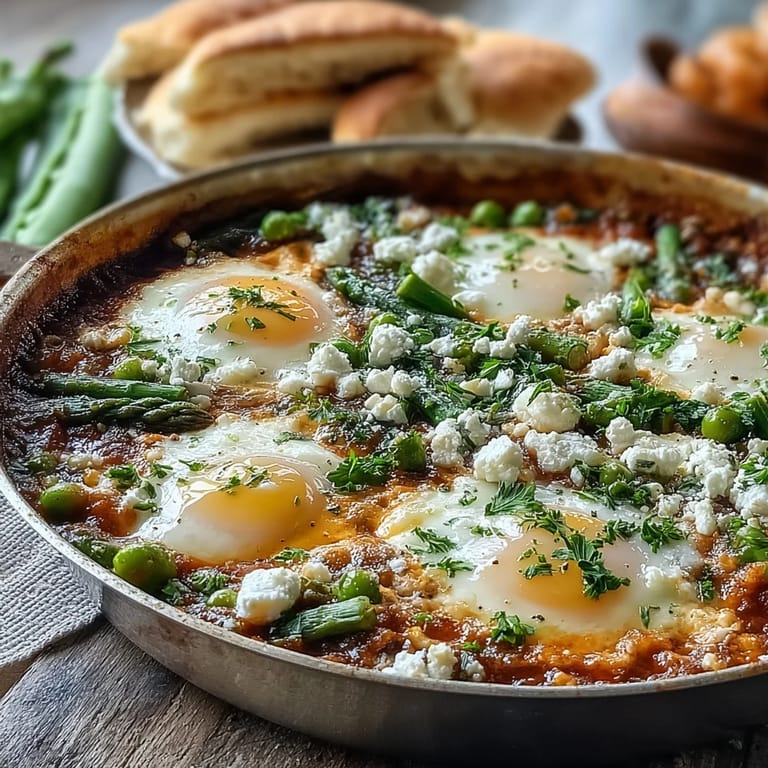
- Remove from heat, sprinkle with crumbled feta and your chosen fresh herbs, then drizzle generously with good olive oil. Serve directly from the pan with crusty bread or flatbreads, letting everyone scoop sauce and vegetables right onto their plate.
 Save
Save My neighbor came over unannounced one afternoon and caught me making this, and she stayed for dinner without being asked twice. Watching her tear into a piece of bread and use it to soak up the yolk and sauce made me realize this dish has that quality where food becomes an excuse to sit together and actually talk.
When to Use Frozen Versus Fresh
I used to think frozen vegetables were shortcuts, but I've learned they're actually harvested at peak ripeness and flash frozen immediately, so they're often fresher than what sits in bins at the market. For this dish, frozen peas and broad beans are genuinely excellent and save you the double-podding work if you're using fresh. Fresh asparagus is worth seeking out though because you can control how you cut it and the texture matters more for something this delicate.
Pairing and Serving Ideas
I've served this with crusty sourdough that's perfect for soaking up the egg and tomato sauce, but flatbreads work beautifully too and feel more authentic to the dish's Middle Eastern roots. A crisp white wine like a Sauvignon Blanc or even just sparkling water with lemon plays against the warm spices in a way that feels right. If you want more heat, drizzle with harissa or chili oil instead of just olive oil, or mix a little into the sauce before serving.
Variations and Flexibility
This recipe is forgiving because it's really just a vehicle for whatever tender vegetables you have on hand, so don't feel locked into the exact list. I've made it with baby spinach added at the end, with different herbs like dill or cilantro, and even swapped feta for a sharp aged cheese when that's what was open in my fridge. The beauty of shakshuka is that it adapts to what's in season and what's in your kitchen, so treat this as a blueprint rather than a strict rule.
- For a vegan version, skip the eggs and feta, then add a can of chickpeas for protein and texture instead.
- If you want it richer, add a dollop of yogurt or labneh at the table for tanginess and creaminess.
- Make it a day ahead through step five, then finish with the eggs just before serving for an easy dinner when people are coming over.
 Save
Save This is the kind of dinner that tastes like spring on a plate and reminds you why seasonal cooking matters. Make it when you can find those first tender vegetables, and it'll become something you come back to every year.
Recipe FAQs
- → Can I use frozen vegetables instead of fresh?
Yes, frozen peas and broad beans work beautifully in this dish. Simply blanch them briefly in boiling water before adding to the tomato sauce. No need to thaw beforehand—just add them directly to the boiling water.
- → How do I know when the eggs are done?
The whites should be fully set and opaque while the yolks remain slightly jiggly and runny. This typically takes 7–10 minutes over low heat with the lid on. Cover the pan and check occasionally to avoid overcooking.
- → Can I make this vegan?
Absolutely. Omit the eggs and feta cheese, adding a can of drained chickpeas or white beans for extra protein. The vegetables and spiced tomato sauce create a satisfying, complete meal on their own.
- → What should I serve with this?
Crusty bread, flatbreads, or pita are perfect for soaking up the rich tomato sauce. A crisp green salad with lemon vinaigrette balances the dish beautifully. For a complete spread, add hummus and olives.
- → Can I prepare this in advance?
The vegetable base can be made up to a day ahead and stored in the refrigerator. When ready to serve, reheat the sauce gently, make wells in the mixture, and crack in the eggs. Finish with fresh garnishes just before serving.
- → How spicy is this dish?
The chili flakes are optional and add mild warmth. For more heat, increase the chili flakes or serve with harissa or chili oil on the side. The smoked paprika provides depth rather than significant spice.