 Save
Save My first bowl of majboos arrived on a warm evening in Doha, served in a communal brass dish that seemed to glow under the kitchen light. The aroma alone—a symphony of cardamom, cinnamon, and those distinctive pierced black limes—made me pause before eating, just to breathe it in. What struck me most was how the meat had surrendered completely to the spices, how the rice had absorbed every drop of that fragrant broth without becoming mushy. I've chased that exact balance ever since, and this is the version that finally got me there.
I made this for my neighbor one winter evening when she'd had a rough week, and I watched her take that first bite and just close her eyes. She didn't say anything for a moment—just kept eating, slowly, like she was gathering herself back together with each spoonful. That's when I understood majboos isn't just dinner; it's a small act of care that says I know you without needing words.
Ingredients
- Lamb, bone-in, 1.5 kg: Bone-in meat gives the broth depth and richness that boneless cuts simply cannot match; the marrow seeps into the cooking liquid and becomes part of the magic.
- Basmati rice, 2 cups: Rinsing removes the starch so grains stay separate and light; soaking for 30 minutes ensures even cooking and that tender bite.
- Onions, 2 large: Golden-brown onions are the foundation—they sweeten and become almost caramelized, creating the base that holds all the spices.
- Garlic, 3 cloves: Minced fine so it melts into the sauce rather than appearing in chunks; it adds depth without announcing itself.
- Tomatoes, 2 medium: Fresh tomatoes break down into a light sauce that prevents the rice from tasting dry or one-dimensional.
- Ground coriander, 2 tsp: This is the quiet backbone of the blend, offering a subtle citrus note that lifts everything around it.
- Ground cumin, 1 tsp: Earthy and warm, cumin anchors the spice profile and keeps the dish from feeling too sweet.
- Ground turmeric, 1 tsp: A pinch gives color and gentle warmth; too much and it becomes medicinal, so measure carefully.
- Ground cinnamon, 1 tsp: Cinnamon here isn't about sweetness—it adds complexity and a hint of mystery that makes people ask what that flavor is.
- Ground cardamom, 1 tsp: This is the fragrance that lingers in your kitchen for hours; it's floral and slightly sweet, the soul of the dish.
- Ground cloves, ½ tsp: A whisper only—cloves can overpower, so resist the urge to add more.
- Black limes (loomi), 2 dried: Pierced so they release their tangy, almost smoky essence; they're the ingredient that makes someone taste this and say what is that?
- Bay leaves, 2: Classic aromatics that infuse the broth subtly; remove them before serving.
- Saffron threads, ½ tsp: Soaked in warm water first, saffron blooms and releases its golden color and delicate flavor; never add dry threads directly to liquid.
- Ghee or vegetable oil, 4 tbsp: Ghee is traditional and carries its own subtle flavor, but oil works if that's what you have—what matters is having enough fat to brown the meat properly.
- Water or low-sodium chicken stock, 4 cups: Stock adds flavor from the start; water works but gives you less to work with.
- Toasted slivered almonds, ¼ cup: Toasting them yourself takes five minutes and transforms them from plain to nutty and aromatic; they add texture and a hint of luxury.
- Fresh cilantro, ¼ cup: Chopped fresh and scattered at the end, cilantro brings brightness that cuts through the richness of the meat.
Tired of Takeout? 🥡
Get 10 meals you can make faster than delivery arrives. Seriously.
One email. No spam. Unsubscribe anytime.
Instructions
- Season your lamb:
- Pat the meat dry with paper towels, then scatter salt and pepper over each piece generously. This simple step lets the meat develop a golden crust when it hits the hot fat.
- Build your base with onions:
- Heat ghee in your pot over medium heat until it shimmers, then add sliced onions and let them cook, stirring occasionally, until they turn deep golden brown—about 10 minutes. You'll know they're ready when they smell sweet and caramelized, and the kitchen fills with that toasted aroma.
- Wake the aromatics:
- Add minced garlic and slit green chilies, stirring for just one minute so the garlic softens but doesn't brown. This is when the dish begins to smell like home.
- Brown the meat:
- Increase the heat slightly and add lamb pieces, turning them occasionally until all sides are deeply browned, about 8 minutes total. Don't rush this step—the fond building on the bottom of the pot is liquid gold.
- Add the tomatoes:
- Stir in chopped tomatoes and cook until they soften and release their juices, about 5 minutes. The mixture will begin to look almost jam-like, which is exactly right.
- Introduce the spices:
- Add all ground spices, the pierced black limes, and bay leaves, stirring constantly for about one minute so the spices bloom and coat every piece of meat. The aroma that rises will make you understand why people travel for this dish.
- Simmer the meat tender:
- Pour in water or stock, bring everything to a boil, then reduce heat to low. Cover and let it simmer for 45–50 minutes, until the lamb is fork-tender and the liquid has reduced slightly. Check once halfway through, but resist opening the lid constantly.
- Prepare for the rice:
- Carefully remove the cooked lamb pieces with a slotted spoon and set aside on a plate. The broth left behind is now rich and concentrated.
- Layer the rice:
- Drain your soaked rice and add it gently to the broth, stirring once to distribute it evenly. The rice will sizzle slightly as it meets the hot liquid.
- Return the meat to the top:
- Arrange the lamb pieces on top of the rice layer, then drizzle the saffron water (along with the soaked threads) over everything. This ensures the saffron colors and flavors both the rice and the meat.
- Cook covered and low:
- Cover the pot tightly—use foil under the lid if needed to trap steam—and cook on low heat for 25–30 minutes. The rice will absorb the remaining liquid and become fluffy and infused with spice. You'll hear occasional gentle pops and hisses; that's the sign it's working.
- Rest and fluff:
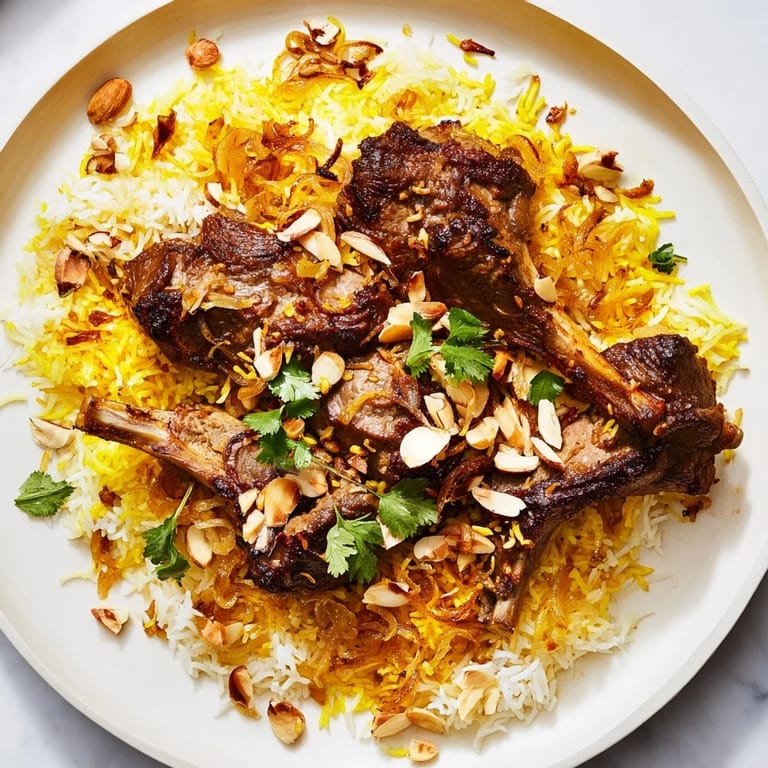
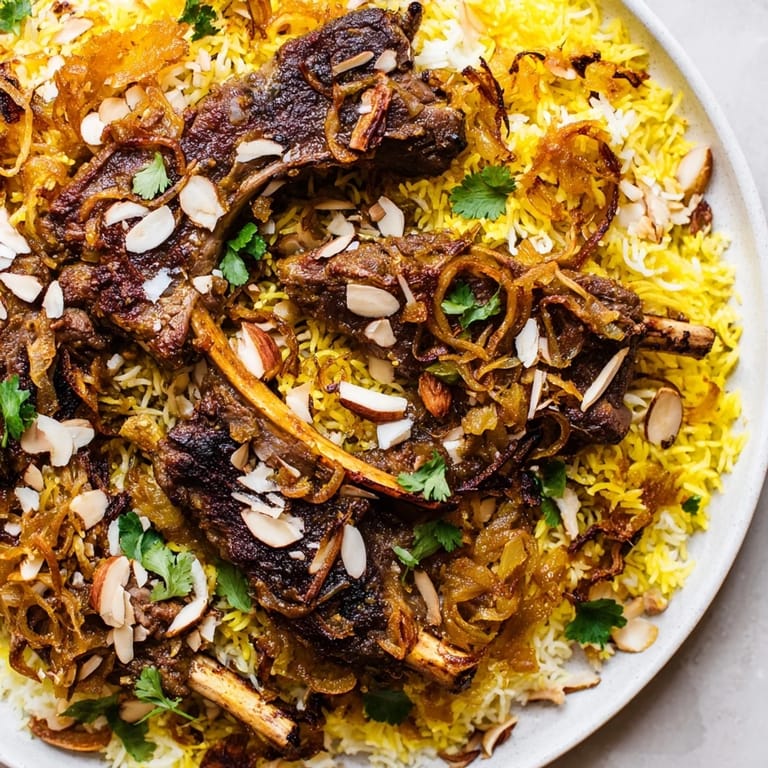
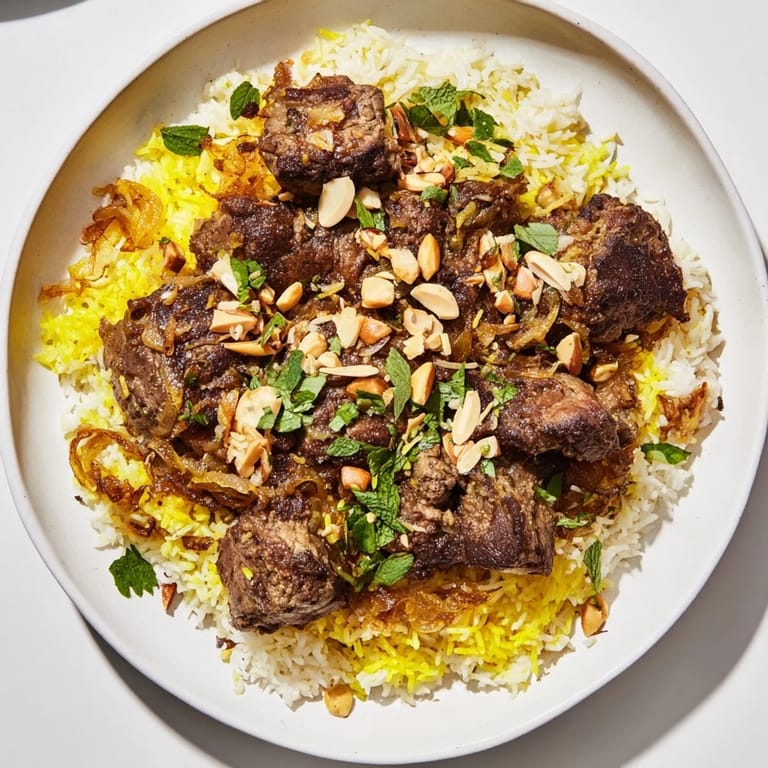
- Remove from heat and let the pot sit, covered, for 10 minutes. This resting period lets the rice relax and the flavors settle. Then gently fluff the rice with a fork and arrange everything on a serving platter, garnishing with toasted almonds and fresh cilantro.
 Save
Save There was a moment, maybe five minutes into the simmering, when I stepped away from the stove and my partner walked into the kitchen, stopped still, and asked what I was making. I didn't have to answer—the look on their face said everything. That smell, that warmth filling the whole house, that's when majboos stopped being instructions on a page and became something real.
The Story Behind the Spices
Every spice in majboos was chosen for a reason, not thrown together randomly. Coriander and cumin are the earthy base, cinnamon and cardamom add warmth and floral notes, and cloves whisper in the background. The black limes are the surprise—that tangy, almost smoky element that makes you pause mid-bite and wonder what just happened on your tongue. Together, they create a flavor that feels both familiar and foreign, comforting and adventurous at once. This balance is what sets majboos apart from other rice and meat dishes.
Timing and Technique Matter
The 45–50 minutes of simmering isn't arbitrary—it's the exact time lamb needs to become truly tender while the broth concentrates and deepens. Rushing this step gives you tough meat and watery rice. Similarly, the final 25–30 minutes of cooking the rice covered and undisturbed allows the grains to absorb the flavored liquid evenly. Each phase builds on the last, and skipping or shortening any of them changes the entire outcome. The resting period at the end matters too; it's not just about convenience, it's about letting the dish become itself.
Serving and Pairing
Majboos is traditionally served on one large platter, with the meat arranged on top of the fluffy rice, garnished with toasted almonds and cilantro so fresh it still looks green and alive. On the side, offer cool yogurt to dollop, a simple salad to cut the richness, or a spicy tomato sauce for those who want extra heat. This isn't a dish meant to be fussy or plated with tweezers—it's meant to be generous and shared, so everyone at the table feels welcomed and cared for. The beauty is in the abundance and the simplicity of presentation, not in restraint.
- Serve immediately while the rice is still steaming and the almonds are warm and crispy.
- Leftover majboos actually improves after a day in the refrigerator as flavors meld, so never apologize for reheating it gently in a covered pot with a splash of water.
- If you have guests with nut allergies, simply omit the almonds or replace them with toasted sesame seeds for a different but equally delicious finish.
 Save
Save This dish has a way of turning an ordinary evening into something memorable, of making people slow down and pay attention. That's the real magic of majboos—it asks you to cook with care and rewards you with something that tastes like it was made with love.
Recipe FAQs
- → What type of meat works best for this dish?
Bone-in lamb is preferred for richer flavor and tenderness, but chicken can be used as a substitute.
- → How should the basmati rice be prepared before cooking?
Rinse the basmati rice thoroughly and soak it for 30 minutes to ensure fluffy, separate grains after cooking.
- → Can the spice blend be adjusted for heat?
Yes, the green chilies are optional and can be increased or omitted to suit your preferred spice level.
- → What is the purpose of black limes (loomi) in this dish?
Black limes add a unique tangy, smoky depth to the broth; they can be omitted if unavailable but contribute authentic flavor.
- → How should the dish be finished for best presentation?
After cooking, fluff the rice gently and arrange the meat on top. Garnish with toasted slivered almonds and chopped fresh cilantro.
- → Is ghee necessary for cooking?
Ghee adds richness and depth, but vegetable oil can be used as a suitable alternative.