 Save
Save There's something magical about the way a kitchen fills with the smell of lemon and butter hitting a hot pan, and that's exactly what drew me to chicken piccata years ago when a friend casually mentioned it took less time than ordering takeout. The first time I made it, I was skeptical—how could something so elegant come together in thirty minutes?—but watching the sauce come together as I whisked in that final knob of butter converted me instantly. Now it's my go-to when I want to feel like I've spent hours cooking without actually leaving the stove.
I remember making this for my sister on a Wednesday night when she arrived unannounced and hungry, and the moment she took that first bite, she went quiet in the way people do when food surprises them. The balance of tart lemon against buttery capers just clicked for her, and she's asked me to make it every time she visits since. That's when I realized this wasn't just easy—it was the kind of dish that makes people feel genuinely cared for.
Ingredients
- Boneless, skinless chicken breasts (2 large): Slicing them in half horizontally creates thin, quick-cooking cutlets that sear beautifully and stay tender.
- All-purpose flour (½ cup): A light coating helps the chicken develop that golden crust while keeping the meat delicate underneath.
- Olive oil (2 tablespoons) and unsalted butter (1 tablespoon): Together they create the perfect medium-high heat base—oil for temperature stability, butter for flavor.
- Garlic (3 cloves, minced): Thirty seconds is all you need; any longer and it turns bitter and ruins the brightness of the sauce.
- Fresh lemon juice (⅓ cup): Bottled won't cut it here—fresh lemon is the backbone of the entire dish and deserves to be fresh.
- Capers (¼ cup, drained and rinsed): Rinsing them removes excess salt and brine, letting their briny punch shine without overwhelming.
- Dry white wine (½ cup): It cuts through the richness and adds depth; chicken broth works but won't give you that same subtle complexity.
- Chicken broth (½ cup low-sodium): Low-sodium lets you control the salt and prevents the sauce from becoming too aggressive.
- Fresh parsley (2 tablespoons, finely chopped): Added at the end, it keeps its brightness and color, waking up every bite.
- Spaghetti or linguine (12 ounces): The shape matters—long, delicate pasta clings to the sauce better than shorter cuts.
Tired of Takeout? 🥡
Get 10 meals you can make faster than delivery arrives. Seriously.
One email. No spam. Unsubscribe anytime.
Instructions
- Get your water boiling:
- Fill a large pot with salted water and bring it to a rolling boil—the salt is your only chance to season the pasta itself, so don't skip it. Start this first so everything else can flow naturally.
- Butterfly those chicken breasts:
- Lay each breast flat and carefully slice through the middle horizontally to create thinner cutlets; this is the secret to ten-minute chicken. Season generously on both sides with salt and pepper, then dredge lightly in flour, shaking off any excess so you get flavor without a crust.
- Sear the chicken until golden:
- Heat olive oil and butter in your skillet over medium-high heat until the butter foams, then lay in the chicken and resist the urge to move it—let it sit for three to four minutes per side until the exterior turns that deep golden color that tells you the crust has set. You'll know it's done when it feels firm to the touch and a knife slides through without resistance.
- Build the sauce with the brown bits:
- Pour off most of the oil, add minced garlic, and let it toast for just thirty seconds—count it out, your nose will tell you when—then pour in the wine and let it bubble while you scrape up all those golden, flavorful bits stuck to the pan. This is called deglazing and it's where restaurant flavor comes from.
- Bring the sauce together:
- Add lemon juice, capers, and chicken broth, then let everything simmer gently for two to three minutes until the volume reduces slightly and the flavors meld. Lower the heat, whisk in the remaining butter until the sauce turns glossy and silky, then return the chicken to the pan and spoon sauce over it.
- Toss it all together:
- Add the drained pasta directly to the skillet with the chicken and sauce, tossing gently so everything coats evenly. If it looks dry, splash in some of that reserved pasta water—it'll emulsify and create something almost creamy without any cream.
- Plate and serve immediately:
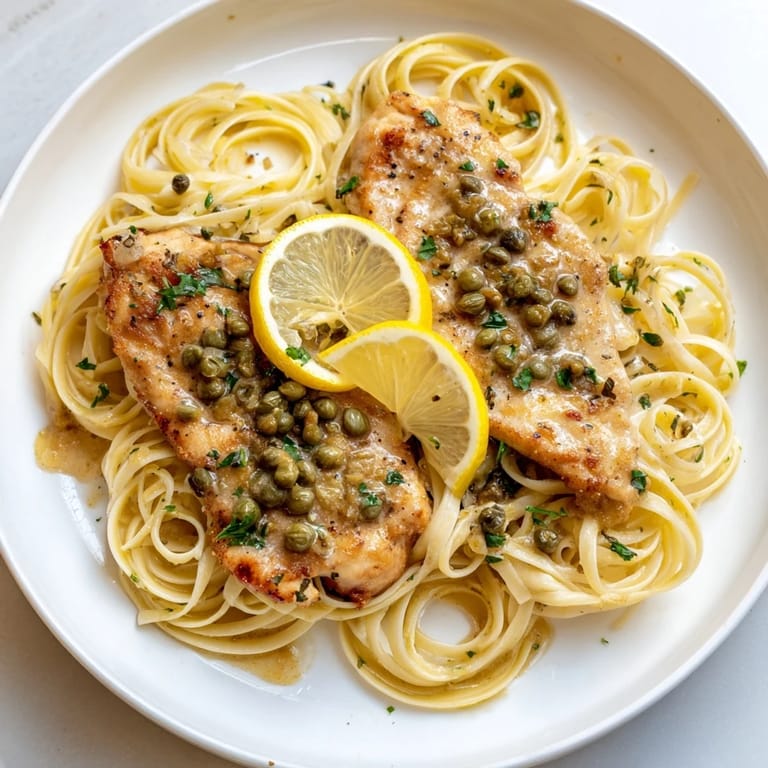
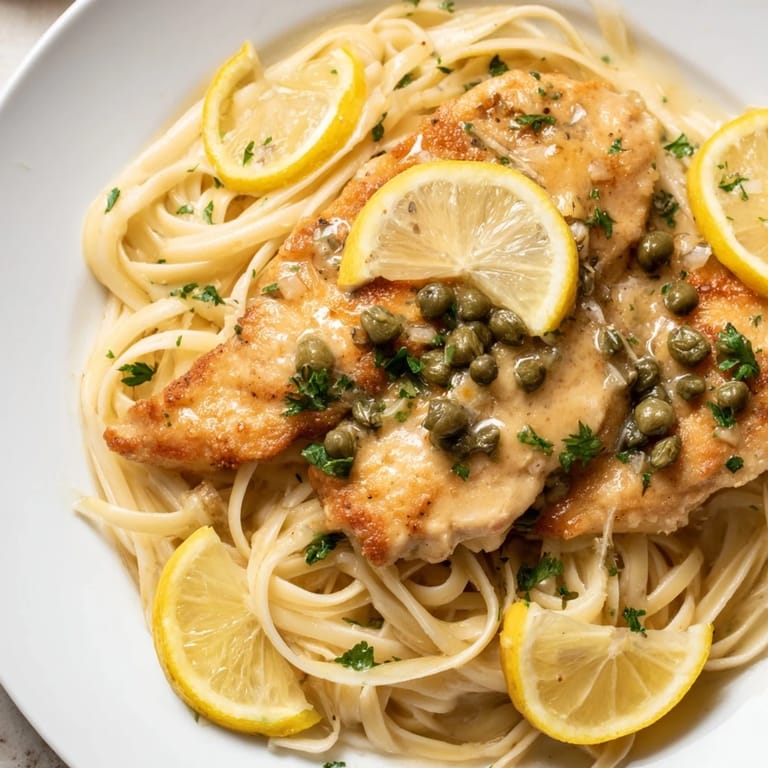
- Divide pasta among bowls, top with a chicken cutlet, spoon the extra sauce over everything, and finish with fresh parsley and a lemon slice if you want it to look as good as it tastes.
 Save
Save The moment that convinced me this recipe was special came on a quiet Sunday evening when my partner, who usually doesn't get excited about weeknight cooking, asked me to make it again after we'd barely finished the first time. There's something about the way this dish manages to feel both easy and impressive that keeps people coming back.
Why This Technique Works
The beauty of chicken piccata lies in its simplicity paired with technique—nothing fancy, just understanding how heat, acid, and fat work together. Butterflying the chicken isn't just about speed; it creates more surface area for that golden sear that seals in moisture while developing flavor. The deglaze step transforms what could be just sautéed chicken into something special, pulling up all those browned bits and turning them into the foundation of your sauce.
Timing and Flexibility
This recipe genuinely takes thirty minutes from start to plate, which makes it perfect for nights when you want something restaurant-quality without the planning. The sauce comes together in just a few minutes once the chicken is seared, so multitasking is easy—your pasta can simmer while your sauce builds. If you're running behind, cook the pasta while the chicken rests; nothing falls apart if you're a few minutes off schedule.
Making It Your Own
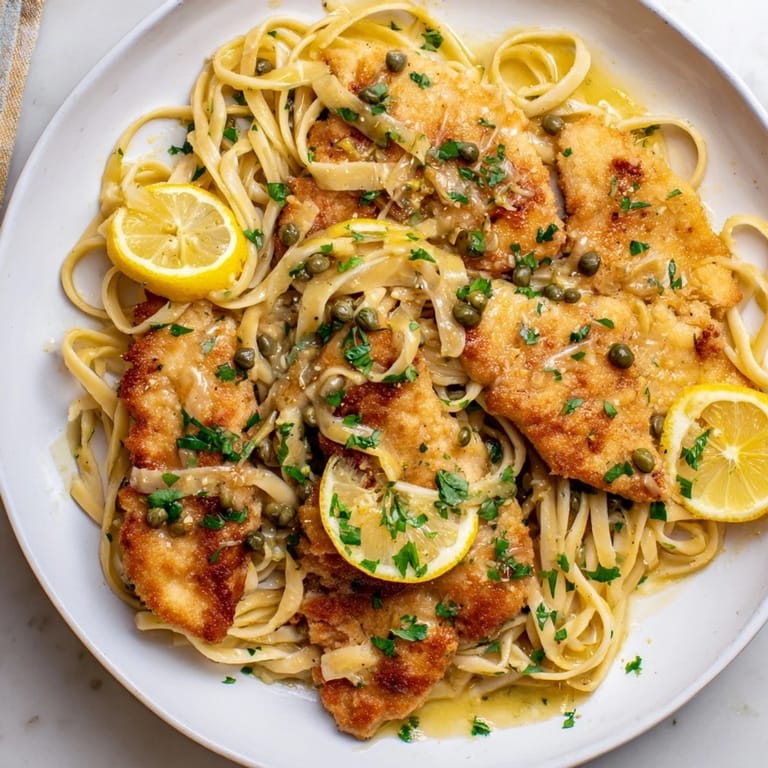
While the classic version is perfect as-is, this recipe invites subtle variations that keep it interesting. Some nights I've swapped half the white wine for a splash of vermouth, and other times I've added a handful of fresh spinach at the very end to bulk it up. The capers are what define the dish, but if you're not a fan, omitting them and adding a few anchovies instead creates an entirely different but equally delicious version.
- Angel hair pasta makes this feel lighter and more delicate if you prefer that texture.
- A gluten-free flour works beautifully for the coating if you need to avoid wheat.
- Fresh herbs like tarragon or thyme can stand in for parsley if that's what you have on hand.
 Save
Save This is the kind of recipe that proves you don't need hours in the kitchen to create something that feels thoughtful and special. Make it once and it becomes part of your permanent rotation.
Recipe FAQs
- → What type of pasta works best for this dish?
Spaghetti or linguine are ideal as they hold the sauce well, but angel hair can be used for a lighter texture.
- → Can I substitute white wine in the sauce?
Yes, chicken broth makes a great substitute and keeps the sauce flavorful without alcohol.
- → How do I ensure the chicken stays tender?
Slice chicken breasts thinly and sauté over medium-high heat until golden but not overcooked to maintain juiciness.
- → Any tips for a gluten-free version?
Use gluten-free flour for dredging and substitute with gluten-free pasta to keep it safe for gluten-sensitive diets.
- → What wine pairs well with this meal?
Pinot Grigio or Sauvignon Blanc complement the bright lemon and caper flavors perfectly.