 Save
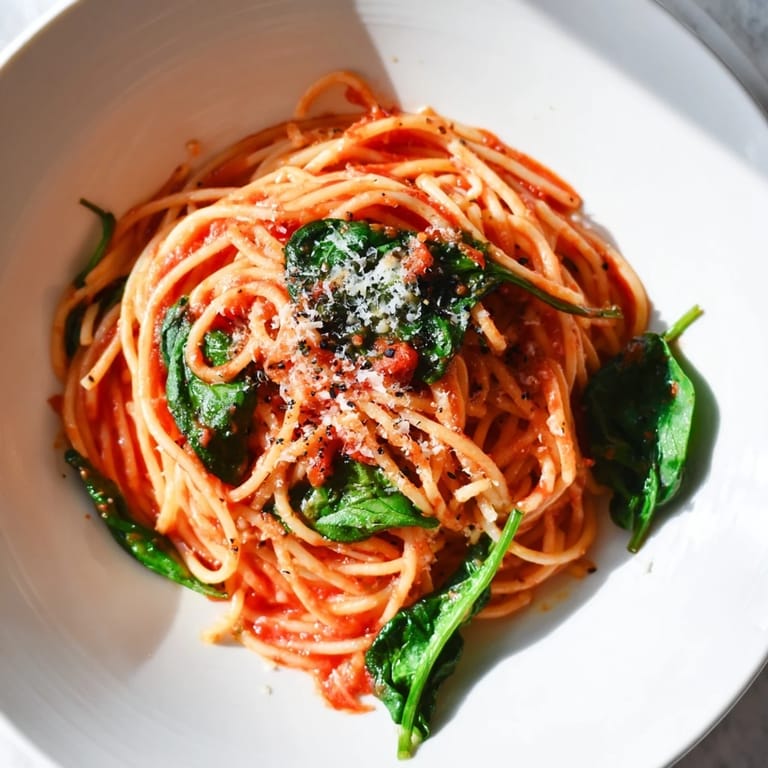
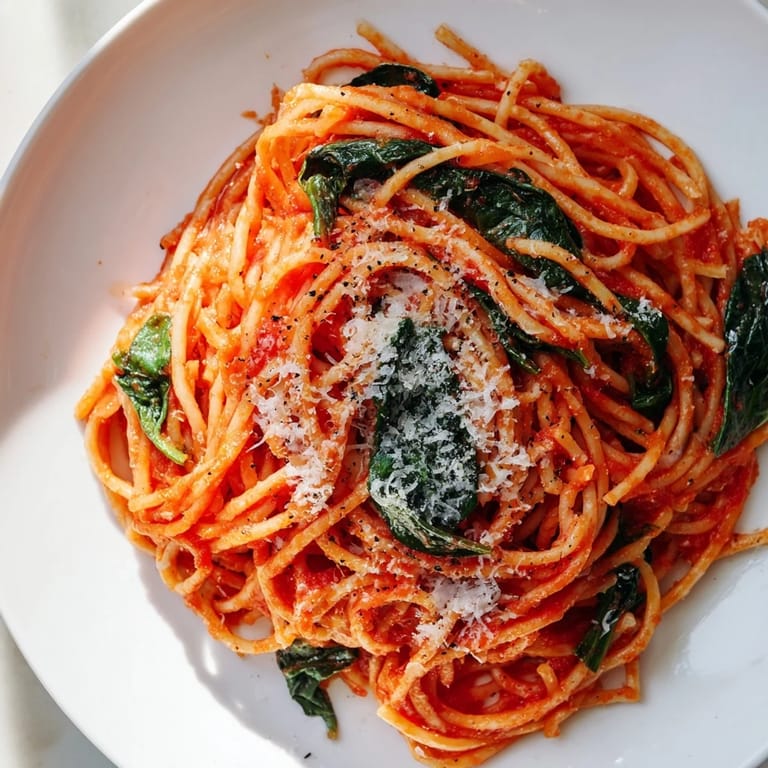
Save There's something magical about opening a jar of marinara on a Tuesday night when you've got twenty minutes and three hungry people waiting at the table. I discovered this combination completely by accident—I'd bought too much spinach that was about to wilt, threw it into the simmering sauce almost as an afterthought, and suddenly had something that tasted like I'd spent all afternoon on it. Now it's become my secret weapon for nights when cooking feels impossible but eating well still matters.
I made this for my neighbor last spring when she was recovering from surgery and didn't want anything heavy but needed something real to eat. The simplicity felt respectful somehow—no fuss, no pretension, just warm pasta and vegetables that actually taste good. She asked for the recipe the next day, and I realized it wasn't the ingredients that mattered, it was that someone took fifteen minutes to make her something that showed up as kindness.
Ingredients
- 12 oz dried spaghetti or penne: Al dente pasta is the whole point here—it should have a slight resistance when you bite it, not be soft all the way through.
- Salt for pasta water: Make it taste like the sea; this is your only seasoning for the pasta itself.
- 2 tbsp olive oil: Good olive oil matters more than fancy ingredients because you can actually taste it in something this simple.
- 3 cloves garlic, minced: That thirty seconds of sizzling in the pan transforms the entire dish, so don't skip it or rush it.
- 1 (24 oz) jar marinara sauce: Pick one with a short ingredient list if you can—tomatoes, garlic, olive oil, that's it.
- 5 oz fresh baby spinach: It looks like too much until it hits the heat, then it shrinks down to exactly the right amount of green.
- 1/2 tsp red pepper flakes (optional): This adds a whisper of heat that makes your mouth wake up; leave it out if you're feeding young kids.
- Freshly ground black pepper and 1/4 cup Parmesan cheese: Fresh black pepper makes all the difference over pre-ground, and Parmesan gives everything a salty, nutty finish.
- Fresh basil leaves (optional): Tear them by hand right before serving if you have them; it changes everything.
Tired of Takeout? 🥡
Get 10 meals you can make faster than delivery arrives. Seriously.
One email. No spam. Unsubscribe anytime.
Instructions
- Get the water boiling:
- Fill a large pot with water, salt it generously, and get it to a rolling boil before you add the pasta. This is non-negotiable for pasta that doesn't taste like nothing.
- Cook your pasta:
- Follow the package timing, but start tasting about a minute before it says it's done. You want it soft enough to bite easily but still with a little firmness in the center, then drain it and set aside 1/2 cup of that starchy water before it all goes down the sink.
- Bloom the garlic:
- Heat your olive oil in a large skillet over medium heat, add the minced garlic, and listen for the sizzle. That thirty seconds of cooking is when the magic happens—the whole kitchen should smell incredible.
- Warm the sauce:
- Pour in your marinara and let it come to a gentle simmer, then add red pepper flakes if that's your thing. Don't let it boil hard or it tastes sharp and angry instead of cozy.
- Wilt the spinach:
- Stir in all that spinach at once and watch it transform into something silky and deep green in just a couple of minutes. The volume shrinks dramatically, which always surprises people.
- Bring it together:
- Add your drained pasta to the sauce and toss everything until the pasta is completely coated. If it looks too thick, add a splash of that reserved pasta water—the starch in the water helps everything cling together beautifully.
- Finish and serve:
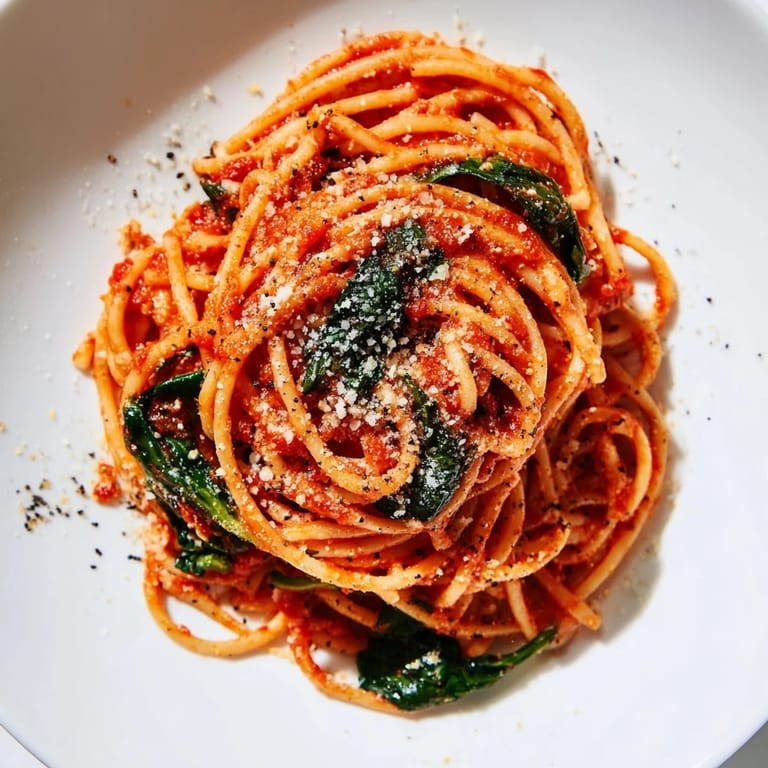
- Stir in the Parmesan, crack in some black pepper, and taste it. Serve it immediately while it's still hot, with extra cheese and fresh basil if you have it.
 Save
Save The moment I remember most is my daughter saying she could taste the spinach but it didn't feel like eating vegetables, it felt like eating sauce that happened to be green. That's when I understood the real power of this recipe—it's not about tricking anyone or proving something, it's just about making food that people actually want to eat.
Why Jarred Sauce Gets a Bad Reputation (And Why It Shouldn't)
Homemade marinara is beautiful when you have three hours, fresh tomatoes, and the patience for simmering. But jarred sauce is honest food made by people who know what they're doing, and there's no shame in starting there. The real cooking happens in what you add to it—the garlic you toast in olive oil, the fresh spinach you wilt into it, the way you finish it with real Parmesan. I've learned that using good ingredients efficiently beats using fancy ingredients carelessly every single time.
Building Flavor in Twenty Minutes
The trick to making something taste like you spent more time on it than you actually did is layering small moments of attention. That thirty seconds of garlic sizzling, the way you taste the pasta water and adjust the sauce consistency, the fresh basil torn at the last second—none of these take extra time, but together they're the difference between something that tastes rushed and something that tastes cared for. You can always tell which is which the moment it hits your mouth.
Variations That Actually Work
The beautiful thing about this recipe is how much it welcomes company. I've thrown in white beans when I needed extra protein, added mushrooms that I'd sautéed separately so they wouldn't release water into the sauce, even crumbled in some cooked Italian sausage when the mood struck. The foundation is sturdy enough to handle what you add, as long as you don't overcomplicate it. Keep the spinach, keep the garlic, and everything else is just what you're in the mood for.
- Stir in a can of white beans at the same time as the spinach for protein-packed weeknight meals.
- Sauté mushrooms separately in a little butter before tossing them in at the end so they stay tender instead of weeping into the sauce.
- Use gluten-free pasta and plant-based Parmesan if that's what works for your table, because the magic is in the technique, not the specific brand names.
 Save
Save This is the kind of recipe that saves you on nights when cooking feels impossible but eating alone or grabbing takeout feels sad. It reminds you that you can make something delicious and thoughtful in the time it takes to scroll through your phone.
Recipe FAQs
- → Can I use fresh tomatoes instead of jarred sauce?
Yes, fresh tomatoes can be simmered down with garlic and olive oil to create a homemade sauce, offering a fresher but slightly longer preparation time.
- → What type of pasta works best for this dish?
Spaghetti or penne are ideal as they hold the marinara sauce well, but any pasta shape you prefer can be used.
- → How do I prevent the sauce from becoming too thick?
Reserve some pasta cooking water and add a splash when needed to loosen the sauce and help it coat the pasta evenly.
- → Can I add protein to this dish?
Cooked white beans or sautéed mushrooms are great options to add protein and enhance the dish's texture and nutrition.
- → Is it possible to make this dish vegan-friendly?
Omit the Parmesan cheese or replace it with a plant-based alternative to keep the dish vegan.