 Save
Save Late one Tuesday night, I stood in my kitchen staring at two lonely packs of instant ramen, wondering if I could make something that felt less like survival food and more like an actual meal. I grabbed a bag of frozen peas from the freezer—the same ones I'd bought weeks earlier with vague intentions—and suddenly the whole thing came alive. What started as a quick fix turned into something I actually wanted to eat, something with color and texture and a strange kind of satisfaction that made me realize the best upgrades aren't complicated.
I made this for my roommate one random evening when she came home exhausted from work, and the look on her face when she saw something warm and green and actually appetizing in her bowl was worth every second. She ate two helpings and asked if I could make it again the next day, which is when I knew this wasn't just a budget hack—it was legitimately good.
Ingredients
- Instant ramen noodles (2 packs): Use whatever kind you have, though the plain ones give you more control over the final flavor—the seasoning packets can be overpowering.
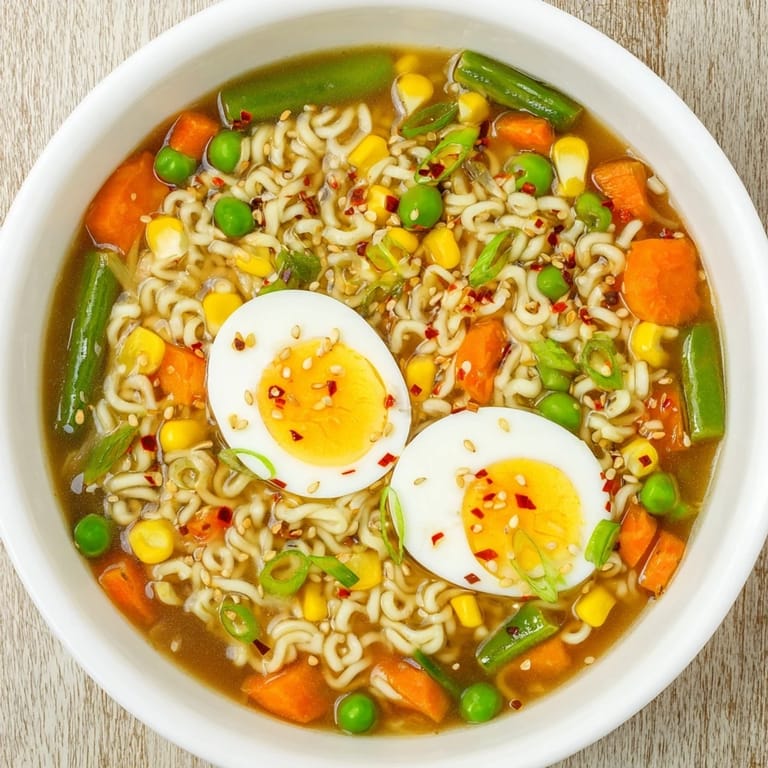
- Frozen peas (1 cup): They don't need thawing, they cook in minutes, and they're one of the only frozen vegetables that actually improves the texture of ramen instead of making it mushy.
- Frozen mixed vegetables (1 cup, optional): Carrots, corn, and green beans add color and depth without much extra work.
- Green onions (2, sliced): The fresh brightness here is non-negotiable—it's what separates this from just heating up broth.
- Garlic (2 cloves, minced): Toast it in the oil first for about 30 seconds so your entire kitchen smells amazing before anything else even happens.
- Low-sodium vegetable broth (4 cups): Water works fine if you're in a pinch, but broth changes everything about the depth of flavor.
- Soy sauce (2 tablespoons): This is your seasoning backbone—taste as you go because some brands are saltier than others.
- Sesame oil (1 teaspoon): Start with less than you think you need; it's potent and carries the whole aromatics of the dish.
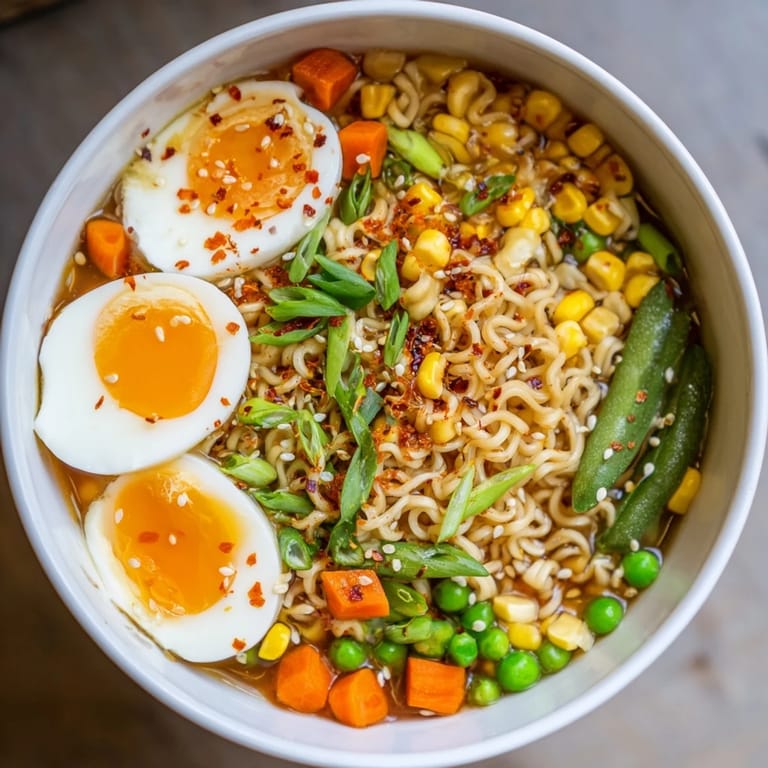
- Soft-boiled eggs (2, optional but recommended): They add richness and make it feel like an actual bowl of ramen instead of just noodles in broth.
- Toasted sesame seeds and chili flakes: These are your finishing touches—they add texture, heat, and the feeling that you knew what you were doing all along.
Tired of Takeout? 🥡
Get 10 meals you can make faster than delivery arrives. Seriously.
One email. No spam. Unsubscribe anytime.
Instructions
- Toast the garlic in oil:
- Heat sesame oil in your saucepan over medium heat, then add minced garlic and let it sizzle for about 30 seconds. You want to smell that toasty, warm note but not let it brown.
- Build your broth:
- Pour in the vegetable broth and soy sauce, then bring everything to a gentle boil. This is when your kitchen starts to smell like an actual ramen shop.
- Add the vegetables first:
- Scatter in the frozen peas and any mixed vegetables, letting them simmer for 2–3 minutes until they're heated through and the peas turn bright green.
- Cook the noodles:
- Add the ramen noodles and cook according to package instructions, usually about 2–3 minutes. Break them up with your spoon if they're stuck together.
- Season and taste:
- Stir in half of the green onions, then take a spoonful of broth and actually taste it. Add more soy sauce if it needs it—this is your moment to make it exactly what you want.
- Divide and top:
- Ladle everything into bowls, then top with a soft-boiled egg if you're using one, the remaining green onions, sesame seeds, and a pinch of chili flakes.
 Save
Save There's something quietly powerful about taking the cheapest, most no-effort ingredient and turning it into something that makes people ask for seconds. That's when I realized this wasn't about stretching a budget—it was about knowing that the smallest upgrades, done thoughtfully, change everything.
Why Frozen Vegetables Are Secretly Better
The first time someone told me that frozen vegetables are actually superior for quick cooking, I didn't believe them. But frozen peas in hot broth cook in minutes and stay bright and almost crisp, while fresh ones turn soft and pale. They're also picked at peak ripeness and frozen immediately, which means they're nutritionally denser than fresh vegetables that have been sitting in the store for days. For ramen specifically, this matters because you want vegetables that add texture and color, not ones that dissolve into the broth and disappear.
The Egg Question
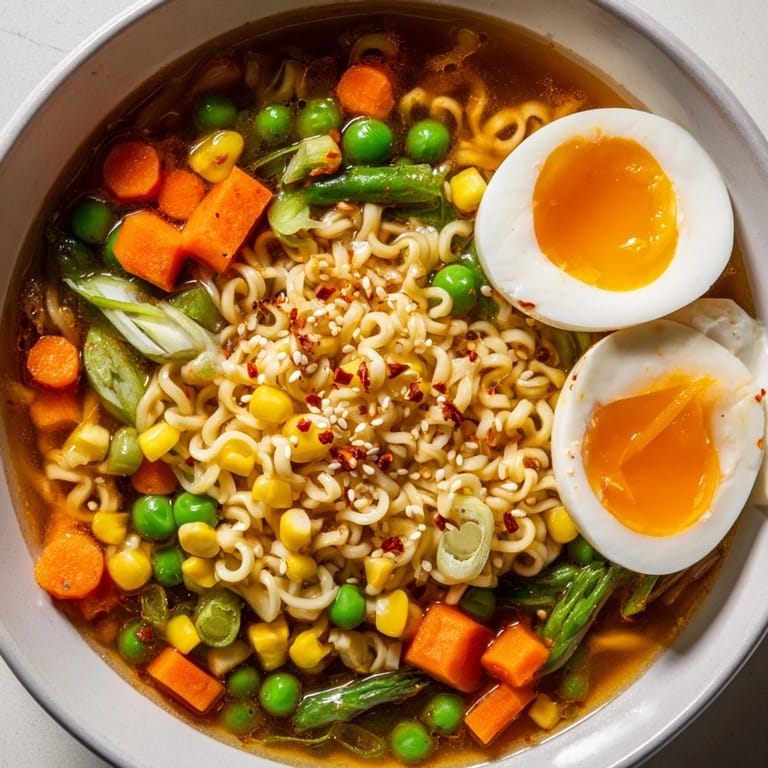
A soft-boiled egg transforms this from a light broth-and-noodles situation into something that feels more substantial and satisfying. The yolk breaks into the broth as you eat, creating its own rich sauce that coats the noodles. If you want to go this route, boil your eggs while the broth is coming up to temperature—they'll be ready at almost exactly the same time as everything else. A runny yolk is what you're after here, not a fully hard-boiled egg that sits there like a rock.
Simple Swaps and Variations
The beauty of this recipe is that it bends to whatever you have on hand or whatever you're craving that day. Some nights I use spinach instead of peas because it wilts into the broth and adds an earthy note. Other times I throw in edamame or even leftover roasted vegetables if I have them. The core technique stays the same—you're just building flavor in a pot and letting everything mingle together.
- Swap the peas for spinach, edamame, or bok choy depending on what's in your freezer.
- Add protein like tofu, shredded chicken, or canned chickpeas if you want something heartier.
- For vegan or dairy-free, skip the egg and let the sesame oil and soy sauce carry the richness instead.
 Save
Save This is the kind of recipe that sits with you because it proves that good food doesn't require time or money or fancy ingredients—just intention and a willingness to notice when something small transforms something ordinary. Make it when you're tired, make it when you're broke, make it because it tastes good.
Recipe FAQs
- → Can I use fresh peas instead of frozen?
Yes, fresh peas can be used, but adjust cooking time as frozen peas cook faster and blend well in the broth.
- → How do I make this dish vegan?
Simply omit the eggs and ensure the broth and noodles are free of animal products.
- → What vegetables work best with this dish?
Frozen mixed vegetables like carrots, corn, and green beans complement peas well and add color and texture.
- → Can I prepare this gluten-free?
Use gluten-free noodles and tamari instead of soy sauce to keep the dish gluten-free.
- → How can I add protein to this meal?
Incorporate tofu, shredded chicken, or extra eggs to boost protein content.