 Save
Save My first encounter with shakshuka happened on a Tuesday morning in a cramped Tel Aviv kitchen, where the smell of cumin and hot tomato sauce somehow made everything feel like home despite being a thousand miles away. A friend thrust a wooden spoon into my hand and said, watch how the eggs nestle into the sauce like they belong there, and I understood immediately why this dish has been feeding people across the Mediterranean for generations. There's something about cracking an egg into a bubbling red sauce that feels both elegant and honest, like you're creating comfort without pretension. I've made it hundreds of times since then, and it still feels like a small victory every single time.
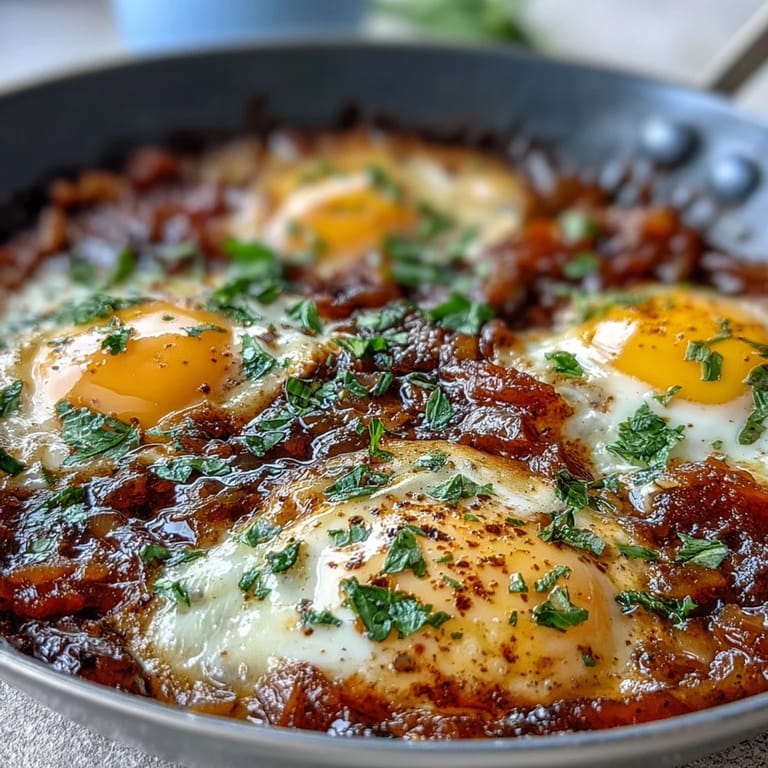
I made this for someone I was trying to impress once, back when I thought shakshuka was too simple to constitute real cooking, and watching them soak up the last of the sauce with bread while asking for seconds taught me that the most memorable meals rarely need to be complicated. The pan came together in my kitchen while rain rattled the windows, and there was this perfect moment where steam rose from the sauce and caught the morning light, and everything felt exactly right.
Ingredients
- Olive oil (2 tbsp): Use a good one you'd actually eat on bread, because you'll taste it here, and it carries the whole flavor profile.
- Large onion (1), diced: The base that everything builds on, and dicing it finely means it melts into the sauce rather than staying chunky.
- Red bell pepper (1), diced: This brings sweetness and body, and honestly it's where half the dish's charm comes from if you're generous with it.
- Garlic (3 cloves), minced: Go fine and go fresh, because powdered garlic will turn bitter by the time the sauce finishes simmering.
- Crushed tomatoes (28 oz can): Canned works better than fresh for this because you need the concentrated flavor and consistent texture, not watery summer tomatoes.
- Chili pepper (1 small), finely chopped: Optional but honestly worth the tiny extra effort if you like heat that builds rather than screams.
- Ground cumin (1 tsp): This is the backbone spice, warm and earthy, and it's why shakshuka tastes like itself and nothing else.
- Sweet paprika (1 tsp): Don't skip this and definitely don't grab the hot kind unless you want to weaponize your breakfast.
- Ground coriander (1/2 tsp): A subtle note that most people won't identify but will notice is missing if you leave it out.
- Cayenne pepper (1/4 tsp, optional): Only add this if you want to wake people up, and even then, start small.
- Salt and black pepper: Season as you go because the sauce reduces and flavors concentrate.
- Eggs (4 large): Room temperature if possible, because they'll cook more evenly and the yolks stay creamy instead of becoming rubber.
- Fresh parsley or cilantro (2 tbsp), chopped: This bright finish cuts through the richness and makes the whole thing feel alive.
- Feta cheese (50 g), crumbled: Optional but transforms the dish into something special, salty and cool against the heat.
Tired of Takeout? 🥡
Get 10 meals you can make faster than delivery arrives. Seriously.
One email. No spam. Unsubscribe anytime.
Instructions
- Start the base with oil and vegetables:
- Heat your olive oil over medium heat until it shimmers, then add the diced onion and bell pepper, stirring occasionally for 5 to 7 minutes until they've softened into each other. You'll know they're ready when the onion turns translucent and the pepper starts to collapse slightly at the edges.
- Build the flavor foundation:
- Add your minced garlic and chopped chili pepper, stirring constantly for about a minute so they perfume the oil without burning. This moment smells incredible and it's when your kitchen transforms into somewhere warm and welcoming.
- Combine the sauce:
- Pour in your crushed tomatoes along with the cumin, paprika, coriander, cayenne, salt, and pepper, stirring everything together until the spices dissolve into the liquid. The sauce should look vibrant and smell like it knows exactly what it's doing.
- Let the sauce develop:
- Simmer uncovered for 10 to 12 minutes, stirring occasionally, until the sauce thickens enough that a spoon dragged through it leaves a brief trail. The longer it sits, the more the flavors meld and deepen, so don't rush this part.
- Create nests for the eggs:
- Using the back of a spoon, make 4 shallow wells distributed around the sauce, pushing down gently but not scraping the pan. These little reservoirs will cradle your eggs and keep them from rolling around.
- Nestle the eggs in:
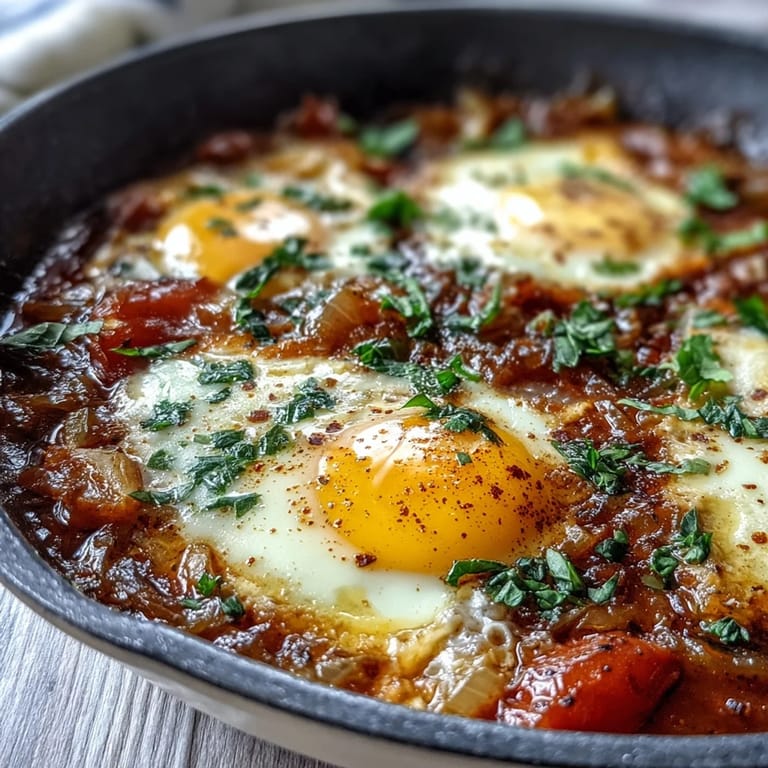
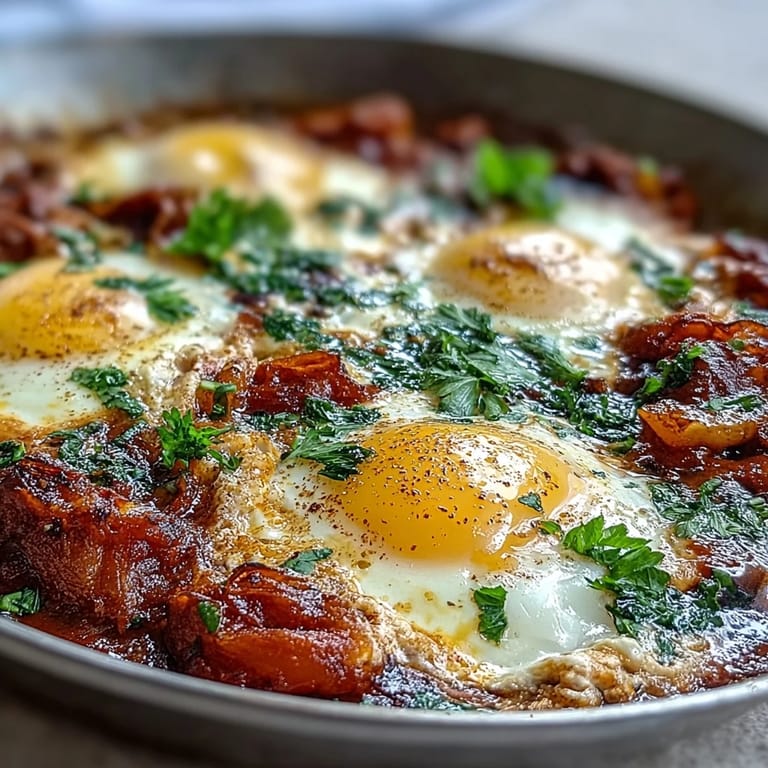
- Crack each egg carefully into a well, keeping the whites intact, and the sauce should immediately start setting them at the edges. The yolks should sit proud on top like little promises of richness.
- Cover and cook the eggs:
- Cover your pan and reduce the heat to medium-low, cooking for 6 to 8 minutes if you like runny yolks, or up to 10 minutes for fully set eggs. The whites will turn opaque and firm while you can watch the yolk jiggle slightly if you tilt the pan.
- Finish and serve:
- Remove from heat, scatter your fresh herbs and crumbled feta across the top, and serve immediately in bowls with crusty bread for dipping. The sauce should still be bubbling gently when it hits the table.
 Save
Save There was a morning when I realized my partner had started making this without asking, just quietly building it while I read the news, and that's when I knew it had become part of our household language. It's the kind of dish that stops being special because it's good and starts being special because it's yours.
Why The Spices Matter
When I first made shakshuka with whatever spices I had on hand, skipping the coriander because I thought it was optional, I created something that tasted almost right but somehow flatter than memory. Each spice here does actual work: the cumin grounds you in warmth, the paprika adds color and smoke, the coriander brings a faint floral note that makes the whole thing taste intentional instead of like spiced tomato soup. Once I understood that, I stopped improvising and started respecting the recipe, and honestly, that's when everything changed.
The Egg Timing Question
The hardest part of making shakshuka isn't the cooking, it's deciding how set you want those yolks, because different people have different opinions and you're standing there with a spatula looking at molten gold wondering if five more seconds is too much. I've learned to use the jiggle test: if the white looks opaque and firm but the yolk moves when you tilt the pan, you're in the sweet spot where every bite delivers a little gift of richness. Some mornings I want them completely runny, other mornings I want them almost set, and the beauty is that this dish accommodates both moods without judgment.
Making It Your Own
I've turned shakshuka into a canvas for whatever vegetables were in my crisper drawer, and it's never failed me: roasted red peppers make it sweeter, diced zucchini adds texture, a handful of spinach wilts into the sauce at the last second and nobody even notices. The spice blend stays the same because it's the identity of the dish, but everything else is negotiable, which means you can make it a hundred times and have a slightly different experience each time.
- Add a dollop of harissa paste or a sprinkle of smoked paprika if you want complexity without commitment.
- Tear up fresh mozzarella instead of feta if that's what you have, or skip the cheese entirely and let the eggs be the luxury.
- Serve it with crusty bread, soft pita, or even crumbled feta mixed into rice if you're feeling unconventional.
 Save
Save This dish has fed me through heartbreaks and celebrations, through lazy mornings and rushed weekends, and it never once disappointed. Make it for yourself on a day when you need something simple and nourishing, then make it for someone you love.
Recipe FAQs
- → What is shakshuka?
Shakshuka is a traditional Middle Eastern and North African dish of eggs poached in a spiced tomato sauce, typically seasoned with cumin, paprika, and peppers. It's often served for breakfast or brunch with bread for dipping.
- → How do I know when the eggs are done?
The eggs are ready when the whites are fully set but the yolks remain runny, usually after 6–8 minutes of covered cooking. For firmer yolks, cook an additional 2–3 minutes.
- → Can I make shakshuka in advance?
The tomato sauce can be made ahead and refrigerated for up to 3 days. When ready to serve, reheat the sauce, create wells, and add fresh eggs to finish cooking.
- → What can I serve with shakshuka?
Crusty bread, warm pita, or flatbread are classic choices for soaking up the sauce. It also pairs well with roasted potatoes, a simple green salad, or olives.
- → Is shakshuka spicy?
The heat level is adjustable. The cayenne pepper and optional chili add mild spice, but you can reduce or omit them for a milder version, or increase for more heat.