 Save
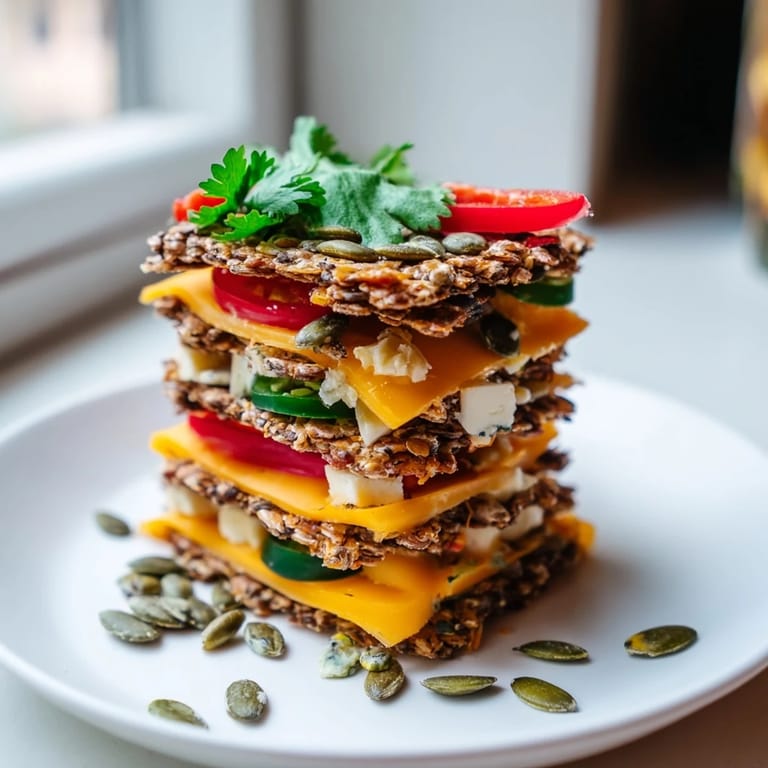
Save I stumbled upon the idea for these stacks while flipping through travel photos from a desert road trip, thinking about how the layered rock formations caught the afternoon light. My nephew was visiting, and I wanted to make something that looked like an adventure on a plate. That's when it hit me—why not turn crackers and cheese into edible mesas, a little geology lesson you could actually eat? The beauty of stacking is that it forces you to slow down and be intentional, and somehow that makes even simple ingredients feel special.
I made these for a small dinner party last summer, and what started as a quiet appetizer turned into everyone gravitating toward the platter, deconstructing the towers piece by piece. One friend kept saying they reminded her of a hiking trip, which made me laugh—but then she was genuinely moved by the connection. That's the magic of food that tells a story; it gives people permission to remember their own.
Ingredients
- 24 assorted crackers: Vary your shapes and sizes—multigrain, wheat, rye, seeded—because the visual chaos is part of what makes these feel like real rock formations, not perfect geometry.
- 100 g cheddar cheese, sliced: Your foundation layer, dependable and sharp enough to anchor everything else.
- 100 g pepper jack cheese, sliced: Brings a whisper of heat and keeps things interesting without overwhelming.
- 100 g Monterey Jack cheese, sliced: Mild and creamy, it acts like a bridge between the bolder flavors.
- 50 g smoked gouda, sliced: A tiny bit goes a long way; this is your secret depth charge.
- 50 g blue cheese, cut into cubes: Optional, but if you use it, bury it in the middle of a stack where it surprises people on the second bite.
- 1 small red bell pepper, thinly sliced: These catch the light and add a crisp, sweet element that feels like wildflowers scattered across desert stone.
- 2 tablespoons fresh cilantro leaves: A sprinkle between layers adds brightness and makes you feel like you know what you're doing.
- 1 small jalapeño, thinly sliced: Use it if your crowd likes heat, tuck it inside a stack so it's a choice, not a surprise.
- 1 tablespoon toasted pumpkin seeds: Scattered around the base, they ground the whole composition and add a textural moment.
Tired of Takeout? 🥡
Get 10 meals you can make faster than delivery arrives. Seriously.
One email. No spam. Unsubscribe anytime.
Instructions
- Prep your cheese into building blocks:
- Slice everything so it's just slightly smaller than your crackers—you want room to maneuver without cheese sliding off like a landslide. I use a cheese slicer for consistency, but a sharp knife works fine if you take your time.
- Start stacking on your platter:
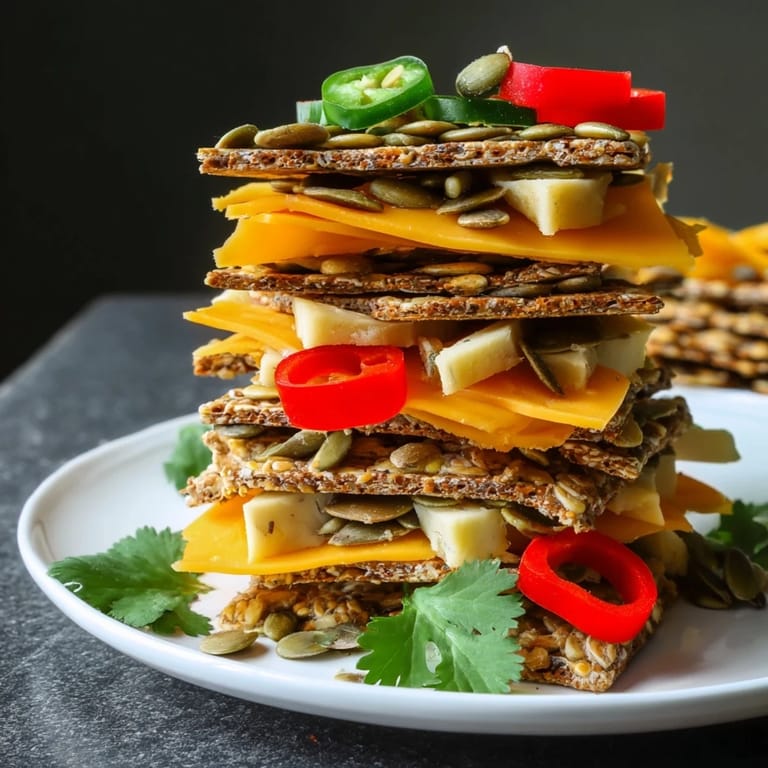
- Begin with a cracker as your base, add a slice of cheese, then another cracker, keeping heights between three and seven layers to mimic real mesas with their varied elevations. Don't overthink it; the unevenness is what makes them look natural.
- Play with variety in each tower:
- Switch up your cheese choices layer to layer so each stack has its own personality and flavor journey.
- Tuck in the garnishes as you go:
- Slip bell pepper slivers, cilantro leaves, and jalapeño slices between layers or perch them on top like vegetation clinging to rock faces. This is where you let your instincts take over.
- Create your desert floor:
- Sprinkle those toasted pumpkin seeds around the base of your stacks for texture and a finishing touch that grounds the whole scene.
- Serve immediately or chill:
- If you're eating right away, serve at room temperature so the cheese flavors shine; if making ahead, cover loosely and refrigerate, letting things come back to room temp for about ten minutes before guests dive in.
 Save
Save I realized halfway through my first attempt that this dish is really about permission—permission to play with your food, to make something beautiful without fancy techniques, to treat an appetizer like it deserves as much thought as a main course. That shift in mindset changes everything.
The Beauty of Asymmetry
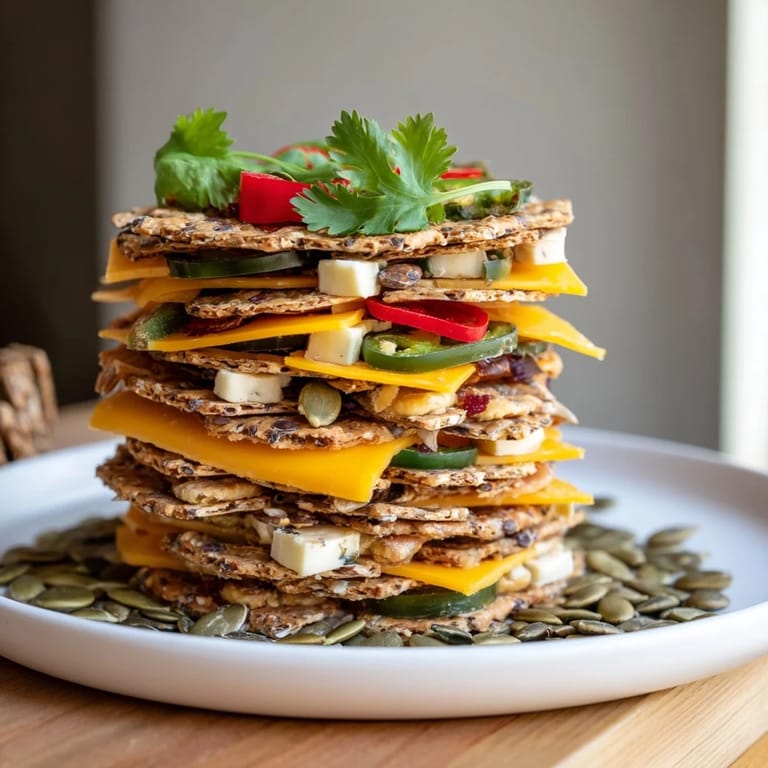
These stacks work because they're intentionally imperfect, mimicking actual geological formations rather than pastry-shop precision. I learned this when I first made them too symmetrical, cutting everything into perfect squares, and they just looked fussy. The moment I switched to varying shapes and heights, they came alive. Uneven stacking isn't a flaw; it's the whole point.
Building Flavor Layers
Think of each stack as a flavor profile on its own journey. The mild Monterey Jack isn't boring filler; it's a palate reset between the sharp cheddar and the smoky gouda. I started noticing this when a friend deconstructed one stack bite by bite, commenting on how each layer tasted different. That's when I realized I could intentionally design stacks for different people at the table—one bold and spicy for the adventurous eaters, one gentle and creamy for someone who prefers subtlety.
Serving With Purpose
Presentation matters here because these towers are meant to be admired before they're demolished. I set mine out an hour before guests arrived, and people kept asking if they were too beautiful to eat.
- If you're serving these at a casual gathering, lean into the playfulness and tell guests the origin story—it makes the whole experience more memorable.
- For a more formal appetizer situation, keep them on a dark board or platter to make the colors pop and the geometry read more clearly.
- Don't stress if a tower topples; just stack it again or repurpose the pieces into a deconstructed cheese board situation.
 Save
Save These stacks turned into a tradition at our summer gatherings, and now people ask if I'm making them before they even RSVP. It's proof that sometimes the simplest ideas, executed with a little thoughtfulness and a sense of play, stick with people longest.
Recipe FAQs
- → What types of cheeses work best for the layered stacks?
Cheddar, pepper jack, Monterey Jack, smoked gouda, and blue cheese provide varied textures and flavors that complement each other well in this dish.
- → Can this dish be made gluten-free?
Yes, simply substitute the crackers with gluten-free varieties while maintaining different shapes and sizes for visual appeal.
- → How should the layers be assembled for best results?
Alternate crackers and cheese slices slightly smaller than crackers, stacking 3 to 7 layers high to mimic flat-topped mesas.
- → Are there suggested garnishes to enhance flavor and presentation?
Thin slices of red bell pepper, fresh cilantro, jalapeño for heat, and toasted pumpkin seeds add vibrant color and texture.
- → What is the recommended serving suggestion?
Serve immediately or refrigerate loosely covered. Pair with a crisp white wine or dry rosé for a refreshing contrast.