 Save
Save The evening I first learned to make hand rolls changed my relationship with sushi forever. Standing in my friend Keiko's kitchen, the steam rising from freshly cooked rice, I watched her hands move with such natural grace as she assembled each temaki. The simplicity stunned me – no special equipment, just good ingredients and a bit of technique. That night, surrounded by laughter and the clean scent of cucumber and vinegar-seasoned rice, I discovered that sometimes the most satisfying meals are the ones you hold in your hands.
Last summer, I hosted an impromptu dinner on my tiny balcony and served these hand rolls with cold sake. The evening air was warm, fairy lights twinkled overhead, and everyone crowded around my coffee table as we passed ingredients family-style. Even my brother-in-law who swore he didnt like seafood ended up making three rolls, experimenting with different ratios of avocado to crab. Sometimes I think the informality of hand-held food creates the most memorable gatherings.
Ingredients
- Sushi Rice: Getting this right is your foundation, and I learned after several gummy disasters that rinsing until the water runs clear isnt just a suggestion but absolutely essential for that perfect sticky-not-mushy texture.
- Nori Sheets: Store these in an airtight container with a silica packet, as humidity is their enemy and nothing ruins the experience faster than limp seaweed that wont hold its shape.
- Crab Meat: While real crab has unmatched sweetness, good-quality imitation crab mixed with a touch of mayo creates a creamy filling that even skeptical friends have praised.
- Avocado: Choose ones that yield slightly to pressure but arent soft all over, and if yours arent perfectly ripe, placing them in a paper bag with a banana overnight works wonders.
- English Cucumber: The thin skin and minimal seeds make this variety perfect, and I always remove any watery center bits that might make my rolls soggy.
Tired of Takeout? 🥡
Get 10 meals you can make faster than delivery arrives. Seriously.
One email. No spam. Unsubscribe anytime.
Instructions
- Prepare the Rice Base:
- Rinse your rice until the water runs clear, swirling it gently with your fingers until that cloudy starch disappears. After cooking, the vinegar mixture should be folded in with cutting motions rather than stirring, keeping those perfect grains distinct.
- Set Up Your Rolling Station:
- Arrange all your prepared ingredients in small bowls within easy reach, like creating a personal sushi bar. Keep a small bowl of water nearby to dip your fingers in, preventing the rice from sticking to everything but the nori.
- Master the Hand Hold:
- Place the half-sheet of nori shiny-side down across your palm, rough side facing up where the rice will cling better. Your hand becomes the rolling mat, giving you perfect control over the tightness.
- Build Your Flavor Base:
- Spread about 2-3 tablespoons of rice diagonally on one corner of the nori, leaving a finger-width border. The diagonal placement is key for that classic cone shape rather than a cylinder.
- Add Your Fillings:
- Layer your crab mixture, avocado slices, and cucumber matchsticks on top of the rice, resisting the urge to overfill. I learned through many split rolls that restraint here makes for easier eating later.
- Roll with Confidence:
- Fold the corner with fillings over, then continue rolling into a cone shape, using your fingers to guide but not squeeze. Secure the edge with either a grain of rice as natural glue or dampen the edge slightly with water.
- Serve Immediately:
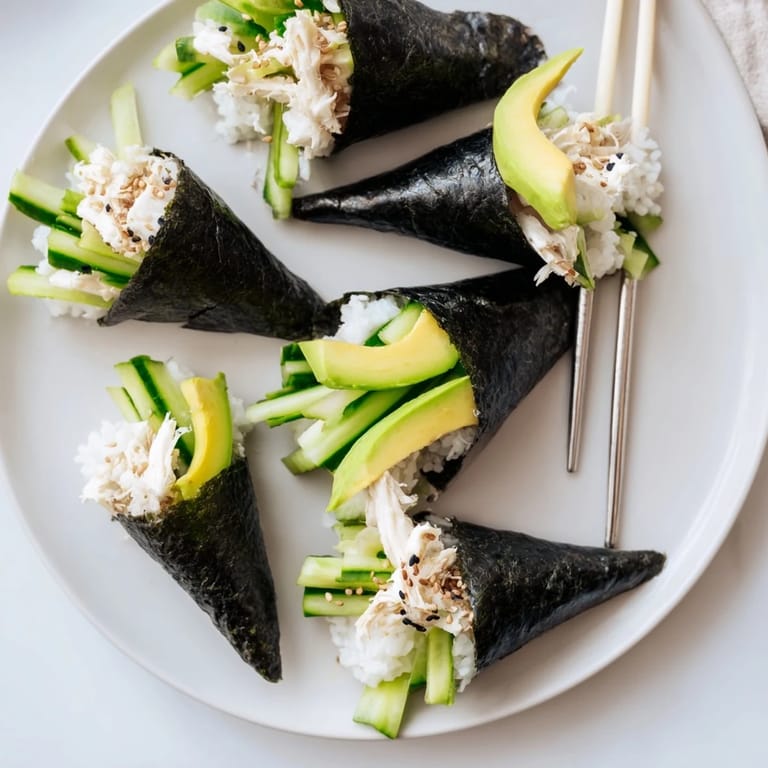
- Arrange your finished hand rolls on a platter with small dishes of soy sauce, wasabi, and pickled ginger. The beauty of hand rolls is they're meant to be eaten right away, while the nori is still crisp against the warm rice.
 Save
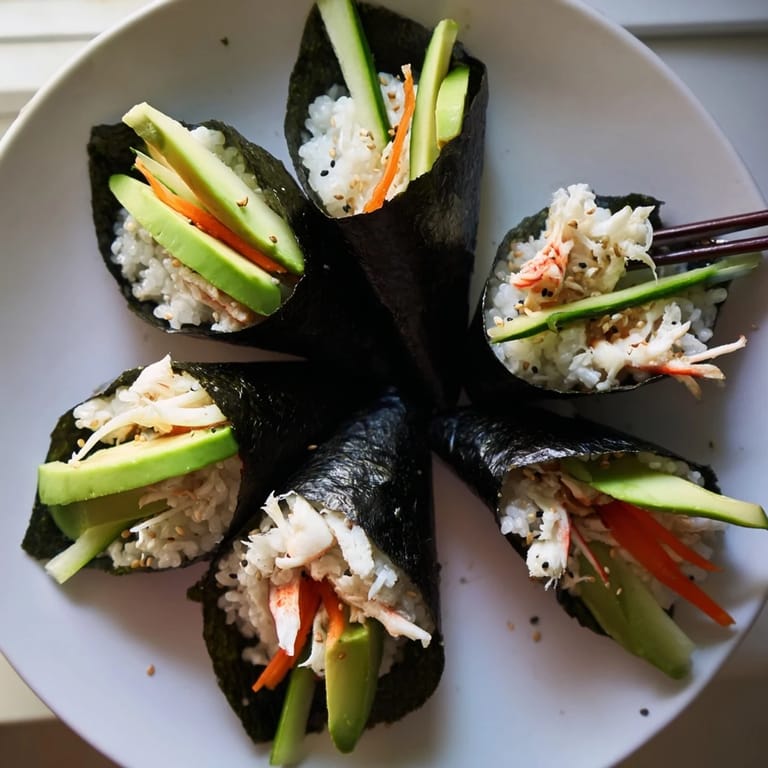
Save One rainy Sunday afternoon, I taught my niece how to make these hand rolls, her little hands awkwardly but earnestly forming lopsided cones as rice scattered across the counter. She beamed with such pride at her creation that I took a photo of her holding it up like a trophy. Now whenever she visits, she asks if we can make our special sushi together, and I realize these hand rolls have become less about the food and more about the ritual of creation we share.
Customizing Your Hand Rolls
After making these countless times, Ive discovered that hand rolls are incredibly forgiving and adaptable to whatever youve got on hand. One memorable evening when the grocery store was out of crab, I substituted some leftover roasted salmon and added thin strips of mango for sweetness. Another time, I used thinly sliced seared beef with green onions for a surf-and-turf variation that disappeared faster than the traditional version. The beauty of hand rolls lies in this flexibility, letting the seasons or your pantry guide what goes inside that nori cone.
Creating the Perfect Rice
The secret to restaurant-quality hand rolls isnt in fancy equipment but in how you handle the rice. After cooking, I transfer mine to a wide, shallow wooden bowl and use a gentle cutting motion with a rice paddle to incorporate the seasoned vinegar mixture. While doing this, I fan the rice with a folded magazine or paper fan, which cools it quickly while creating a beautiful glossy finish on each grain. This technique took me several attempts to master, but the difference between properly seasoned, well-textured sushi rice and rushed, gummy rice is what separates memorable hand rolls from forgettable ones.
Serving and Enjoyment Tips
Theres something special about the communal aspect of hand roll dinners that elevates them beyond just a meal. I like to set everything out on a large board or platter in the center of the table, encouraging everyone to construct their own creations based on preference. The interactive nature transforms dinner into an event, slowing everyone down as they focus on building the perfect bite.
- Keep a damp kitchen towel nearby for wiping fingers between rolls, especially if youre enjoying sake or beer alongside.
- Serve the rolls standing upright in short glasses if youre making several ahead for a small gathering, which keeps the open end from touching the plate and becoming soggy.
- Remember that hand rolls are best eaten immediately after making, ideally within 30 seconds, before the nori begins to soften from contact with the warm rice.
 Save
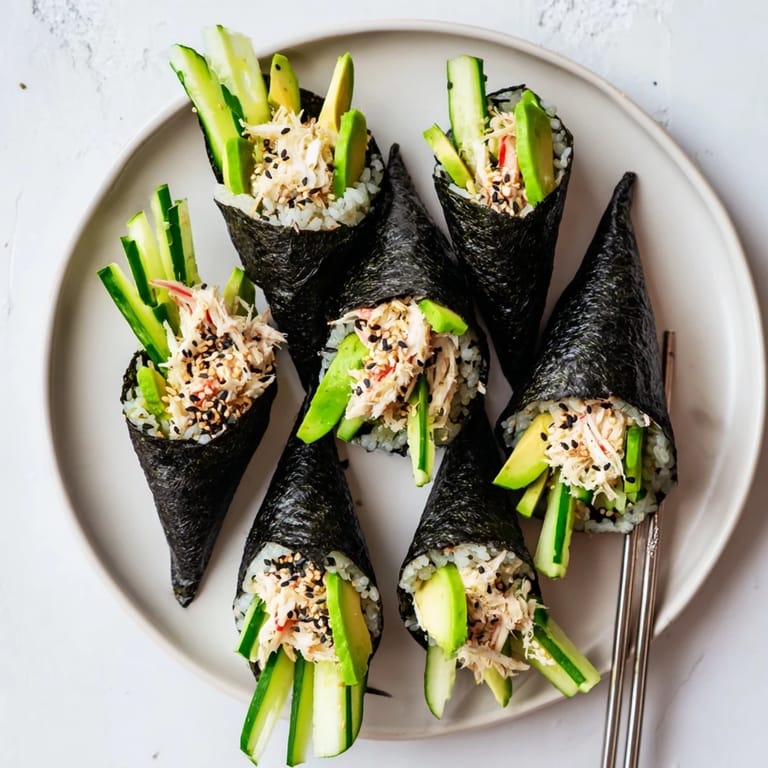
Save These hand rolls have become my favorite way to transform simple ingredients into something that feels special without hours in the kitchen. Theres something magical about watching friends gather around a table, sleeves rolled up, creating their own perfect bites amid conversation and laughter.
Recipe FAQs
- → How do I prevent the sushi rice from becoming mushy?
Rinse the rice thoroughly under cold water until the water runs clear before cooking. This removes excess starch. Cook with precise measurements (1 cup rice to 1.25 cups water) and allow it to cool to room temperature before assembling, which helps maintain the proper texture and prevents the nori from becoming soggy.
- → Can I prepare the rice ahead of time?
Yes, you can cook the sushi rice 2-3 hours in advance and keep it covered at room temperature. Avoid refrigerating, as cold rice becomes hard and loses its optimal texture. If preparing a day ahead, store in an airtight container and gently warm to room temperature before use.
- → What's the best way to keep nori sheets crispy?
Store nori in an airtight container with a silica gel packet or desiccant to maintain crispness. Once opened, use promptly as nori absorbs moisture quickly. If nori becomes soft, you can briefly pass it over an open flame to restore crispness, though this affects flavor slightly.
- → Are there protein alternatives to crab meat?
Absolutely. Cooked shrimp, smoked salmon, or cooked chicken work well. For vegetarian options, try cucumber, pickled radish, or marinated tofu. You can also use a combination of vegetables with toasted sesame seeds for added depth and nutrition.
- → How should I store leftover hand rolls?
Hand rolls are best consumed immediately as nori softens within hours. If storing, place in an airtight container in the refrigerator for up to 4 hours, though texture will diminish. Wrap individually in plastic wrap to slow moisture absorption and maintain freshness.
- → What consistency should the sushi rice have?
The rice should be sticky enough to hold together but not mushy. Each grain should remain distinct while cohesive. When properly seasoned with the vinegar mixture and cooled, it should spread easily onto nori without falling apart and seal the nori edges effectively when rolled.