 Save
Save The first time I made muhammara, I was standing in a friend's kitchen in Beirut, watching her mother char red peppers directly over a gas flame with the kind of casual confidence that only comes from decades of practice. She didn't measure anything—just roasted, peeled, pulsed, tasted, adjusted. What struck me wasn't just how simple it was, but how alive the flavors felt: smoky, bright, a little sharp from the pomegranate molasses, grounded by walnuts that had been toasted until they released their deep, nutty warmth. When I returned home, I spent weeks trying to recreate that moment, and this recipe is what finally got me close.
Years later, I served this at a potluck where half the guests were skeptical about anything they'd never heard of. By the end of the night, someone had scraped the bowl with pita bread so thoroughly you could see the ceramic underneath. That's when I realized muhammara isn't just a dip—it's a conversation starter, the kind of dish that makes people curious about what's in it and how you made it.
Ingredients
- Red bell peppers (3 large): These are the star, and their sweetness develops and deepens when charred. Choose peppers that feel heavy for their size—they'll have thinner skins and less bitter white membrane inside.
- Walnuts (1 cup, lightly toasted): Toasting them yourself makes all the difference; it wakes up their flavor and keeps the dip from tasting one-dimensional. Don't skip this step even if it feels fussy.
- Pomegranate molasses (2 tbsp): This is what makes muhammara unmistakably muhammara—that tart, almost wine-like tang. Find it in Middle Eastern markets or online; there's really no substitute that delivers the same punch.
- Breadcrumbs (2 tbsp): A small amount acts like an invisible thickener and adds a subtle earthiness that rounds out the texture. It's one of those ingredients you won't taste but absolutely will miss if it's gone.
- Aleppo pepper (1/2 tsp): If you can find it, use it—it's fruitier and less harsh than standard red chili flakes. If not, red chili flakes work, but start with less and taste as you go.
- Garlic (2 cloves): Two cloves is intentionally restrained; the peppers and pomegranate molasses should lead, and garlic should whisper, not shout.
- Cumin (1 tsp) and smoked paprika (1/2 tsp): These spices add warmth and a faint smokiness that echoes back to the charred peppers, tying everything together.
- Extra virgin olive oil (2 tbsp, plus more for drizzling): Use something you'd drizzle on bread; it's not just an ingredient here, it's part of the final presentation and flavor.
- Lemon juice (1–2 tbsp): Add gradually at the end; this is your brightness dial, and it's easier to add than to take away.
- Sesame seeds (1 tbsp, optional): A gentle scatter on top adds a subtle nuttiness and a visual finish that makes the dip look intentional.
Tired of Takeout? 🥡
Get 10 meals you can make faster than delivery arrives. Seriously.
One email. No spam. Unsubscribe anytime.
Instructions
- Char the peppers until their skins blister and blacken:
- Preheat your oven to 220°C (425°F) and lay the whole peppers directly on a baking tray. Roast for 20–25 minutes, turning them occasionally with tongs so they char evenly on all sides. You want the skins to look almost burnt—that's where the smoke and depth come from. The kitchen will fill with a sweet, slightly acrid smell that's honestly one of the best signs you're doing this right.
- Steam them in their own heat to loosen the skins:
- The moment they come out of the oven, transfer them to a bowl and cover tightly with plastic wrap or a plate. Let them sit for 10 minutes—this gentle steam makes peeling almost effortless. When you uncover the bowl, the aroma that rises is concentrated pepper and smoke; it's worth pausing to take it in.
- Peel away the blackened skin and seeds:
- Once cool enough to handle, the charred skin should slide off under your fingers. Some bits of char are fine—they add flavor—but remove the stems and as many seeds as feels reasonable. Don't obsess over perfection here; a few stray seeds won't hurt anyone.
- Pulse the peppers with nuts and spices until coarse:
- In a food processor, combine the peeled peppers, toasted walnuts, garlic, breadcrumbs, cumin, smoked paprika, Aleppo pepper, salt, and black pepper. Pulse 5–8 times until the mixture breaks down but still has some texture and doesn't look like a paste yet. This is where you build the foundation of the dip.
- Add the liquid ingredients and blend until smooth with character:
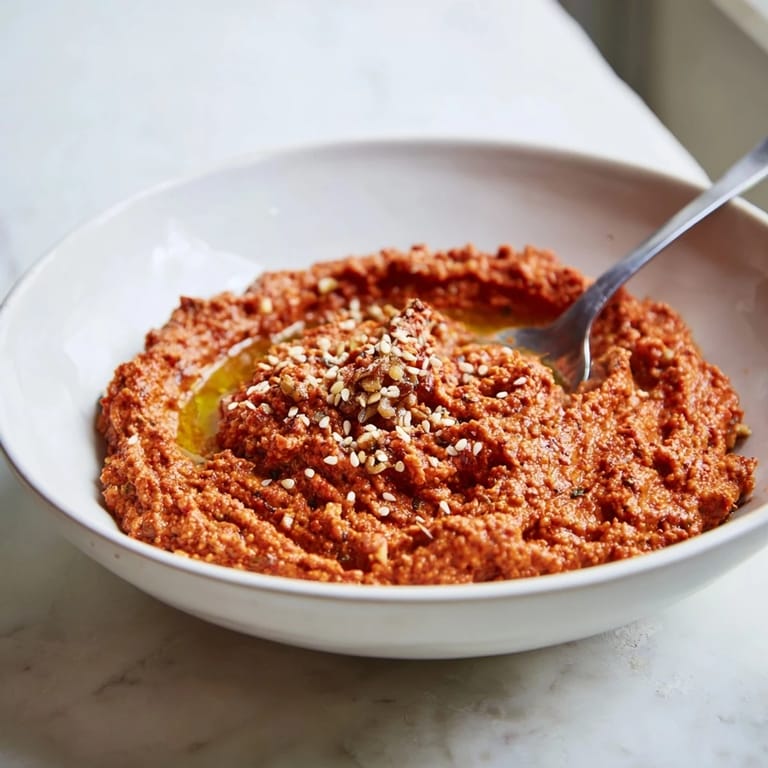
- Pour in the pomegranate molasses, olive oil, and 1 tablespoon of lemon juice. Process until the dip comes together into a cohesive but still slightly textured spread—you want it pourable enough to pool slightly in a shallow bowl but not so smooth it loses all personality. Taste, then adjust: need more tang? More lemon. Need more richness? More olive oil. Need more kick? A pinch more Aleppo pepper.
- Transfer to a shallow bowl and dress it like you mean it:
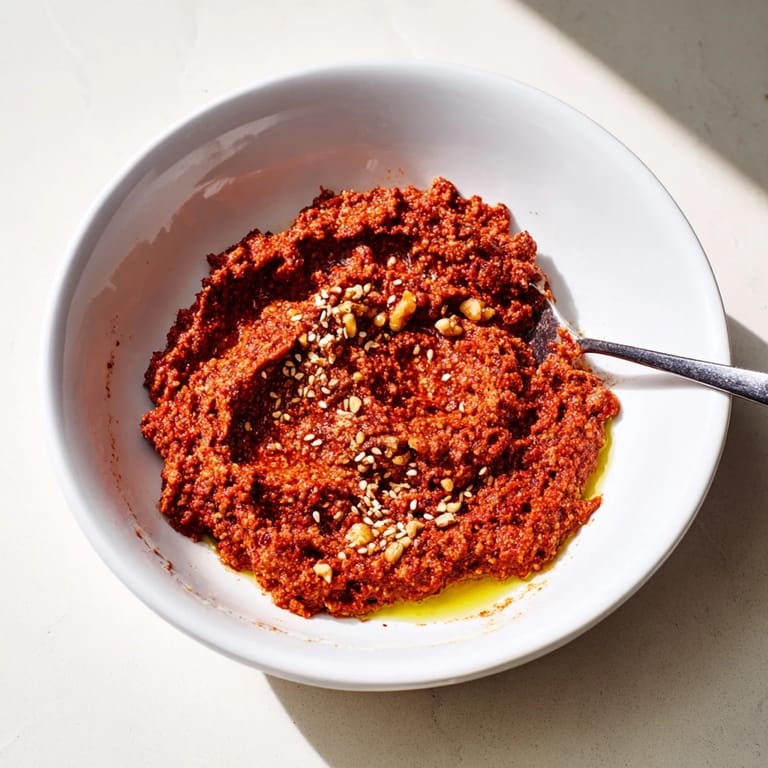
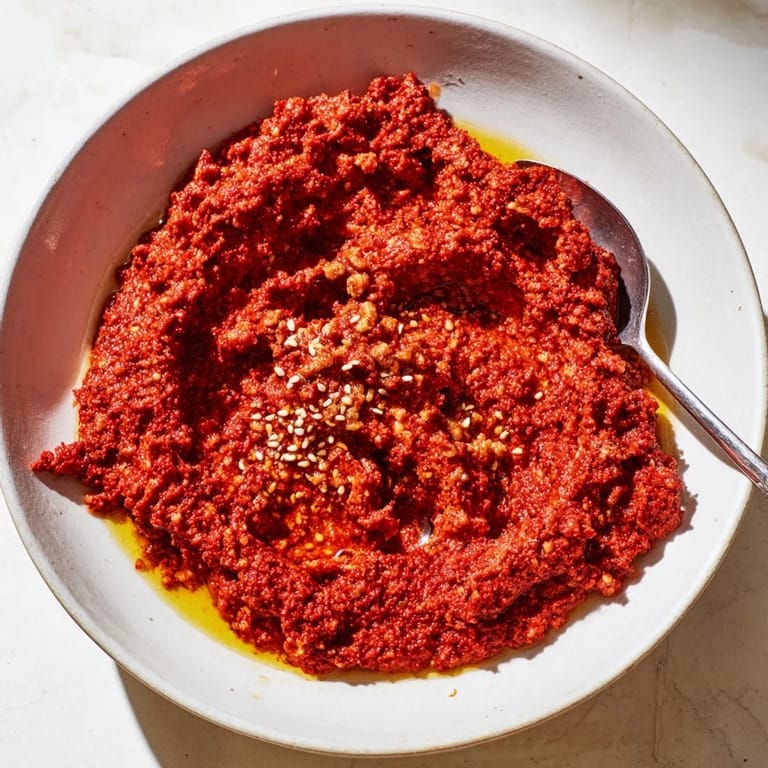
- Spoon the muhammara into a shallow serving bowl, use the back of a spoon to create a gentle well in the center, and drizzle generously with good olive oil. If you have sesame seeds, scatter them over the top. This final step isn't just garnish—it's an invitation.
 Save
Save I remember my neighbor, who had never tried muhammara before, taking a spoonful and going quiet for a moment. Then she said, 'This tastes like someone's grandmother.' That's exactly right—this dip carries generations in it, and when you make it with intention, people taste that history.
How to Serve Muhammara
Muhammara is best served at room temperature or just slightly chilled, with warm pita bread torn into pieces, or alongside crackers, fresh vegetables, and other mezze dishes like hummus or baba ghanoush. I've also discovered it's excellent on crostini, spread under grilled vegetables, or stirred into yogurt for a quick sauce. The ritual of eating it—tearing bread, scooping, tasting—is as important as the dip itself.
Making It Ahead and Storing It
This is one of those dishes that actually improves a day or two after you make it, as the flavors settle and deepen into each other. Store it in a glass or ceramic container, cover it well, and refrigerate for up to five days. Before serving, let it come back to room temperature for about 15 minutes, and give it a gentle stir. If it looks dry on top, drizzle with a little more olive oil to revive it.
Why Peppers and Walnuts Work So Well Together
What makes muhammara special is the conversation between two textures and flavors that seem opposite but are actually made for each other. The peppers bring sweetness, smoke, and body; the walnuts add earthiness and a subtle bitterness that keeps the dip from tasting too soft or one-note. The pomegranate molasses and lemon juice cut through both, waking everything up. It's the kind of balance that feels effortless until you try to recreate it and realize how carefully it was built.
- Toast your walnuts fresh if you can; they'll taste brighter and more alive than pre-toasted ones sitting in a bag.
- Don't fear the char on the peppers—that dark, almost burnt skin is exactly what you're after.
- Serve it with people who are willing to slow down and actually taste something unfamiliar, because muhammara deserves attention.
 Save
Save Muhammara is proof that the simplest dishes—roasted peppers, walnuts, a few spices—can taste like they hold the sun inside them. Make it, serve it, and watch what happens.
Recipe FAQs
- → What gives muhammara its smoky flavor?
The smoky aroma comes from roasting the red bell peppers until their skins blister and char, enhancing the overall depth of the dip.
- → Can I make this dip nut-free?
Walnuts are essential for texture and flavor, but you can substitute with seeds like sunflower or pumpkin if avoiding nuts.
- → How spicy is this dish?
The heat level is adjustable by modifying the Aleppo pepper or red chili flakes to suit your taste.
- → What pairs well with this spread?
It complements pita bread, crackers, or fresh vegetable sticks, and fits beautifully on mezze platters.
- → How long can I store this dip?
It keeps refrigerated for up to five days, allowing flavors to develop even further over time.