 Save
Save I'll never forget the December evening when my aunt unveiled her stunning cheese board at our holiday party—twelve distinct sections, each telling its own story. That moment sparked something in me: the realization that a cheese board could be more than just snacks arranged on a platter. It could be a celebration, a journey through flavors from around the world, all on one beautiful canvas. Now, whenever I create this Twelve Days of Cheese board, I'm transported back to that evening, watching guests discover new favorite pairings with each section they explored.
I served this for the first time at a small Christmas dinner with friends who thought they knew cheese. Watching their faces light up as they discovered that Manchego with a toasted almond tasted like autumn, or how Brie with a drizzle of honey became something almost romantic—that's when I knew this wasn't just a cheese board, it was an experience.
Ingredients
- Brie: Soft, creamy, and approachable; choose a good quality one with a buttery center that yields to gentle pressure
- Aged Cheddar: Sharp and complex, it's what gives this board its backbone; look for ones aged at least 12 months
- Manchego: Nutty and slightly caramel-like, it bridges the gap between familiar and adventurous
- Roquefort or Blue Cheese: Bold and beautiful, this is where brave flavors live; use sparingly because it commands attention
- Goat Cheese: Tangy and elegant, it's the one that converts skeptics
- Gruyère: Rich and slightly sweet, it's comfort in cheese form
- Camembert: Earthy and warm, like a hug from France on your board
- Gouda: Smooth with hints of caramel, it's the crowd-pleaser every time
- Comté: Complex and subtle, it rewards the curious palate
- Pecorino: Sharp and salty, a reminder that simplicity can be stunning
- Havarti: Buttery and dense, it has a presence that feels special
- Smoked Cheese: Distinctive and memorable, choose a quality smoked provolone or similar; it adds drama
- Honey: Raw is best; it should taste like flowers and sunshine
- Fig Jam: Sweet with subtle tartness, it complements both delicate and bold cheeses
- Whole Grain Mustard: Textured and spicy, it sharpens the palate between tastings
- Dried Apricots, Walnuts, Almonds: Toasted almonds especially; the warmth brings out hidden flavors in the cheese
- Apple and Pear Slices: Prepare these fresh just before serving so they stay crisp and bright
- Dark Chocolate: Quality matters here; it should have depth, not just sweetness
- Cornichons: Tiny and tart, they cleanse the palate like tiny flavor resets
- Fresh Herbs: Thyme is sharper, rosemary more piney; choose based on mood
- Artisanal Bread or Crackers: Buy a variety; some people are purists about the vehicle for their cheese
Tired of Takeout? 🥡
Get 10 meals you can make faster than delivery arrives. Seriously.
One email. No spam. Unsubscribe anytime.
Instructions
- Gather Your Canvas:
- Find your largest, most beautiful serving board or platter—this is going to be the star of your gathering. If it's white, the cheeses will pop. If it's wood, it feels warm and inviting. Either way, clear a good space on your counter to work.
- Create Your Sections:
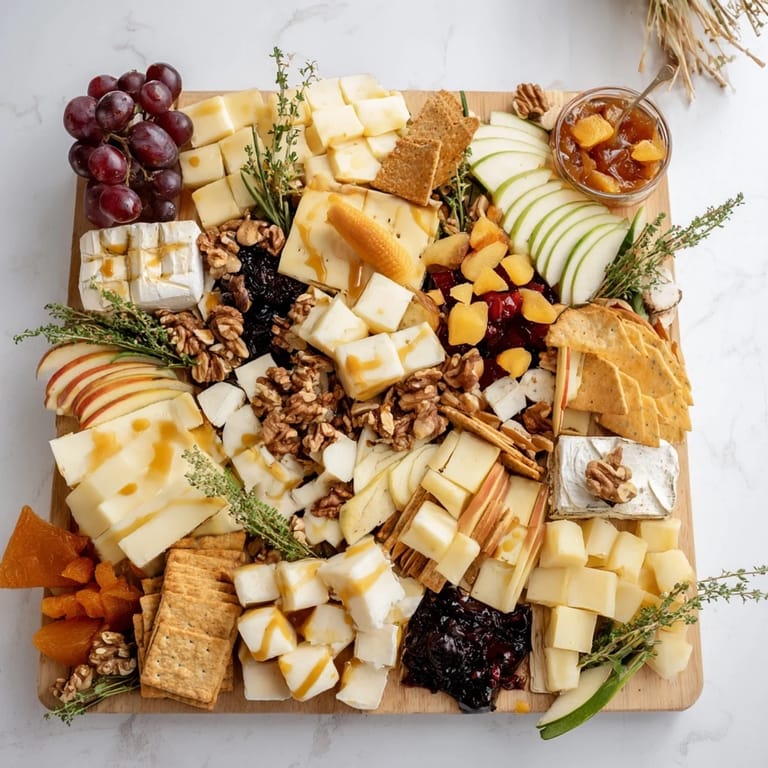
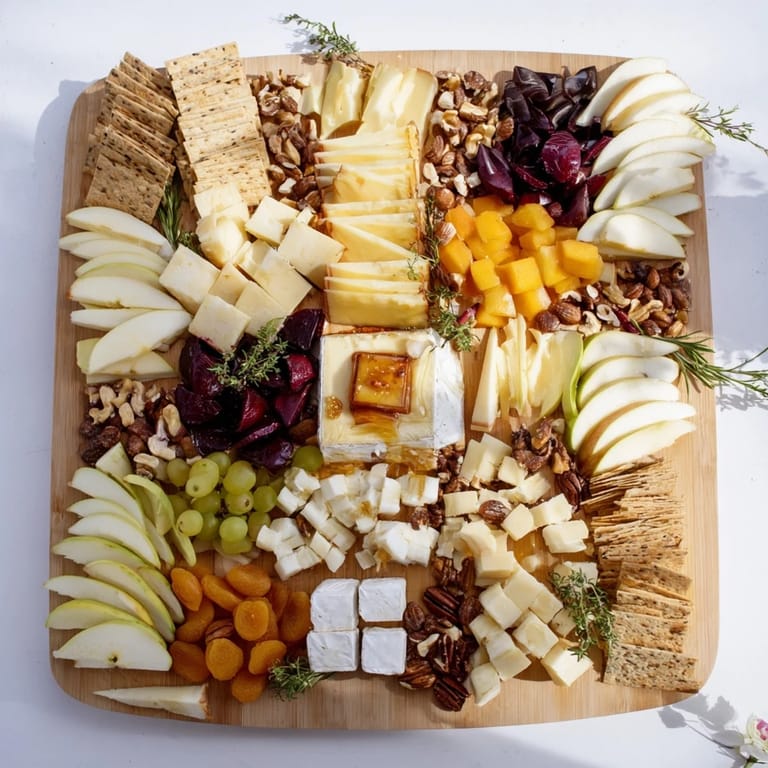
- This is where the magic happens. Imagine dividing your board into twelve equal pieces, like a clock face or twelve little neighborhoods. You can use small bowls or ramekins as gentle dividers, or simply use a light hand and your eye to create invisible boundaries. I like to step back and look at it from across the room—the sections should feel balanced.
- Introduce Each Cheese:
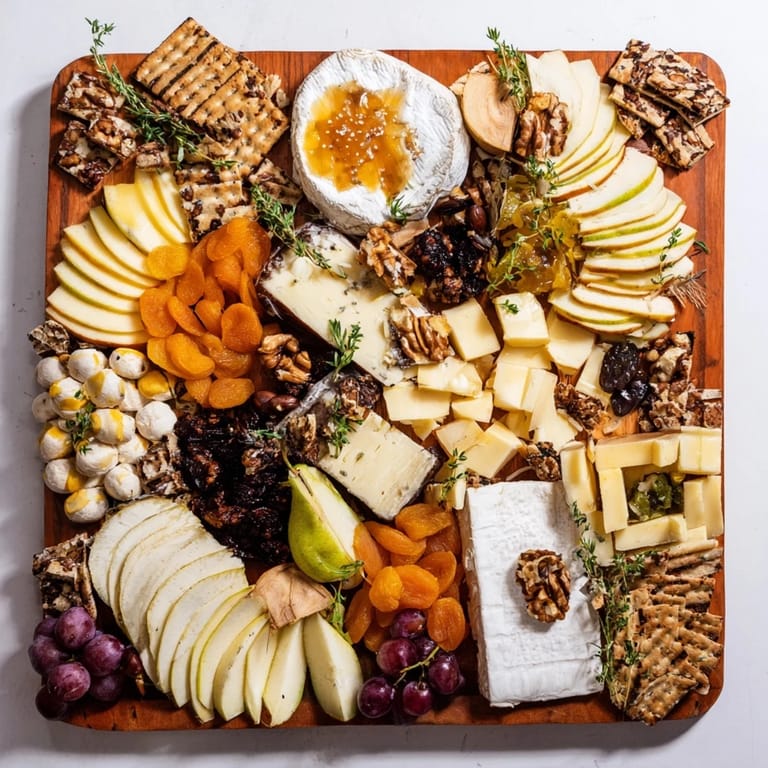
- Place one cheese variety in each section, cutting them into graceful bite-sized pieces. Some cheeses like Brie and Camembert are best left in wedges; others like Cheddar and Manchego are beautiful in neat cubes. You're creating a portrait, so let each cheese show its best side.
- Pair with Purpose:
- Now, the art: in each section, add its perfect companion. Brie gets a whisper of honey and a slice of crisp apple. Aged Cheddar pairs with fig jam and a golden walnut. Roquefort meets pear and becomes something elegant. Goat cheese gets kissed with fresh thyme and surrounded by grapes. Let each pairing feel intentional—when you taste them together, you should taste why they were meant for each other.
- Frame with Crackers and Bread:
- Arrange your selection of artisanal crackers and bread slices around the perimeter of the board like a golden frame. Make sure there's enough for each section—nothing worse than running out of vehicles for the cheese.
- Add the Finishing Touch:
- Scatter small sprigs of fresh thyme and rosemary across the board. These aren't just garnish; they hint at the flavors to come and make everything feel like it was gathered from a Mediterranean kitchen garden.
- Set It Out with Confidence:
- Bring everything to room temperature—this is crucial. Cold cheese tastes muted. At room temperature, flavors bloom and oils release. Set it out about 20 minutes before guests arrive, and watch it become the centerpiece everyone gravitates toward.
 Save
Save There's a moment that happens every time I make this board—usually about halfway through the evening when someone stops mid-conversation and says, 'Wait, what is this combination?' and then closes their eyes for a moment, truly tasting. That's when I know I've done something right. That's when cheese becomes more than sustenance; it becomes a memory.
The Story Behind Each Pairing
Each section of this board tells a story from a different part of the world. The Brie with honey reminds us of French farmhouse kitchens where afternoon snacks were simple but luxurious. The Manchego with almond speaks to Spanish afternoons. The Roquefort demands respect like the caves where it aged for months. When you put all twelve together, you're creating an edible passport, a way to travel the globe without leaving your dining room. I've found that when people understand the story of each pairing, they taste more intentionally, and the board becomes a conversation starter that lasts all evening.
Building Your Own Variations
While I've given you twelve specific cheeses and pairings, the real beauty of this board is its flexibility. I've made versions focused on a single country, rotating just through French cheeses with their traditional pairings. I've done a 'mild to wild' progression, starting with gentle Gouda and building toward bold Roquefort. I've even done a seasonal version where summer brings stone fruits and lighter wines, and winter brings dried fruit and darker chocolate. The structure is your freedom—once you understand how cheese and accompaniment should speak to each other, you can improvise based on what's available at your market or what you're craving.
Making It Memorable
The secret to this board being more than just food is in the details and the intention you bring to it. I always taste each pairing myself before guests arrive—not to judge, but to remember what I'm serving and to have a genuine recommendation ready. I've learned to place small cheese knives in each section so guests feel invited to explore rather than feeling like they're taking the last piece. I've discovered that serving this alongside sparkling wine or a light red wine transforms it from a snack into an event. Here are the final touches that make the magic happen:
- Set small plates and napkins nearby so guests can actually taste multiple cheeses without commitment
- Label each section with a tiny card if you're feeling fancy—it turns the board into an interactive experience
- Play music that matches the mood you're creating, whether it's sophisticated jazz or something more festive
 Save
Save This board is an invitation to slow down and savor. When you set it out for people you care about, you're saying something: I thought about this, I chose thoughtfully, I wanted to create a moment worth remembering. That's really what good food does.
Recipe FAQs
- → What types of cheeses are included?
Includes Brie, Aged Cheddar, Manchego, Roquefort, Goat Cheese, Gruyère, Camembert, Gouda, Comté, Pecorino, Havarti, and Smoked Cheese.
- → How should the board be arranged?
Divide the board into twelve sections, placing one cheese per section with paired accompaniments like nuts, fruit, or spreads.
- → Can this be adapted for special diets?
Yes, use vegetarian or plant-based cheeses for dietary preferences and substitute gluten-free crackers if needed.
- → What are ideal pairings for the cheeses?
Pairings include honey with Brie, fig jam with Aged Cheddar, apple slices with Camembert, and dark chocolate with Smoked Cheese.
- → How should it be served for best flavor?
Serve the board at room temperature to ensure optimal flavor and texture of the cheeses and accompaniments.
- → What beverages complement this board?
Sparkling wine, light red wines, or cider work well alongside the diverse flavors on the board.