 Save
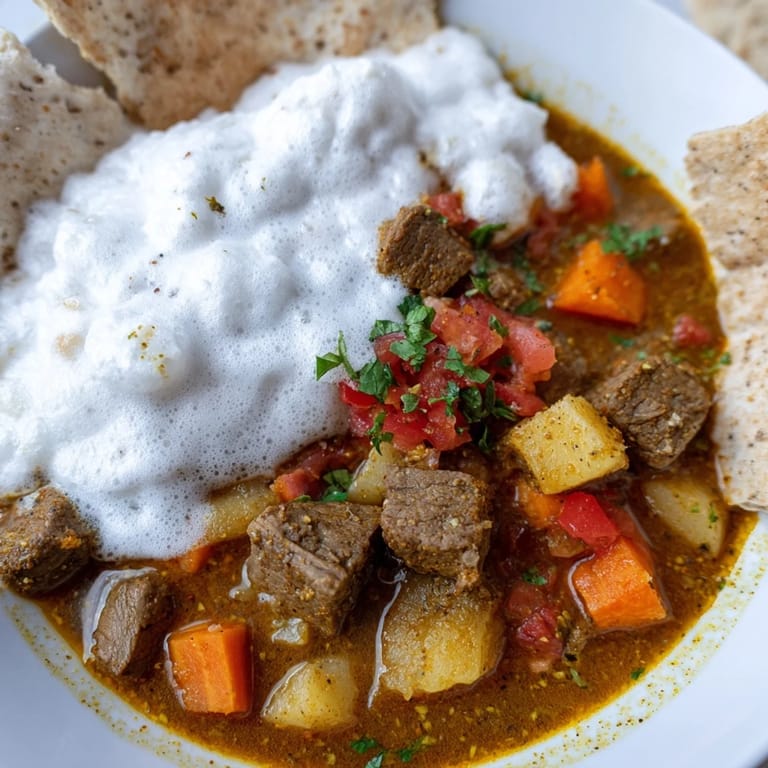
Save I first tasted saltah on a cold afternoon in a tiny restaurant tucked between spice vendors in Sana'a. The owner brought out a clay pot bubbling with meat and broth, crowned with a cloud of pale green foam that looked almost too delicate to eat. When I asked what it was, he just smiled and said, "Mix it all together." The moment I did, the fenugreek melted into the stew, turning it silky and aromatic in a way I'd never experienced before. I've been chasing that flavor ever since.
The first time I made saltah at home, I invited my neighbor over because I wasn't sure I'd gotten it right. She took one spoonful, closed her eyes, and told me it reminded her of her grandmother's kitchen in Taiz. That's when I realized this dish isn't just about following steps, it's about honoring a tradition that brings people together. Now, every time I make it, I think of her and that quiet moment of recognition across the table.
Ingredients
- Beef or lamb: Use bone-in cuts if you can, the marrow adds richness to the broth that you just can't get from lean meat alone.
- Vegetable oil: A neutral oil works best here so the spices can shine without competing flavors.
- Onion: Chop it fine and let it cook slowly until it's golden and sweet, this is the flavor foundation of the entire stew.
- Garlic: Fresh garlic is essential, the jarred stuff just doesn't have the same punch or fragrance.
- Tomatoes: Ripe, juicy tomatoes break down into the broth beautifully, adding both acidity and body.
- Green chili: This is optional, but it adds a fresh heat that balances the earthy spices perfectly.
- Potato and carrot: These soak up the spiced broth and add a comforting heartiness to every bite.
- Water or beef broth: Broth gives you a head start on flavor, but water works fine if you're patient and let the meat do its job.
- Cumin, coriander, black pepper, turmeric, ground fenugreek, and salt: This spice blend is the soul of the dish, each one playing a role in building that warm, complex flavor.
- Ground fenugreek seeds for hulbah: This is the star topping, when whipped with water it becomes a light, airy foam that's slightly bitter and utterly addictive.
- Cilantro and lemon juice: These brighten the hulbah and cut through the richness of the stew with a fresh, herbal note.
- Yemeni flatbread: Malawah or lahoh are traditional, but pita or naan will still give you that satisfying bread layer that soaks up the broth.
Tired of Takeout? 🥡
Get 10 meals you can make faster than delivery arrives. Seriously.
One email. No spam. Unsubscribe anytime.
Instructions
- Brown the aromatics and meat:
- Heat the oil until it shimmers, then add the onions and let them soften and turn golden, stirring occasionally so they don't burn. Toss in the garlic, chili, and meat cubes, and sear them until they develop a deep brown crust on all sides, this step locks in flavor.
- Build the stew base:
- Stir in the chopped tomatoes, potato, carrot, and all your spices, letting them cook together for a few minutes until the tomatoes start to break down and the spices bloom. Pour in the water or broth, bring it to a boil, then lower the heat, cover, and let it simmer gently until the meat is fall-apart tender and the vegetables are soft.
- Whip the fenugreek topping:
- Soak the ground fenugreek in cold water for an hour, then drain it well and whisk it vigorously until it transforms into a light, fluffy foam, this takes a bit of elbow grease but it's worth it. Fold in the diced tomato, cilantro, chili, lemon juice, and a pinch of salt, then set it aside until you're ready to serve.
- Assemble and serve:
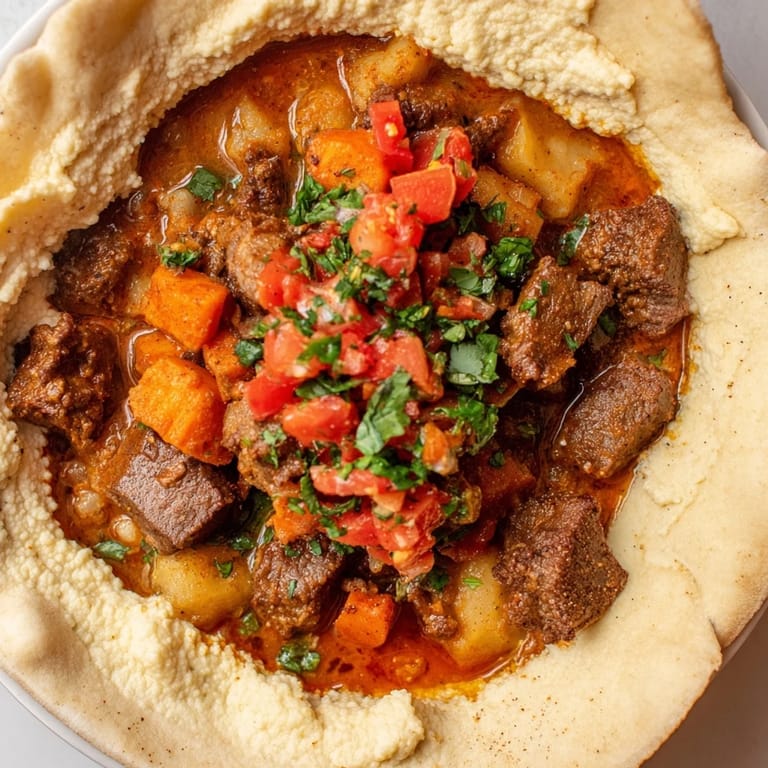
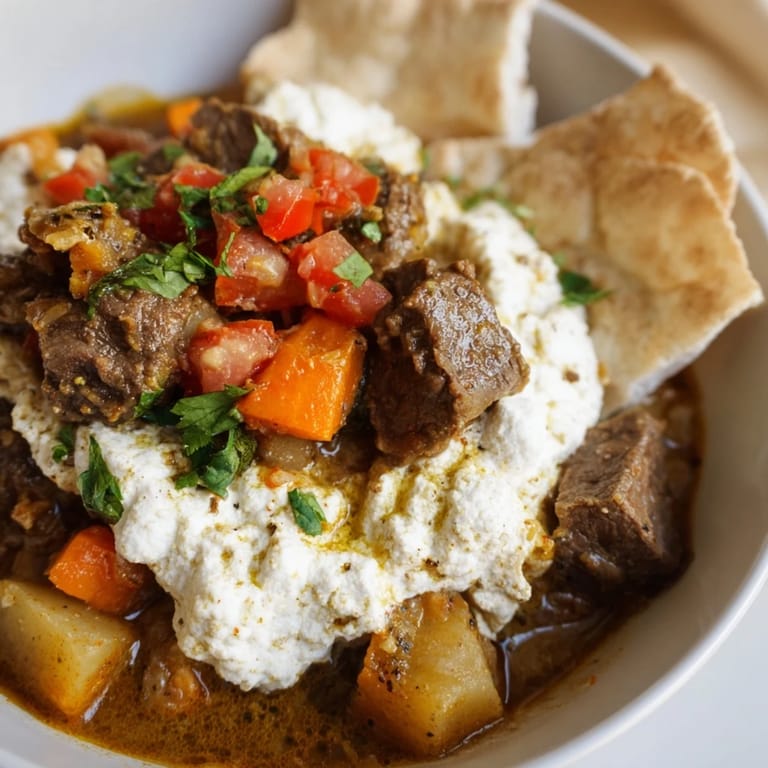
- Tear the flatbread into bite-sized pieces and spread them in the bottom of each serving bowl, then ladle the hot stew over the bread, making sure it's well soaked. Spoon a generous layer of hulbah on top, and serve immediately so everyone can mix it all together while it's still steaming.
 Save
Save One evening, I made saltah for a friend who'd just moved from Yemen and was homesick. She sat at my kitchen table, mixed the layers together, and took a bite. Her eyes welled up, and she told me it tasted exactly like home. In that moment, I understood that some recipes are more than food, they're bridges across distance, time, and longing.
Making It Your Own
If you want to make this vegetarian, skip the meat and add chickpeas, lentils, or extra root vegetables like turnips or sweet potatoes. You'll still get that hearty, warming quality, and the hulbah will work its magic just the same. Some cooks also add a spoonful of zhug, a fiery Yemeni hot sauce, on the side for those who want even more heat.
Choosing Your Bread
Malawah and lahoh are the traditional choices, and if you can find them at a Middle Eastern or Yemeni grocery, grab them. They have a slightly spongy texture that soaks up broth beautifully. If you can't find them, pita or naan work well, just tear them into pieces and let them sit in the stew for a minute before serving so they soften up.
Storage and Reheating
Leftover stew keeps well in the fridge for up to three days, and the flavors actually deepen overnight. Reheat it gently on the stove, adding a splash of water or broth if it's thickened up. Make fresh hulbah each time you serve it, the whipped fenugreek doesn't hold up well in storage and loses its airy texture.
- Store the stew and hulbah separately to keep the textures distinct.
- Freeze the stew in portions if you want to make a big batch, it reheats beautifully.
- Always add fresh bread just before serving, stale or pre-soaked bread turns mushy and loses its appeal.
 Save
Save This dish has taught me that the best meals are the ones that invite you to slow down, mix things together, and savor every spoonful. I hope it brings you the same warmth and comfort it's brought to my table, time and time again.
Recipe FAQs
- → What type of meat works best for this stew?
Beef or lamb cut into bite-sized cubes lends the best texture and flavor when slow-cooked in this dish.
- → How do you prepare the fenugreek foam topping?
Soak ground fenugreek seeds in cold water for an hour, then whisk until light and fluffy before folding in tomato, cilantro, and lemon juice.
- → Can I substitute the flatbread used in this dish?
Yes, traditional Yemeni flatbreads like malawah or lahoh work best, but pita or naan can be used as alternatives.
- → Is there a vegetarian alternative to this dish?
Omitting meat and adding more root vegetables or beans can create a satisfying vegetarian variation.
- → What spices give this stew its signature flavor?
The blend of cumin, coriander, turmeric, black pepper, and fenugreek seeds creates the distinctive aromatic balance.
- → How long should the stew simmer for optimal tenderness?
Simmer the meat and vegetables gently for about 1 to 1.5 hours until everything is tender and flavors meld.