 Save
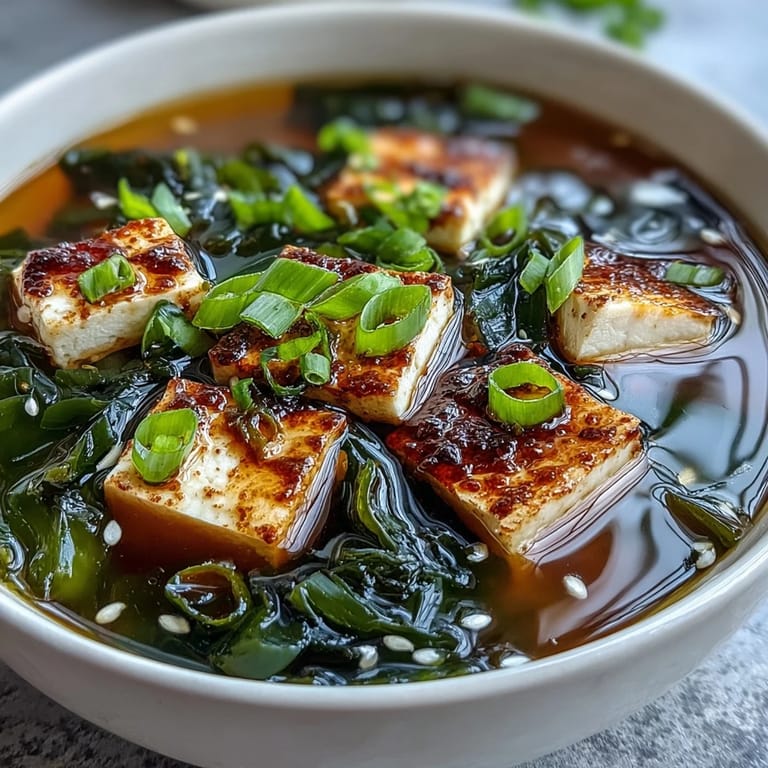
Save My first encounter with proper miso soup came on a cold February morning in a tiny Tokyo restaurant where an elderly woman ladled it into a chipped ceramic bowl without looking at me twice. The steam rose up and hit my face, and suddenly I wasn't thinking about jet lag anymore—just the salty umami warmth settling into my chest. Years later, making it at home became my ritual for those mornings when I needed something honest and simple, something that tastes like it's been made the same way for a thousand years.
I made this for my roommate during her first week dealing with a cold, and she claimed it was the only thing that made her feel human again. The next morning she was already asking for the recipe, even though she couldn't cook scrambled eggs. There's something about miso soup that bypasses all the fancy culinary rules and just works—it meets you where you are, warm and wordless and exactly what your body needed.
Ingredients
- Dashi stock (4 cups): This is your foundation, and it matters—vegetarian dashi made from kombu and shiitake gives you the same deep savory notes without any fish, though bonito-based versions are traditional if you're not plant-based.
- White or yellow miso paste (3 tablespoons): The color matters less than the flavor you prefer; white miso tastes slightly sweeter and more delicate, while yellow sits in the middle ground and works beautifully as your safe choice.
- Silken tofu (200g): Silken, not firm—the difference between silken and firm is like comparing silk to canvas, and this soup demands something that melts on your tongue rather than holds its shape stubbornly.
- Dried wakame seaweed (2 tablespoons): Those papery strips transform in hot water into tender ribbons with a briny ocean taste that completes the whole experience.
- Scallions (2): Slice them thin and add them at the very end so they stay bright green and slightly crisp against the soft soup.
Tired of Takeout? 🥡
Get 10 meals you can make faster than delivery arrives. Seriously.
One email. No spam. Unsubscribe anytime.
Instructions
- Start with a gentle heat:
- Pour your dashi into a medium saucepan and bring it to a simmer over medium heat—not a rolling boil, just small bubbles breaking the surface. This slowness matters because you're coaxing flavors out, not fighting them.
- Wake up the seaweed:
- While the broth warms, place your wakame in a small bowl of cold water and let it soak for five minutes, watching it unfurl and soften. This rehydration is crucial; dry seaweed in hot soup just turns to mush, but pre-soaked it becomes tender and intentional.
- Dissolve the miso correctly:
- Scoop a ladleful of hot dashi into a separate bowl, add your miso paste, and whisk it smooth—this tempering prevents lumps and ensures an even flavor throughout. Think of it like making a smooth sauce rather than trying to break apart a stubborn paste in the whole pot.
- Layer in the delicate items:
- Pour the drained wakame and gently add the tofu cubes to your simmering dashi, letting them warm for two to three minutes without aggressive heat. Handle the tofu like it's fragile because it is, and that fragility is part of its charm in this dish.
- Finish with the miso:
- Remove the pan from heat, then stir in your dissolved miso paste smoothly—never boil it after this point because high heat kills the beneficial probiotics and turns the flavor harsh and one-dimensional. This is the moment where patience pays off in taste.
- Serve with intention:
- Ladle into bowls while the soup is still steaming, scatter your sliced scallions across the top, and serve immediately so everything is at its best. The heat, the aroma, the moment—they're all part of why this dish works.
 Save
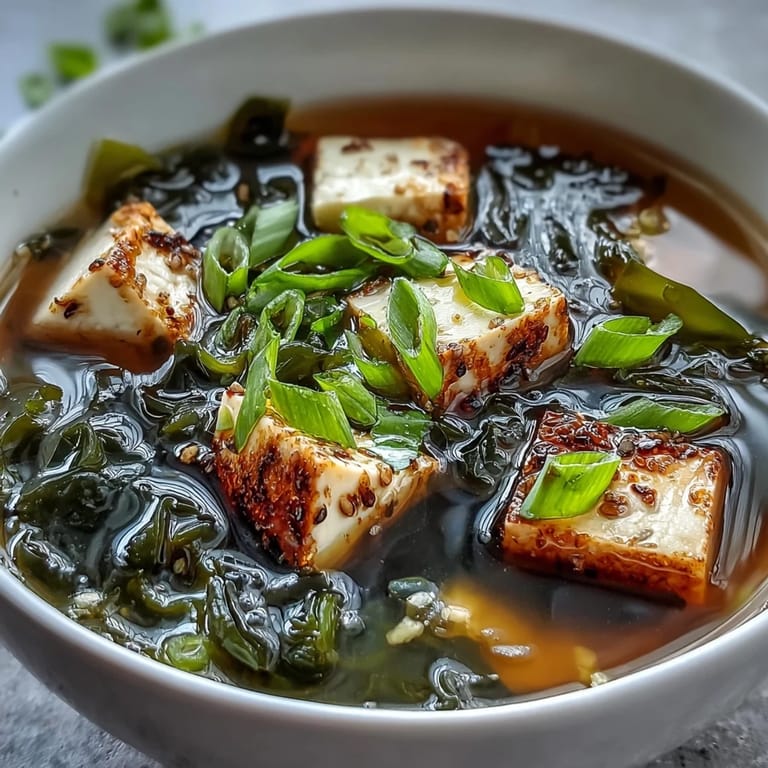
Save There's a specific quiet that happens when someone blows gently across the surface of their miso soup bowl before taking that first careful sip. I noticed it with my grandmother when I made this for her—that moment of focus, of appreciation, of understanding that something simple was being taken seriously. In that quietness, the soup became more than food; it became a small ceremony of care.
The Ritual of Dashi
Making your own dashi from scratch takes thirty minutes you might not have, so buying pre-made is smart and honest—but if you're ever curious on a weekend morning, brewing kombu and dried shiitake fills your kitchen with an aroma that justifies the slowness. The vegetarian version tastes lighter, more delicate, almost ethereal compared to bonito-based broths, and honestly, I've stopped making the traditional version at home because the plant-based option feels truer to what my body wants.
Miso Variations and Depth
White miso is forgiving and gentle, but one evening I mixed two tablespoons of white with one tablespoon of red miso and suddenly the soup had layers—a complexity that made people pause and ask what I'd changed. Red miso tastes deeper, earthier, slightly fermented in a way that whispers rather than shouts, so using both lets you have a conversation with the umami rather than just a simple statement.
Customizing Your Bowl
The beauty of miso soup is how it welcomes additions without losing its identity—I've added paper-thin mushroom slices that turn silky in the heat, fresh spinach that wilts into tender ribbons, even a thin sheet of nori torn into pieces. The core stays intact while you make it yours, and that flexibility means you can build this soup around whatever you have on hand or whatever your season demands.
- Add mushrooms early so they have time to soften and release their own subtle umami into the broth.
- Wilted spinach or bok choy added at the end keeps its color and slight texture rather than disappearing completely.
- A small piece of nori adds a toasted, oceanic finish that some bowls really need to feel complete.
 Save
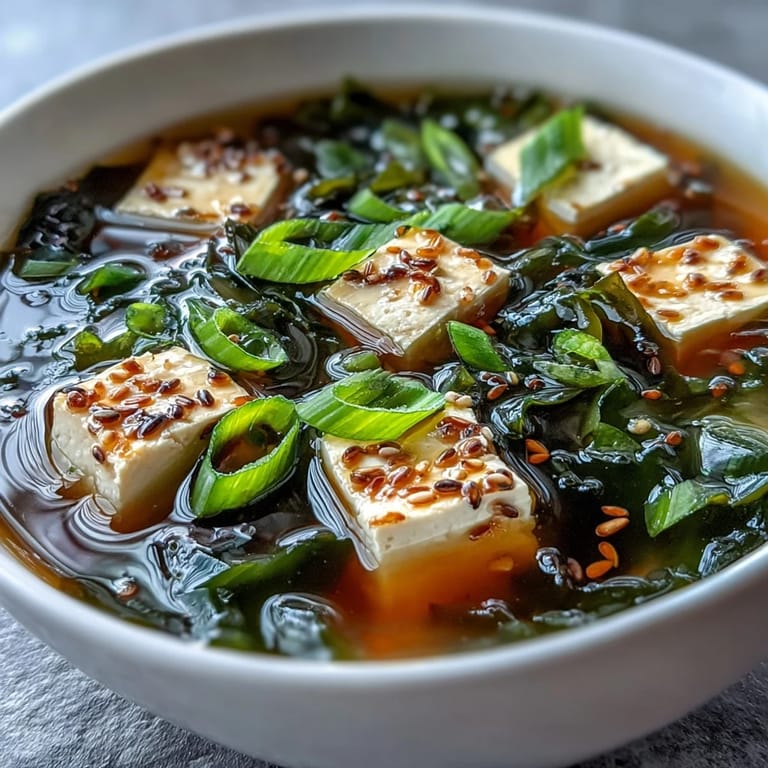
Save This soup has become my answer to so many different mornings—the ones where I'm sick, the ones where I'm sad, the ones where the world feels too loud and I need something that whispers back. It's proof that simplicity, when done honestly, can be just as nourishing as anything complicated.
Recipe FAQs
- → What type of miso works best?
White miso offers a milder, slightly sweet flavor perfect for beginners. Yellow miso provides a balanced umami taste. For deeper complexity, combine both varieties or experiment with red miso for a stronger fermented profile.
- → Can I make this vegan?
Yes, simply use vegetarian dashi made from kombu seaweed and dried shiitake mushrooms instead of traditional bonito-based stock. Most miso pastes are naturally vegan, but always check labels to ensure no fish-derived ingredients are included.
- → Why shouldn't I boil miso?
Boiling miso destroys the beneficial probiotics and enzymes that make fermented miso so nutritious. It also creates a grainy texture and can make the flavor overly harsh. Always remove the soup from heat before stirring in the dissolved miso paste.
- → How do I store leftovers?
Store cooled soup in an airtight container in the refrigerator for up to 3 days. The tofu may absorb more flavor over time, which some people enjoy. Reheat gently over low heat without boiling to preserve texture and beneficial properties.
- → What can I add for variety?
Thinly sliced shiitake mushrooms, fresh spinach, snow peas, or cubed sweet potato make excellent additions. You can also add cooked udon noodles for a heartier dish or a drizzle of sesame oil just before serving for extra richness.