 Save
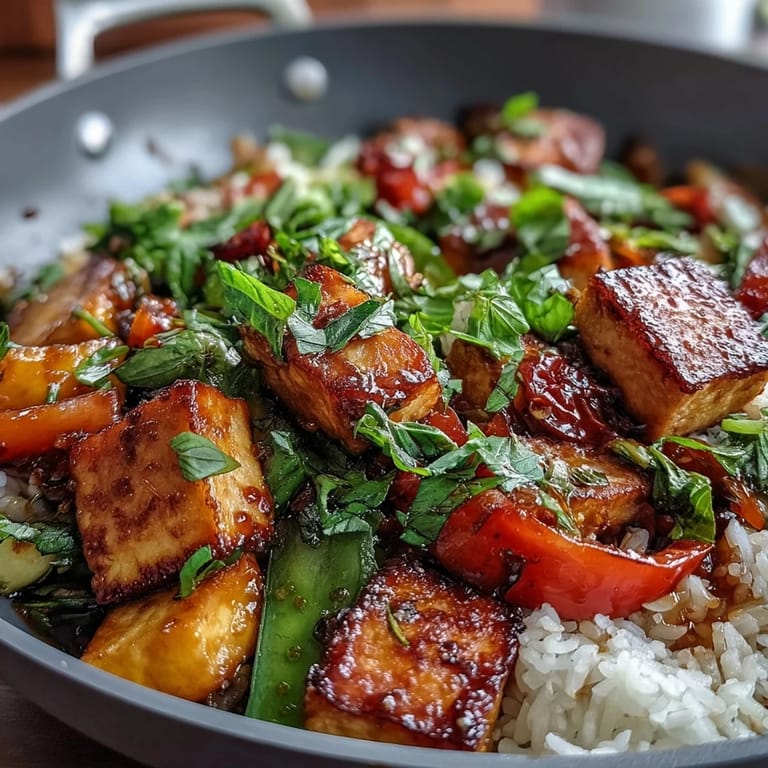
Save There's something about the sizzle of tofu hitting hot oil that makes me feel like I'm cooking in a proper Thai kitchen, even if I'm just in my small apartment with the windows cracked open. I discovered this stir-fry on a Tuesday evening when I had random vegetables scattered across my counter and a block of tofu that needed rescuing from the back of my fridge. The magic happened when I combined that crispy tofu with handfuls of Thai basil I'd impulsively bought at the market—suddenly my kitchen smelled like a Bangkok street food stall, and I knew I'd stumbled onto something special.
I made this for my friend Marcus on a rainy Saturday, and he kept going back for seconds while telling me he thought vegans just ate salads all day. Watching him pile more rice on his plate and reach for another lime wedge felt like the best compliment I could have gotten—it wasn't about proving anything, just sharing food that actually tasted incredible.
Ingredients
- Firm tofu, pressed and cubed: Pressing out the moisture is non-negotiable here; it's the difference between tofu that soaks up the sauce like a sponge and tofu that gets crispy and golden. I wrap mine in a clean kitchen towel and let it sit under a heavy skillet for about 10 minutes.
- Red and yellow bell peppers: The colors aren't just pretty; they bring different sweetness levels, and slicing them relatively thick means they stay crisp instead of turning mushy.
- Carrot, julienned: Thin, matchstick-cut carrots cook quickly and add a subtle sweetness that balances the savory sauce beautifully.
- Snap peas: These stay snappy and don't release too much water, which keeps your sauce from becoming watery and diluted.
- Red onion and garlic: The red onion adds a mild bite, while garlic builds that aromatic foundation that makes everything smell like you know what you're doing.
- Soy sauce and dark soy sauce blend: Using both gives you depth and a beautiful color; regular soy sauce alone leaves everything looking pale and washed out.
- Maple syrup or coconut sugar: These add subtle sweetness without the harsh edge of regular sugar, and they help balance the saltiness of the sauce.
- Rice vinegar: A splash of this adds brightness and prevents the sauce from tasting one-dimensional and heavy.
- Vegetable oil: High-heat oil is essential because your wok or skillet needs to get seriously hot for tofu to crisp up properly.
- Fresh Thai basil: This is the secret weapon; regular basil just doesn't have the same personality, so if you can find Thai basil at an Asian market, grab it.
Tired of Takeout? 🥡
Get 10 meals you can make faster than delivery arrives. Seriously.
One email. No spam. Unsubscribe anytime.
Instructions
- Whisk your sauce together and step back:
- Combine soy sauce, dark soy sauce, maple syrup, rice vinegar, black pepper, and water in a small bowl and let it sit. This gives the flavors a moment to mingle, and you've got one less thing to worry about while the stir-fry is happening.
- Get that tofu golden and crispy:
- Heat one tablespoon of oil in your largest skillet or wok over medium-high heat until it's properly hot—you should see a faint shimmer. Add your pressed tofu cubes and let them sit for a minute or two before turning, resisting the urge to move them around constantly. You're looking for a deep golden crust on most sides, which takes about 6 to 8 minutes total.
- Build your aromatic base:
- Once the tofu is out, add the remaining oil and immediately add minced garlic, sliced red onion, and chili if you're using it. Let this toast for just 30 seconds—you want the smell to fill your kitchen, not the garlic to turn brown and bitter.
- Get the vegetables singing:
- Throw in your bell peppers, julienned carrot, and snap peas, and keep everything moving for about 3 to 4 minutes. You're aiming for that perfect moment where the vegetables are tender enough to eat but still have a slight crunch when you bite them.
- Bring it all together:
- Return the tofu to the pan, pour in your sauce, and toss everything until it's evenly coated. Give it another 2 to 3 minutes of gentle stirring so the sauce coats the tofu and vegetables and thickens up slightly.
- Finish with fresh Thai basil:
- Remove from heat and fold in your Thai basil leaves gently so they just begin to wilt and release their flavor. The heat of the pan should do the work; you're not trying to cook the basil, just warm it through.
 Save
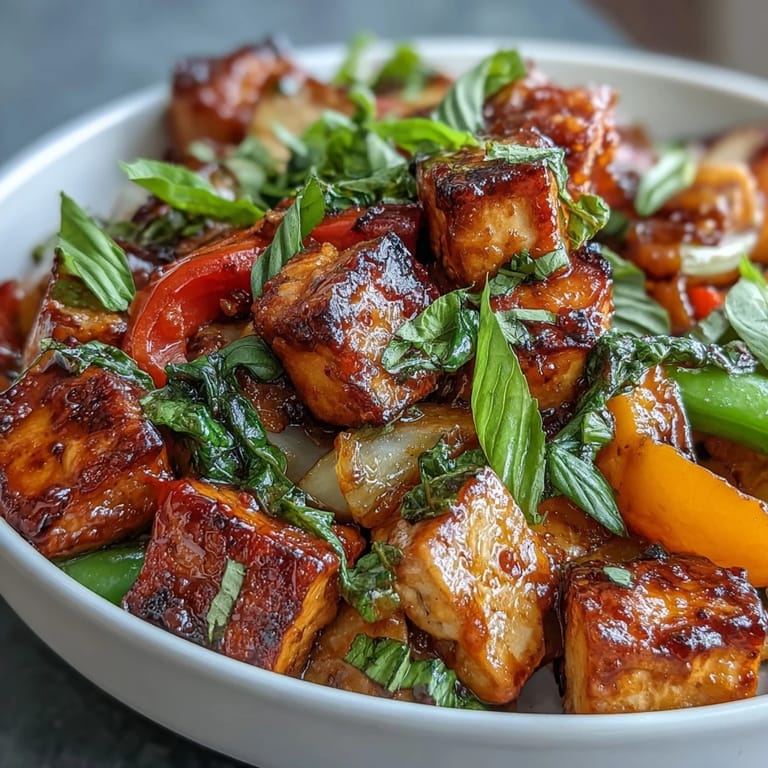
Save What I love most about this dish is how it transformed the way I think about vegan cooking; it's not about replacing something, it's about creating something that stands completely on its own. My mom tried it last month and asked for the recipe without even realizing there was no meat or dairy involved, which somehow felt like the highest possible compliment.
Making Your Tofu Crispy, Not Rubbery
The secret lives in three places: pressing out moisture, using hot oil, and not moving the tofu around too much while it's cooking. I used to flip my tofu every 30 seconds like I was afraid it would escape, but patience is actually what creates that golden crust you're after. Let each side sit and develop color before you turn it, and you'll understand why some people get genuinely excited about tofu.
Sauce Consistency and Flavor Layering
The combination of two different soy sauces might seem fussy, but regular soy sauce alone tastes thin and one-note, while dark soy sauce brings richness and color that makes the whole dish look more appetizing. The maple syrup and rice vinegar work as a team—sweetness and brightness—so the sauce doesn't taste salty and heavy. I've learned that getting the sauce right before you add it to the pan means your entire dish will taste intentional instead of improvised.
Vegetable Swaps and Seasonal Thinking
While this recipe works beautifully with the vegetables listed, I've found that thinking seasonally keeps this dish from ever getting boring. In summer I add extra snap peas and baby corn; in fall and winter I throw in broccoli florets or zucchini slices, adjusting cooking time slightly so everything finishes tender-crisp at the same moment. The structure of the recipe stays solid no matter what vegetables you choose, which is why it's become my go-to when I want something delicious but flexible.
- Broccoli and baby corn work wonderfully and cook in roughly the same time as the original vegetables.
- If you use zucchini, slice it slightly thicker so it doesn't turn mushy and release too much liquid into your sauce.
- Whatever you choose, the key is keeping pieces roughly the same size so everything finishes cooking together.
 Save
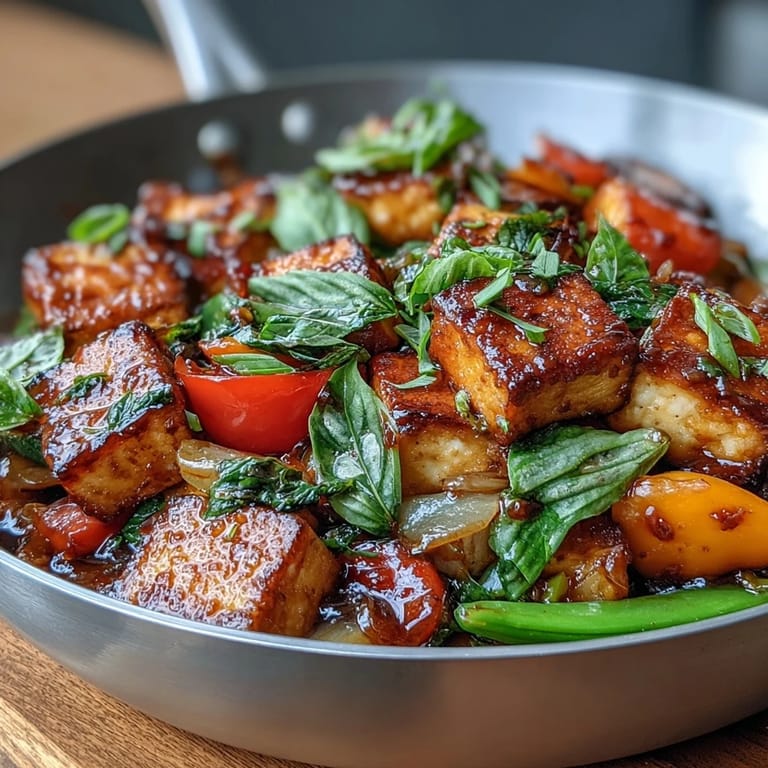
Save This stir-fry has become the meal I make when I want to feel like I'm cooking something special without spending hours in the kitchen or stressing about technique. It's proof that plant-based cooking can be vibrant, satisfying, and genuinely delicious.
Recipe FAQs
- → Can I use other vegetables?
Yes, broccoli, baby corn, or zucchini make excellent substitutions to add variety and texture.
- → How do I make it gluten-free?
Replace regular soy sauce with tamari to ensure gluten-free preparation.
- → What is the best tofu type to use?
Firm tofu pressed and cut into cubes works best for maintaining crispiness when seared.
- → Can I add more heat to the dish?
Yes, increase the amount of red chili or add chili flakes to intensify the spice level.
- → Is there a recommended cooking oil?
Vegetable oil is ideal for stir-frying as it withstands high heat and allows even cooking.
- → How do I keep the Thai basil fresh?
Add Thai basil leaves at the end of cooking and fold gently to preserve their aroma and texture.